












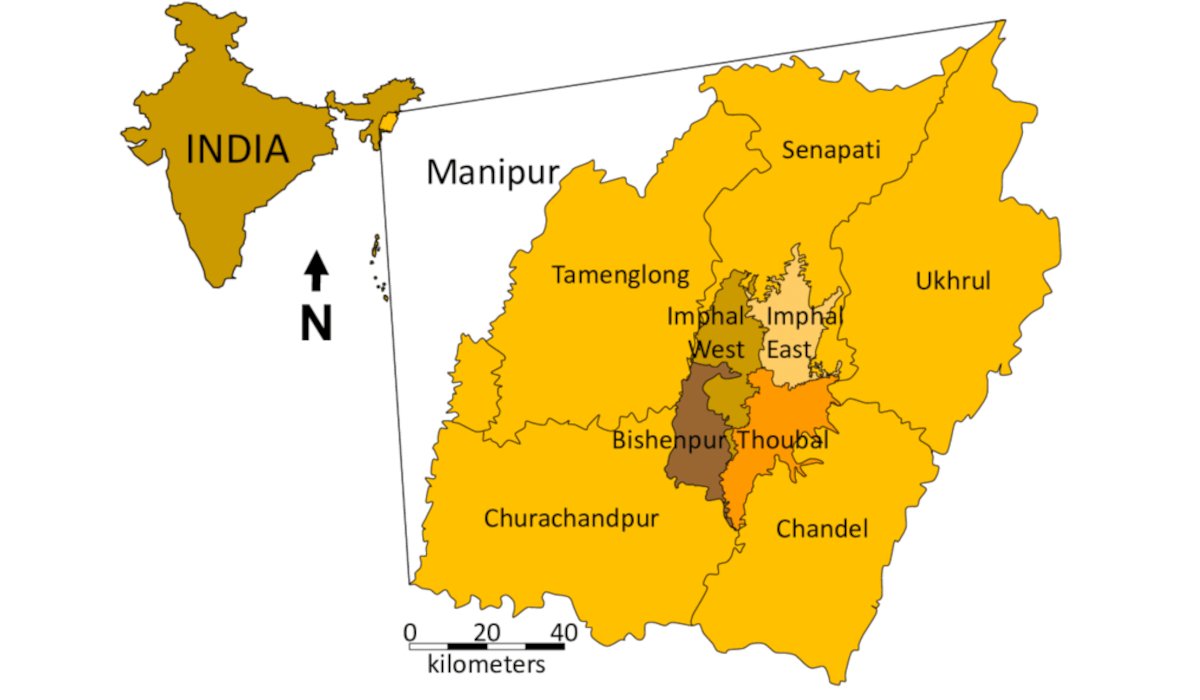
IMPHAL: The Joint Tribes Council (JTC) representing four Naga tribes in Manipur has written to Prime Minister Narendra Modi seeking urgent intervention over what it describes as “unchecked illegal immigration” from Myanmar and its alleged impact on indigenous populations. The letter, dated December 4 and signed by leaders of the Liangmai, Rongmei, Zeme and Inpui Naga councils, urges the Centre to take immediate measures to address what they call an escalating demographic and security challenge.
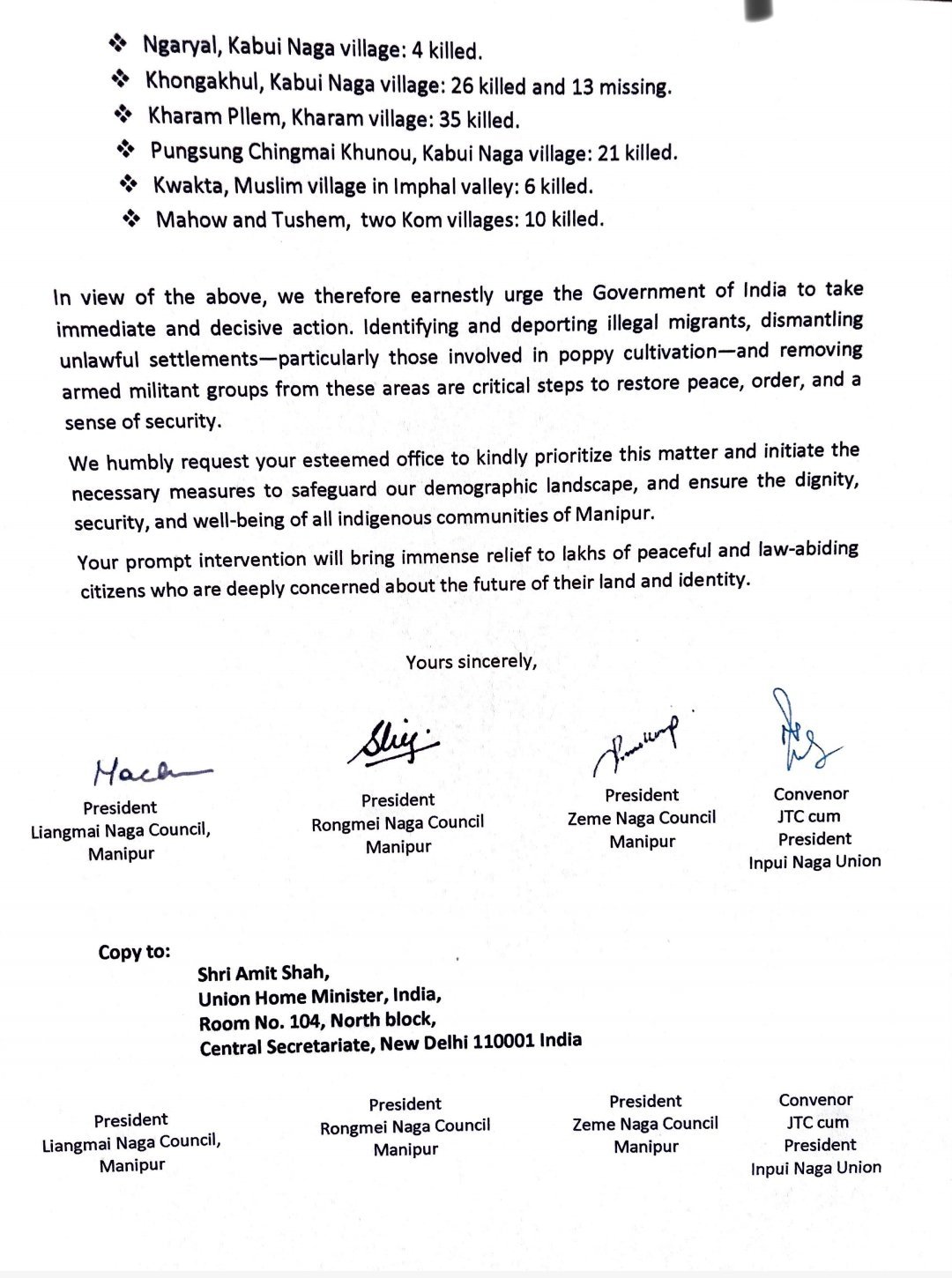
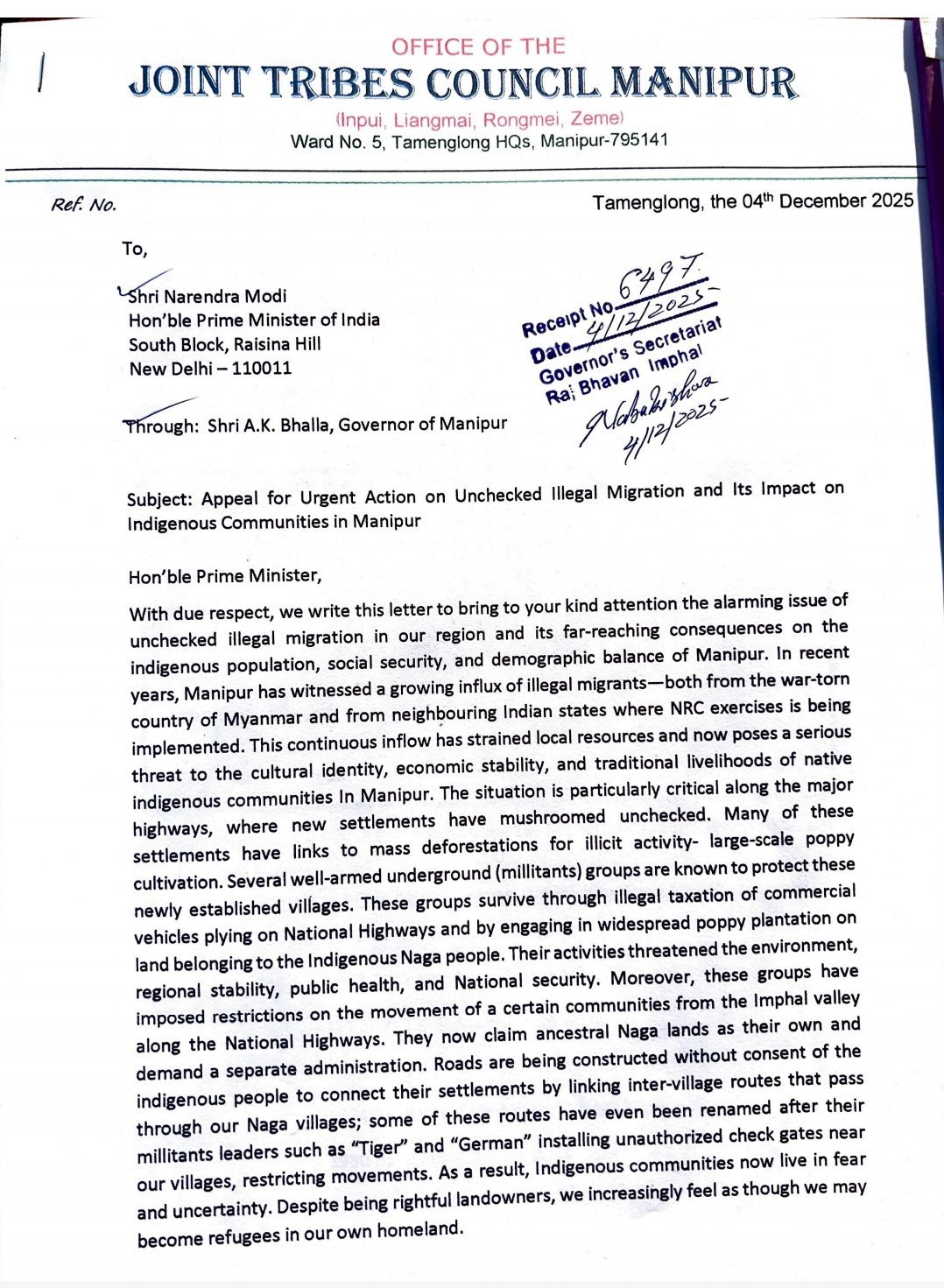
In the letter, the JTC argues that the continued inflow of people from across the Myanmar border has strained resources and placed pressure on land, employment and traditional livelihoods of indigenous communities. The organisation also warned that the issue, if left unaddressed, could have long-term implications for cultural identity and demographic balance in Manipur. “This continuous inflow has strained local resources and now poses a serious threat to the cultural identity, economic stability and traditional livelihoods of native indigenous communities,” the letter stated.
Concerns Raised Over New Settlements and Poppy Cultivation
The JTC, citing its own assessments, said that several new settlements have emerged along major highways, allegedly without the consent of local villages. The council further claimed that some of these settlements are linked to large-scale poppy cultivation and that underground groups are providing protection to those involved in such activities.
According to the JTC’s representation, these groups also allegedly impose illegal taxation on vehicles along national highways. The council warned that such activities pose risks to environmental stability, public health and national security. It said that these “well-armed groups” have also imposed restrictions on the movement of certain communities and have begun claiming ancestral Naga lands as their own.
Data Cited on Demographic Shift
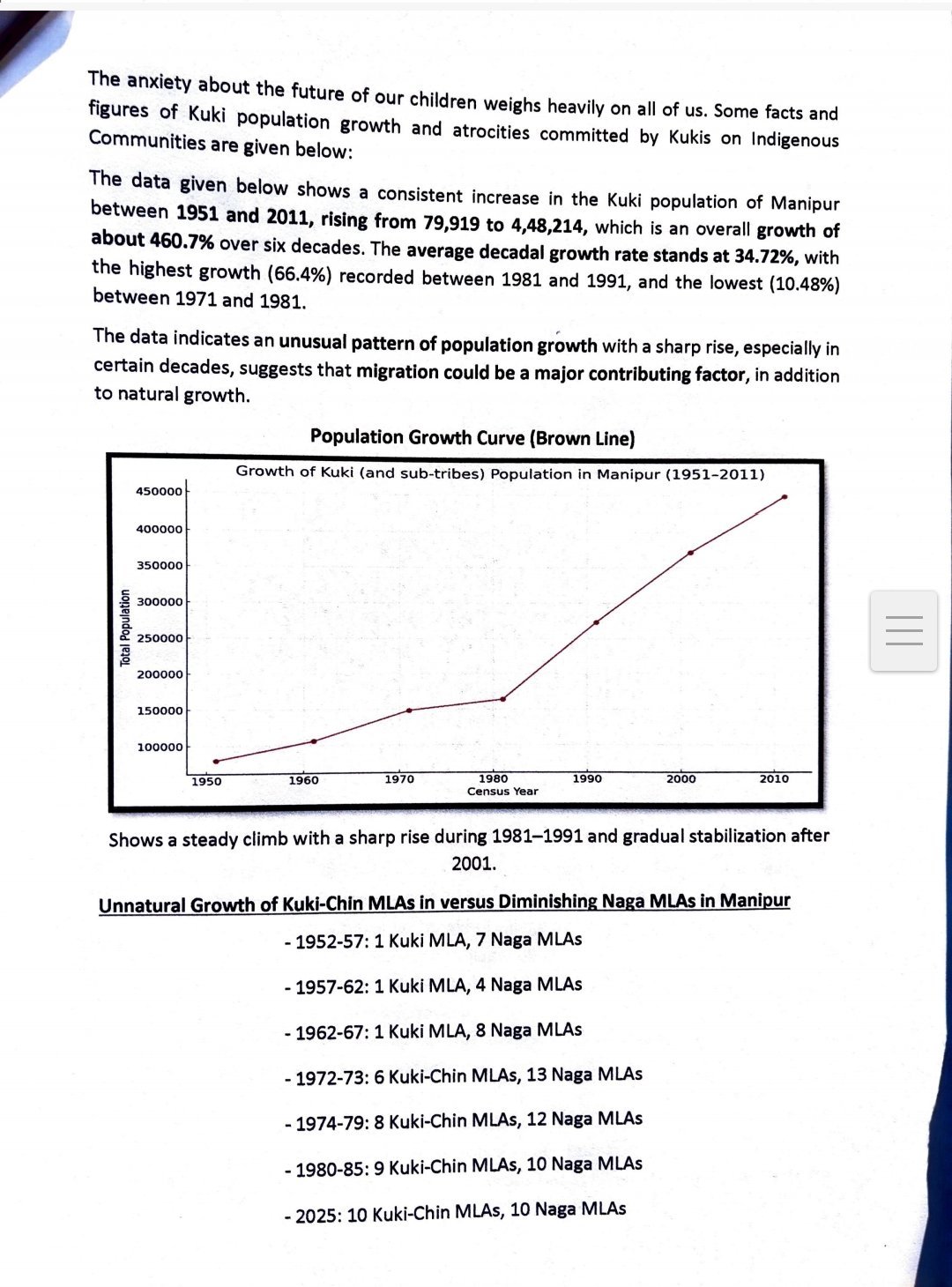
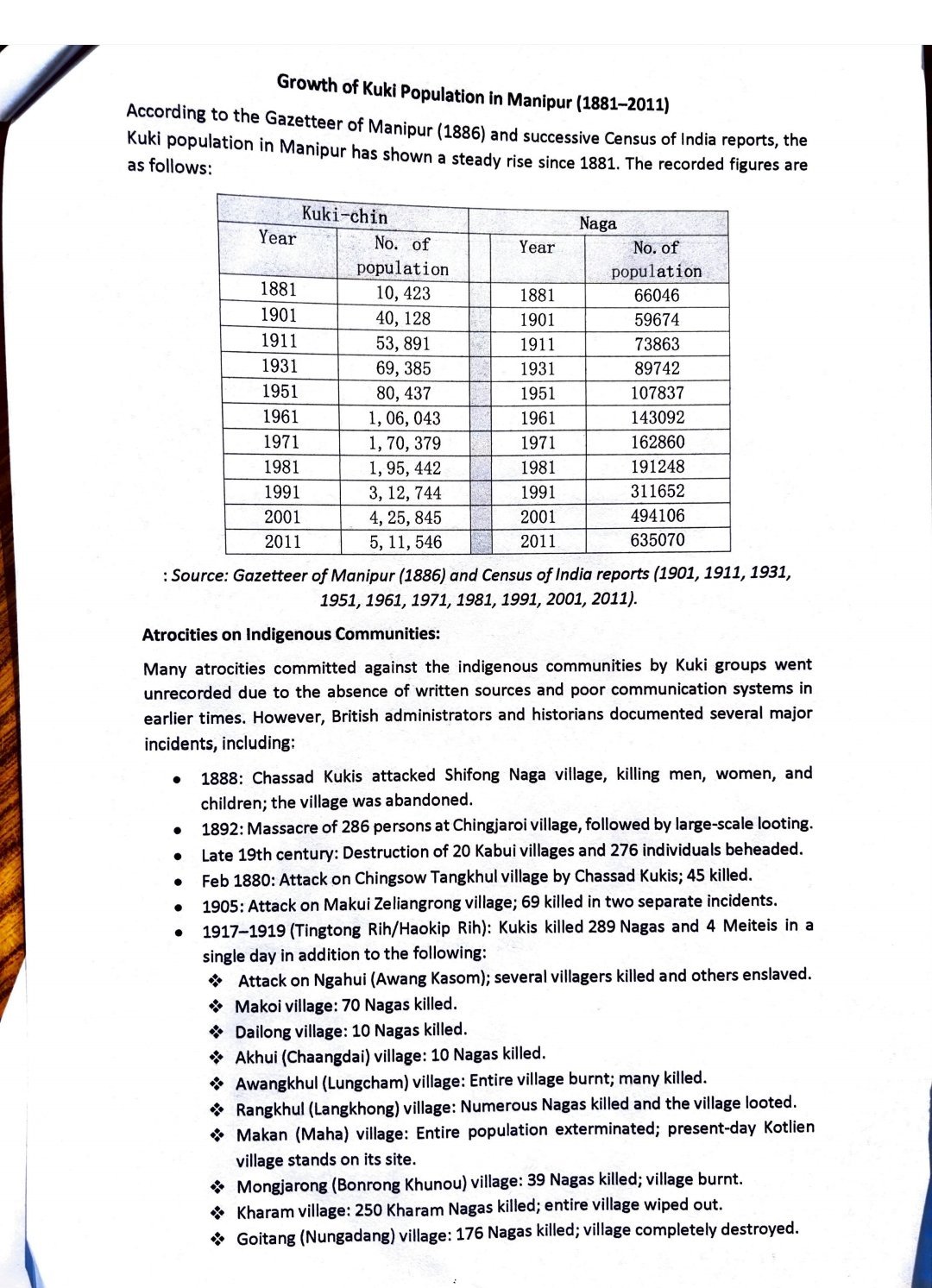
The letter cited historical census statistics to highlight what the JTC described as significant demographic changes in the Kuki population of Manipur between 1881 and 2011. According to the figures enclosed with the letter, the Kuki-Chin population rose from around 10,000 in 1881 to more than 5 lakh by 2011. The documents note periods of sharp rise in particular decades, which the council argues may be linked to migration.
A population curve produced by the group shows notable increases between census years, particularly between 1981 and 1991. The JTC interpreted this as evidence of what it called an “unusual pattern of growth,” although the council did not provide external demographic studies to corroborate the reasons for the rise.
The representation also included an outline of MLA representation from different decades, suggesting that Kuki-Chin political presence had expanded steadily. The JTC contended that this shift reflects broader demographic changes, though it acknowledged that political representation is tied to electoral outcomes and constituency structures.
List of Historical Atrocities Attached
The JTC enclosed a list of violent incidents, some dating back to the late 19th and early 20th centuries, citing British-era documents and historical records. These incidents, described as attacks on indigenous communities, were included by the council to argue that longstanding grievances continue to shape present-day tensions. However, the report did not reproduce original historical sources, and the claims remain attributed solely to the council.
Call for Central Intervention
In its final appeal, the council urged the Government of India to identify and address alleged unlawful settlements, investigate links to poppy cultivation, and take steps to remove armed groups from affected regions. It said that decisive action is necessary to ensure “peace, order and a sense of security” for indigenous communities. The letter stated: “Your prompt intervention will bring immense relief to lakhs of peaceful and law-abiding citizens who are deeply concerned about the future of their land and identity.”
A copy of the representation has also been sent to Union Home Minister Amit Shah.
The Centre has not yet issued a public response to the concerns raised in the letter.