Police Busts Sex Racket in Guwahati, 4 Including Constable Detained

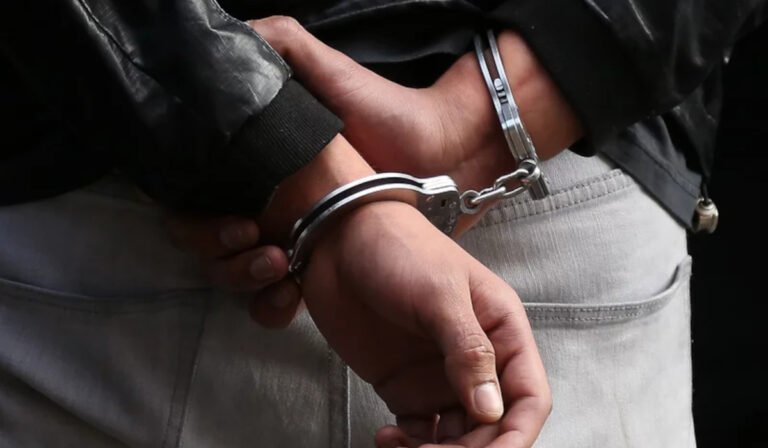
Police in Guwahati have successfully busted a prostitution racket, arresting four individuals, including the guesthouse owner and an Assam police constable who have now been detained for questioning in connection with the case.

The bust occurred at a guesthouse in the city’s Joyanagar area on Tuesday. Following a tip-off, a case was registered at the Dispur police station, which led to a preliminary investigation and the subsequent arrests. The arrested individuals have been identified as the guesthouse owner, Bapti Hazarika, and his alleged accomplices, Jonali Chowkham, Ritumoni Gohain Rabha, and Riya Das. Police also rescued three women who were victims of the operation.

According to police sources, an Assam police constable has been detained as part of the ongoing investigation. It has not yet been confirmed whether the constable was directly linked to the racket. Authorities are continuing to interrogate the suspects and meticulously analyse records and CCTV footage to uncover the full extent of the illegal operation.

Bangladesh Interim Government Sets Election for Early 2026

0

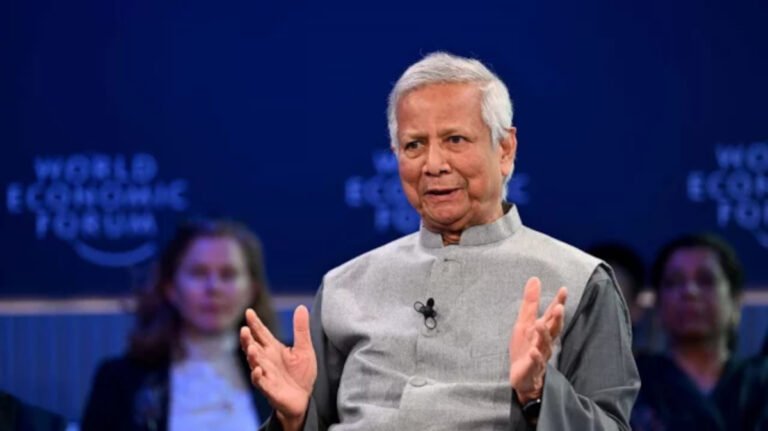
Bangladesh’s interim government, led by Chief Adviser Muhammad Yunus, has announced that national elections will be held in February 2026, just before the holy month of Ramadan. The announcement, made during a televised address, marks a key step in the country’s transition back to democratic rule after a mass uprising ousted the previous government a year ago.

The new election timeline represents a shift from an earlier plan for an April vote and follows consultations with major political parties, who had pressed for an earlier date. In his address, Yunus called on political parties to prepare for an election that would be remembered for its “joy and celebration, peace and order.”

The announcement coincides with rallies held by student-led and opposition parties in Dhaka to mark the first anniversary of the uprising that ended the 15-year rule of former Prime Minister Sheikh Hasina. Hasina, who fled to India a year ago, remains in exile and faces charges for corruption and human rights violations. Her party, the Awami League, has been banned by the interim administration, effectively barring it from participating in the upcoming polls.

While the interim government is working to restore stability and has released a 26-point document for proposed constitutional reforms, critics and human rights groups have expressed concern over a rise in mob violence and the ban on the Awami League. The February 2026 election is seen as a critical test for the country’s political future, as various factions vie for power and a new constitution is being debated.

US-Russia Diplomacy Continues Amid Sanctions Warning

0

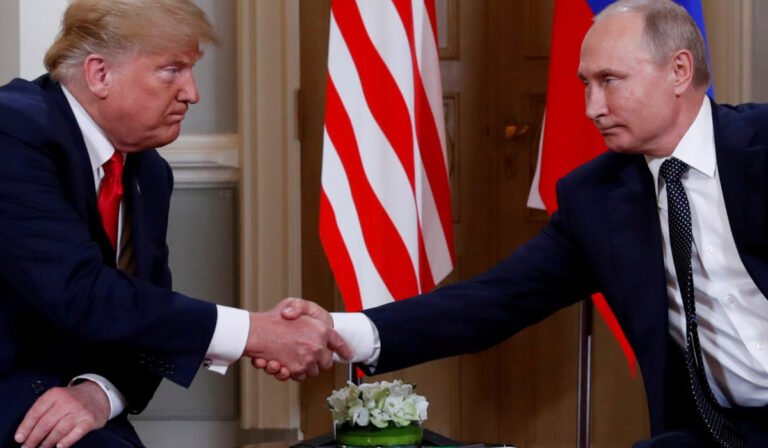
The prospect of a direct meeting between U.S. President Donald Trump and Russian President Vladimir Putin has grown, following a recent “highly productive” meeting between a US special envoy and the Russian leader in Moscow. The diplomatic moves come as a White House deadline for fresh sanctions on Russia looms.

US envoy Steve Witkoff travelled to Moscow to meet with President Putin, a discussion which lasted for approximately three hours. While no specific details of a breakthrough were announced by the Kremlin, President Trump posted on his social media platform that “great progress was made!” and that he had briefed European allies, with all agreeing the war must come to an end. This has led to speculation that Trump could meet with Putin as soon as next week, though an official date and location have not been finalised.

The diplomatic push is set against a backdrop of a looming ultimatum from the Trump administration. The US has threatened to impose secondary sanctions on countries that continue to trade with Russia, a move intended to pressure Moscow to agree to a ceasefire in Ukraine. Despite the ongoing talks, a White House official has clarified that these sanctions are still expected to be implemented as planned. The Ukrainian government has also weighed in, with President Volodymyr Zelenskyy confirming a call with Trump and European leaders to discuss the talks and reiterate the need for a “lasting and reliable peace.”

India Calls Additional 25% US Tariff ‘Unjustified’

0

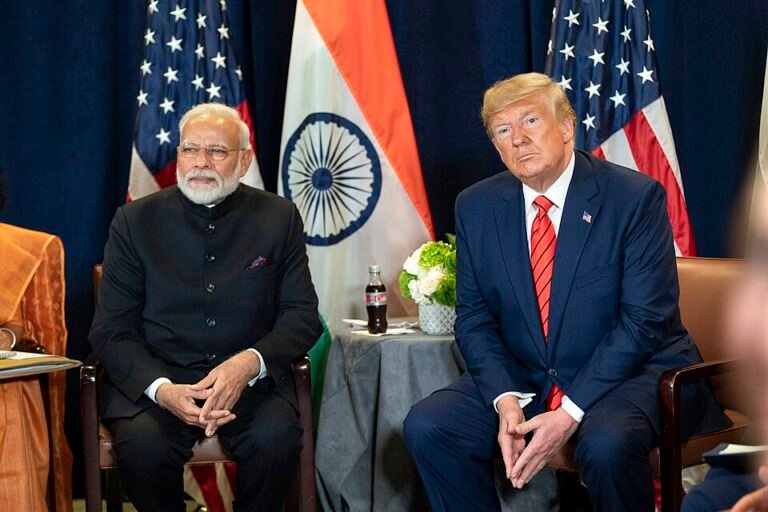
The Indian government has voiced strong disapproval of a decision by US President Donald Trump to impose an additional 25 percent import tariff on Indian goods. The new levy brings the total tariff on many products to 50 percent and has been imposed in response to India’s continued purchase of Russian crude oil. The initial 25 percent tariff came into effect on 7 August, with the supplementary charge scheduled to be implemented 21 days later.

The Ministry of External Affairs (MEA) issued a statement calling the US action “extremely unfortunate,” “unfair, unjustified, and unreasonable.” The MEA reiterated India’s position that its oil imports from Russia are based on market factors and are crucial for ensuring the energy security of its 1.4 billion people. The ministry also pointed out that other countries are engaging in similar actions and questioned why India was being singled out. The statement concluded with a vow that “India will take all actions necessary to protect its national interests.”

Economic Impact and Trade Negotiations

The new tariffs have raised significant concerns among Indian exporters and industry experts. The Federation of Indian Export Organisations (FIEO) has expressed shock, stating that the 50 percent tariff could affect over 55 percent of India’s exports to the US, particularly in sectors such as textiles, gems and jewellery, and leather. Exporters fear that the high duties will make their products uncompetitive compared to those from countries with lower tariff rates.

While the overall macroeconomic impact on India’s GDP is expected to be minimal, the effect on specific sectors and small and medium-sized enterprises (MSMEs) could be severe. Many export orders have already been put on hold as buyers re-evaluate their sourcing decisions due to the higher costs. The new tariffs are also being viewed by some as a pressure tactic ahead of the sixth round of bilateral trade agreement negotiations between the two countries, which are scheduled to take place later this month.

PM Modi to Visit China for SCO Summit, First Trip Since Galwan Clash

0

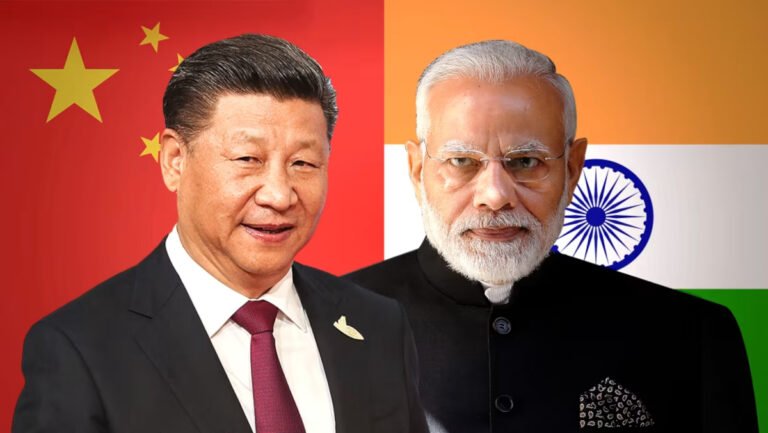
Prime Minister Narendra Modi is set to embark on a significant visit to China, attending the Shanghai Cooperation Organisation (SCO) Summit in Tianjin from 31st August to 1st September 2025. This trip marks a pivotal moment in India-China relations, as it will be PM Modi’s first visit to China since the deadly Galwan Valley clash in June 2020, which severely strained bilateral ties.

The visit comes amidst ongoing efforts by both nations to normalise relations, which have remained tense following the military standoff along the Line of Actual Control (LAC) in eastern Ladakh. While there has been no official confirmation from New Delhi regarding a bilateral meeting, anticipation is high for a potential one-on-one interaction between Prime Minister Modi and Chinese President Xi Jinping on the sidelines of the summit. The two leaders last met briefly during the BRICS summit in Kazan, Russia, in October 2024.

Sources indicate that the groundwork for this high-level engagement has been laid through recent diplomatic exchanges. External Affairs Minister S. Jaishankar recently visited China in July, his first trip in five years, for an SCO Foreign Ministers’ meeting. During his visit, Mr. Jaishankar reportedly apprised President Xi of the recent developments in bilateral ties and reiterated India’s consistent stance on de-escalating the situation along the LAC.

The SCO summit, hosted by China this year, will bring together leaders from member states, including Russia and Pakistan, to discuss regional security, economic cooperation, and counter-terrorism efforts. PM Modi’s presence underscores India’s commitment to multilateral forums, even as it navigates complex bilateral challenges with Beijing.

The Galwan Valley incident, which resulted in casualties on both sides, led to a significant downturn in India-China relations, prompting India to take a firm stance on border issues and introduce restrictions on Chinese investments and apps. While some measures, such as the resumption of the Kailash Mansarovar Yatra, have signalled a cautious thaw, the core border disputes remain unresolved. This upcoming visit will be closely watched for any indications of further de-escalation or a renewed push towards normalising the multifaceted relationship between the two Asian giants.

RBI Downplays Major Impact of US Tariffs, Maintains Robust GDP Forecast

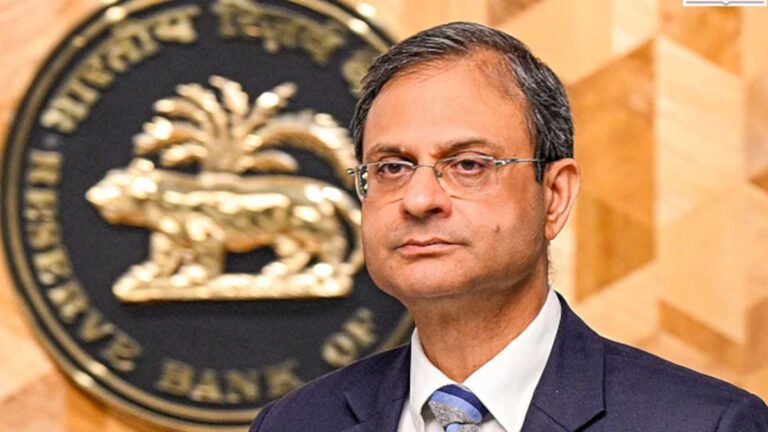
The Reserve Bank of India (RBI) Governor Sanjay Malhotra today indicated that the central bank does not foresee a “major impact” of the recent US tariffs on the Indian economy, provided there are no retaliatory tariffs from India. This assessment was made during a press conference following the Monetary Policy Committee (MPC) meeting on August 6 (Wednesday), where the key repo rate was kept unchanged at 5.5%. 

Governor Malhotra’s statement implicitly blunts the US President’s recent “dead economy” jibe against India. While acknowledging the “uncertainties of tariffs” and their evolving nature, the RBI has maintained India’s GDP growth forecast for the financial year 2025-26 at a robust 6.5%.

“On growth, you are very well aware that we had already reduced our forecast, which was earlier, 6.7% to 6.5% so some of the global uncertainties have already been factored in the revised growth forecast,” Governor Malhotra publicly stated. He added, “However, there is still a lot of uncertainty… and it’s really very difficult to predict as to what the impact will be. Going forward… we will maintain a very, very close vigil on the incoming data and take a call as of now, we do not have sufficient data to revise our GDP forecasts.”

The Governor also highlighted India’s relative independence from external factors concerning inflation. He conveyed that India is “less dependent on the outside as far as inflation is concerned,” suggesting that the impact of external trade disruptions on domestic prices might be limited.

The MPC’s decision to keep the repo rate unchanged and maintain a neutral stance reflects a cautious but confident approach. This stance allows the central bank to monitor the unfolding impact of global trade tensions while ensuring that previous rate cuts continue to transmit through the economy. The RBI’s commitment remains focused on maintaining price stability while supporting sustainable economic growth.

RBI Holds Repo Rate Steady at 5.5% Amid Global Trade Uncertainty

The Reserve Bank of India (RBI) has decided to keep the key repo rate unchanged at 5.5%, as the Monetary Policy Committee (MPC) concluded its three-day meeting on August 6 (Wednesday). The announcement made today by RBI Governor Sanjay Malhotra, reflects a cautious stance as the central bank monitors inflation trends and global economic uncertainties, particularly new tariffs and trade tensions.

“The Monetary Policy Committee, MPC, met on the 4th, 5th and 6th of August to deliberate and decide on the policy repo rate. After a detailed assessment of the evolving macroeconomic and financial developments and the outlook, the MPC voted unanimously to keep the policy repo rate under the Liquidity Adjustment Facility unchanged at 5.5%,” said RBI Governor Sanjay Malhotra.

He further confirmed that the Standing Deposit Facility (SDF) rate will remain at 5.25%, with the Marginal Standing Facility (MSF) rate and the Bank Rate continuing at 5.75%. The MPC also decided to “continue with a neutral stance,” indicating that the central bank is not currently leaning towards a rate hike or cut.

Governor Malhotra explained the decision, noting that while headline inflation has been “much lower than projected earlier,” this is primarily due to volatile food prices, especially in vegetables. He highlighted that core inflation has remained steady around the 4% mark and is projected to rise towards the end of the financial year.

On the economic growth front, the Governor stated that India’s growth is “robust and as our earlier projections go, of course, below our expectations.” He acknowledged that the full impact of the 100 basis points in rate cuts since February is still “unfolding” on the broader economy.

Upasna Bhardwaj, Chief Economist at Kotak Mahindra Bank, commented on the decision, stating that the MPC’s move to hold rates steady comes amid global uncertainties, even as inflation remains benign. She added, “With inflation likely to trend higher post the near term favourable trends, the bar for rate cuts ahead is set very high. We can see some room for the last leg of easing only if growth momentum slows significantly.”

The RBI’s decision to maintain a neutral stance and keep rates unchanged indicates a wait-and-watch approach, allowing time for previous policy actions to fully transmit into the credit markets and the broader economy before making any further adjustments.

India and Philippines Forge Strategic Partnership, Boost Defence and Maritime Ties

0

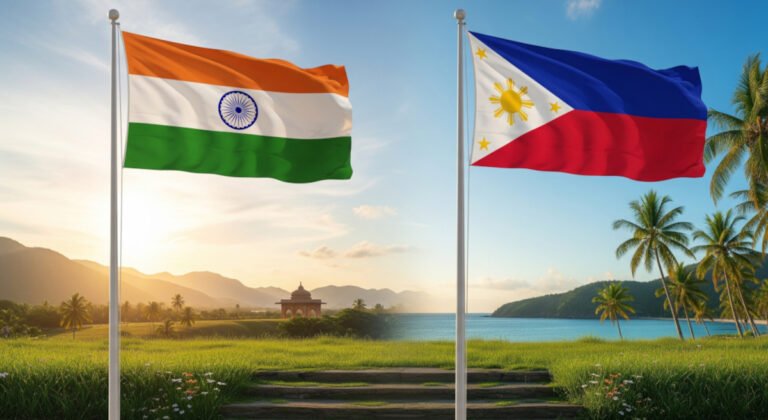
India and the Philippines have elevated their bilateral cooperation to a strategic partnership, marking a significant milestone in their diplomatic relations. This development was announced on August 5 (Tuesday) during the state visit of the President of the Philippines to India.

The new strategic partnership aims for a greater thrust on increasing interaction among the armed forces and expanding cooperation across various sectors. These include political dialogue, defence, security, maritime cooperation, science, technology, and agriculture. The President of the Philippines was accorded a ceremonial reception at Rashtrapati Bhavan and held bilateral talks with Prime Minister Narendra Modi.

This enhanced partnership is guided by a new Plan of Action for 2025-2029, adopted on August 5 (Tuesday). It seeks to strengthen joint efforts in combating terrorism, violent extremism, radicalisation, and transnational organised crimes, including trafficking in narcotics and human trafficking. Both nations also committed to expanding cooperation in hydrography and promoting coordination between maritime authorities and law enforcement agencies.

Trinamool MP Kalyan Banerjee Issues ‘Apology to Nation’ Amidst Feud with Mahua Moitra

0

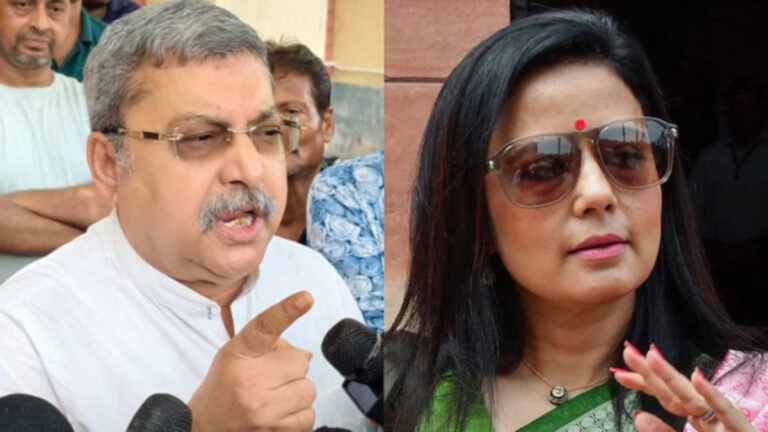
Following a series of sharp exchanges between the Trinamool Congress (TMC) Member of Parliament Kalyan Banerjee and his colleague Mahua Moitra, Banerjee on August 5 (Tuesday) has publicly offered an “apology to the nation” for his past support of party colleague, intensifying an ongoing internal feud within the party. 

Banerjee’s apology comes after Moitra allegedly made derogatory remarks about him in a public podcast. Sharing an old video from 2023 where he defended Moitra during a parliamentary controversy, Banerjee stated, “In 2023, I stood by Ms Moitra when she was under fire in Parliament — I did so out of conviction, not compulsion. Today, she repays that support by calling me a misogynist. I owe the nation an apology for having defended someone who clearly lacks basic gratitude.”

The public spat escalated following Banerjee’s recent resignation as the party’s chief whip in the Lok Sabha. His resignation reportedly stemmed from observations made by West Bengal Chief Minister Mamata Banerjee regarding a lack of coordination among MPs, for which Kalyan Banerjee claimed responsibility.

The animosity between Banerjee and Moitra has been simmering for months, marked by personal jibes and accusations. The latest flashpoint was Moitra’s comments in a podcast, where she reportedly addressed Banerjee’s verbal attacks by stating, “You don’t wrestle with a pig. Because the pig likes it and you get dirty. There are deeply misogynistic, sexually frustrated, depraved men in India and they have their representation in parliament across all parties.”

In response, Kalyan Banerjee vehemently criticised what he termed “dehumanising language.” He asserted, “Comparing a fellow MP to a ‘pig’ is not only unfortunate but reflects a deep disregard for basic norms of civil discourse.” He further argued that “Labelling a male colleague as ‘sexually frustrated’ isn’t boldness – it’s outright abuse. If such language were directed at a woman, there would be nationwide outrage, and rightly so. But when a man is the target, it’s dismissed or even applauded. Let’s be clear: abuse is abuse – regardless of gender.”

This public exchange highlights the deepening rift between the two senior TMC leaders, drawing significant attention to the internal dynamics of the party.