Meghalaya HC Orders Probe into Disappearance of 4,000 MT of Illegal Coal

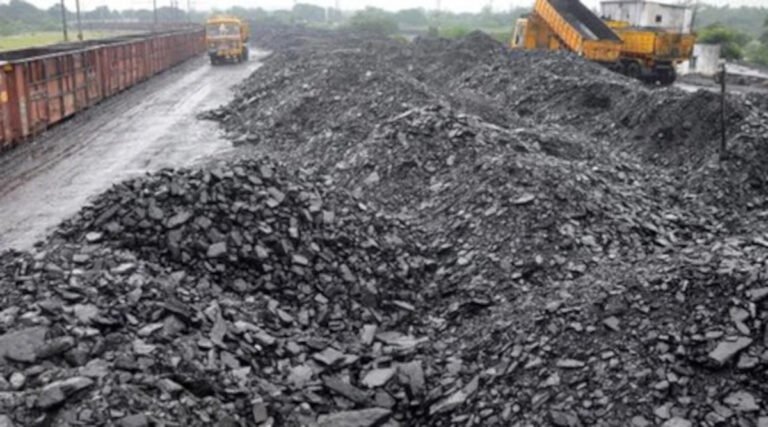
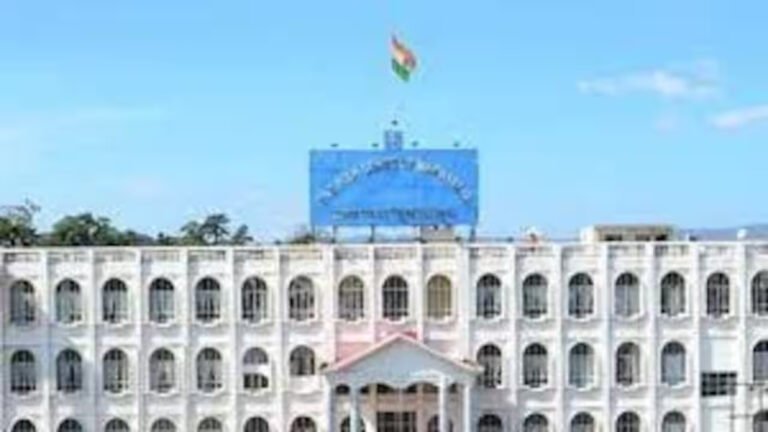
The Meghalaya High Court has directed a full investigation into the mysterious disappearance of nearly 4,000 metric tonnes of illegally extracted coal from two designated depots in the state, calling the matter a serious lapse in governance and enforcement.

The directive came during a hearing on Thursday, when a bench led by Justice HS Thangkhiew expressed concern over how previously inventoried coal had vanished from storage sites in Rajaju and Diengngan villages. The missing coal had earlier been identified during official surveys and marked for necessary action.

The court’s observations followed the submission of the 31st interim report by the Justice (Retd) BP Katakey Committee, which is monitoring coal-related issues in the state. The report revealed startling discrepancies between recorded and actual quantities of coal at the two depots. While the Meghalaya Basin Development Authority (MBDA) had earlier reported 1,839.03 MT of coal at Diengngan, only 2.5 MT could be found during recent ground verification. In Rajaju, out of the recorded 2,121.62 MT, merely 8 MT remained.

Describing the disappearance as alarming, the court instructed the state government to immediately identify both the individuals and the officials responsible for the removal of the coal, which had already been flagged as illegally mined. It warned that such lapses point to systemic failure in tracking and securing coal inventories and said that accountability must be established.

Beyond the missing coal, the committee report also flagged delays and confusion in disposing of inventoried coal currently stored at Coal India Limited (CIL) depots. In response to a previous court order issued on June 2, the committee held meetings with stakeholders, including CIL, to streamline the auction process. CIL proposed four options for sale and disposal, three of which are already part of the Revised Comprehensive Plan of 2022.

The committee has also recommended adding two new mandatory clauses to the plan: that buyers must make full payment within 120 days of a successful bid, and that coal must be lifted within 120 days of full payment. Any failure to comply would result in cancellation of the bid, forfeiture of the Earnest Money Deposit (EMD), and re-auctioning of the coal.

The High Court has now asked the state to implement the recommended measures swiftly and ensure greater transparency and oversight in future coal management processes.

Raijor Dal Alleges Multi-Crore Misuse of Public Funds in Assam PWD Cultural Event

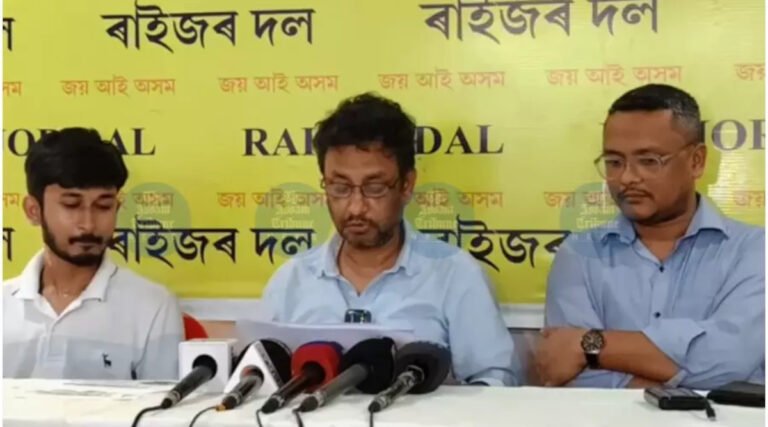
Raijor Dal has alleged serious financial irregularities in the Assam Public Works Department (PWD), accusing it of misusing public funds to the tune of Rs 8.84 crore under the pretext of organizing a cultural programme titled ‘Jhumoir Binandini’. The party’s president and Sivasagar MLA, Akhil Gogoi, made the allegations at a press conference held in Guwahati on Friday, July 25.

Gogoi said that documents acquired through the Right to Information (RTI) Act showed unusually high expenses for a single-day event organised on March 23, 2023, in Bongaigaon. “A total of Rs 8.84 crore was spent. One contractor alone was paid over Rs 3.86 crore, and nearly Rs 5 crore was claimed as expenditure on logistics and materials,” he said.

What raised further suspicion, Gogoi noted, was that the Public Works Department—ordinarily tasked with construction and infrastructure projects—was made the implementing agency for a cultural function. “This is highly irregular. Cultural programmes are the responsibility of the Cultural Affairs Department, not the PWD. It seems like a pre-planned effort to divert funds,” he alleged.

According to Gogoi, the financial clearances and disbursements were processed rapidly, without transparency or competitive bidding. “There is no documentation to show how this money was spent. No audit, no footage, no public report—nothing,” he said.

Gogoi warned that if the government fails to act, Raijor Dal will launch a mass protest across Assam. “This scandal is not just about money; it’s about how deeply corruption is embedded in governance. The people of Assam deserve to know where their tax money is going,” he said.

The party has submitted a memorandum to the Governor of Assam demanding an impartial investigation and strict action against officials found guilty of fund misappropriation.

So far, the PWD has not issued any public response to the allegations.

India-UK Sign Landmark Free Trade Agreement (FTA), Open New Markets for Indian Farmers

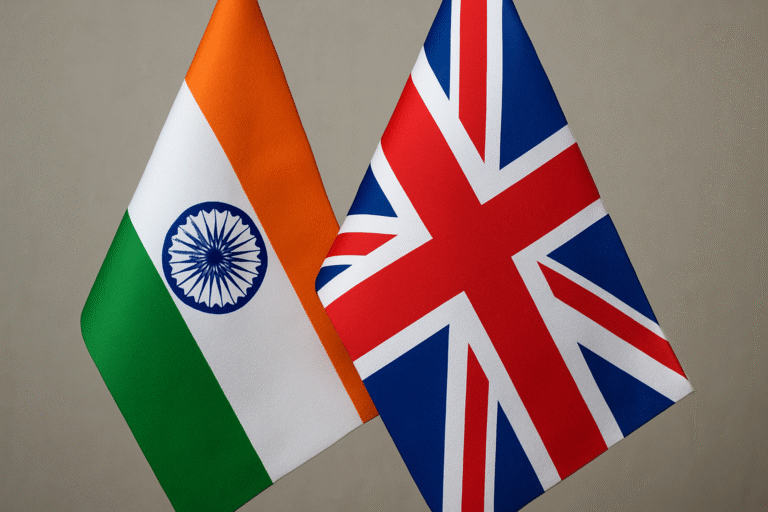
In a significant diplomatic and economic milestone, India and the United Kingdom officially signed a long-awaited Free Trade Agreement (FTA) on July 24, 2025. The pact, hailed by Prime Minister Narendra Modi as a “historic turning point,” is expected to transform bilateral trade by granting duty-free access to a wide range of Indian goods while opening new opportunities for Indian farmers and exporters.

The agreement was signed during Modi’s official visit to London, where he met with UK Prime Minister Keir Starmer. The leaders described the deal as mutually beneficial, promising to strengthen ties between two of the world’s major economies.

According to the provisions of the agreement, nearly 99 percent of Indian export items will now enjoy zero-duty access to the UK. These include sectors such as textiles, engineering goods, spices, marine products, jewellery, and footwear. At the same time, around 90 percent of UK goods entering India will benefit from phased tariff reductions, with approximately 85 percent of those becoming entirely duty-free within the next 10 years.

Crucially, India ensured the protection of its sensitive domestic sectors by excluding items such as dairy products, apples, edible oils, and oats from any tariff concessions. This move comes in response to concerns raised by Indian farmers and food producers, who feared potential market disruption from cheaper imports.

The Indian government has emphasized that the FTA offers unprecedented export potential for the country’s agricultural and processed food sectors. Products such as turmeric, mango pulp, ground spices, pulses, tea, seafood, fruit-based products, and ready-to-eat meals will now face minimal to no tariffs in the UK market. Sectors in Andhra Pradesh, Kerala, Odisha, and Tamil Nadu, particularly marine exporters dealing in shrimp and tuna, are expected to benefit significantly from the duty relief.

Government projections estimate that India’s agricultural exports to the UK could rise by over 20 percent in the next three years. The move is aligned with India’s broader goal of achieving $100 billion in agri-exports by 2030.

Apart from agriculture, the agreement has also extended benefits to the services sector. A Double Contribution Convention signed alongside the FTA ensures that Indian professionals working short-term assignments in the UK will not be required to pay into the British social security system. This provision is expected to benefit over 60,000 Indian workers in sectors like IT and consulting, potentially saving them up to 20 percent of their income.

Mobility provisions in the agreement will allow easier short-term visas for business visitors, yoga professionals, and artists. The UK has also committed to streamlined customs processes, reduced regulatory barriers, and greater cooperation in intellectual property rights, although concerns remain among British pharmaceutical firms about limited gains on patent data protections.

Trade analysts suggest that the FTA could boost annual bilateral trade by more than £25 billion by 2040, adding up to £5 billion to the UK’s GDP and generating new business and employment opportunities in both countries. The UK views the deal as a significant step toward building deeper ties with Indo-Pacific economies in the post-Brexit era, while India considers it part of its ongoing efforts to diversify trade partners and strengthen export-led growth.

The signing of the agreement also reflects a shared commitment to democratic values and a rule-based global trading system. Both leaders have indicated that the FTA will serve as a foundation for expanded cooperation in digital trade, clean energy, and supply chain resilience in the years ahead.

Despite these promising developments, some Indian farmer unions and trade bodies have expressed cautious optimism. While they welcomed the exclusion of certain sensitive items, they have urged the government to remain vigilant in monitoring the influx of foreign goods that could affect local market prices and small-scale producers.

In response, Prime Minister Modi reassured stakeholders that national interests were fully safeguarded during negotiations, and that the FTA was designed to be inclusive, equitable, and future-ready.

As the two countries embark on a new era of trade relations, the India–UK FTA stands as a landmark achievement—offering Indian farmers, entrepreneurs, and exporters a wider global stage while reinforcing strategic and economic bonds between two historic partners.

Assam CM Orders Probe After Engineer’s Suicide Over Alleged Pressure to Clear Fake Bills

Assam Chief Minister Himanta Biswa Sarma has called for a detailed investigation into the tragic death of a 30-year-old assistant engineer with the Public Works Department (PWD), who died by suicide in Bongaigaon on Tuesday.

The young engineer, Jyotisha Das, was found dead in her rented accommodation. Her death has sparked widespread outrage after a handwritten suicide note was recovered from the scene, in which she accused two senior officials of mentally harassing her and pressuring her to approve fraudulent bills related to incomplete projects.

“We are investigating all aspects. The building concerned, on which the alleged bills were made, will be probed. We will reassess the work costing,” police officials said, confirming that a criminal investigation was underway.

According to police sources, Das had been under severe psychological distress and felt unsupported at her workplace. In the note, she expressed her helplessness, stating she was overwhelmed by pressure from her seniors and had no one to turn to for professional guidance. “I am taking this step due to extreme stress from my work. There is no one to guide me in the office. I am tired and have nowhere to go. My parents are worried for me,” the note stated.

Following a formal complaint lodged by her family, police registered a First Information Report (FIR) and arrested two officials named in the note — Dinesh Medhi Sharma, a recently promoted Superintendent Engineer who previously held the post of Executive Engineer in Bongaigaon, and Aminul Islam, the current Sub-Divisional Officer (SDO) in Bongaigaon.

The arrests were made on charges of abetment of suicide under relevant sections of the Indian Penal Code. Investigators are now examining the financial records and project files linked to the officials named, especially those concerning the allegedly fraudulent bills.

Chief Minister Sarma has instructed the concerned departments to fully cooperate with the inquiry and ensure transparency. He has also assured the public that strict action will be taken if the allegations are proven true. The case has prompted wider questions about internal oversight mechanisms within state departments, particularly regarding pressure faced by junior employees.

The death of Jyotisha Das has drawn widespread sympathy and sparked protests by civil society groups and youth organisations demanding accountability and institutional reforms. Her colleagues described her as a sincere and hardworking engineer who had been under visible stress in recent weeks.

As the investigation continues, the state government has pledged to conduct an audit of PWD projects in the region and re-evaluate internal procedures to ensure that no official, especially women and junior officers, is left without proper mentorship and safeguards in place.

India Post 264/4 on Day 1 of Manchester Test, Injury to Pant Casts Shadow

0

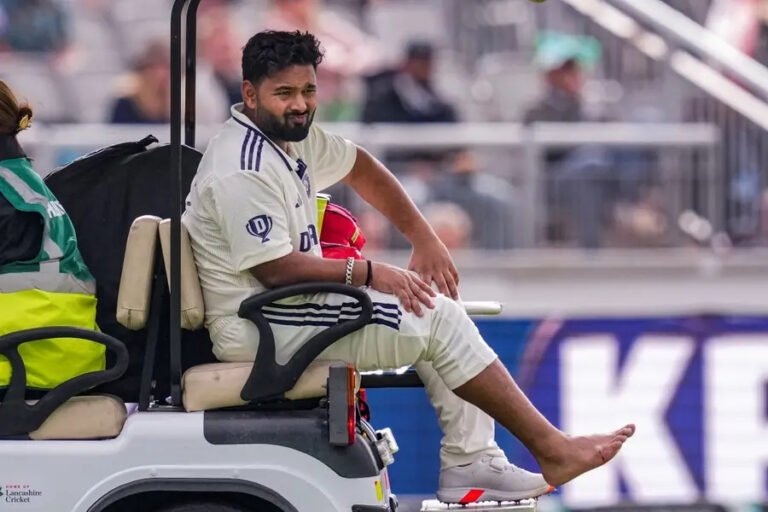
India finished the opening day of the fourth Test against England at Old Trafford on a steady note, reaching 264 for 4 at stumps, but the day’s progress was clouded by a concerning foot injury to Rishabh Pant, who was forced to retire hurt after being struck while attempting a reverse sweep.

India were put in to bat after England captain Ben Stokes won the toss under gloomy skies. Openers Yashasvi Jaiswal and KL Rahul provided a solid start, negotiating the early swing and seam movement to put on a 94-run stand for the first wicket. Jaiswal continued his fine form with a fluent 58, becoming the first Indian opener in 50 years to notch a half-century at Old Trafford. Rahul, playing with trademark restraint, made 46 before edging behind off Chris Woakes.

England struck thrice in the second session to claw back into the game. Debutant Liam Dawson, returning to Test cricket after a long gap, got Jaiswal leg-before with a sharp delivery. Moments later, Woakes dismissed Rahul with an outswinger, and Shubman Gill fell soon after to Ben Stokes, leaving India in a spot of bother at 138 for 3.

Sai Sudharsan, promoted to the crucial No. 3 spot, held the innings together with a composed 61. His partnership with Rishabh Pant helped India regain control. Pant, who began counter-attacking as usual, raced to 37 in quick time before disaster struck.

While attempting a reverse sweep off Woakes, Pant was struck hard on the right foot. He immediately dropped his bat and signaled for medical attention, writhing in pain. The team physio rushed out, and after a lengthy on-field assessment, Pant was taken off the ground on a medical buggy. The Indian camp later confirmed that he was being sent for scans, but did not provide further details. Former Australian skipper Ricky Ponting, speaking on air, said the injury “didn’t look good at all.”

With Pant unable to continue, Ravindra Jadeja and Shardul Thakur took India to stumps without further damage. Both remained unbeaten on 19 and will resume the innings on Day 2 with the second new ball looming. Despite the late hiccup, India ended the day with a decent platform, though Pant’s availability will weigh heavily on their plans going forward.

England’s bowlers shared the spoils on Day 1, with Woakes picking two wickets, while Dawson and Stokes claimed one each. The pitch offered enough assistance for both seamers and spinners, promising an intriguing battle in the days ahead.

India will look to build on the foundation laid on the first day, but much will depend on how serious Pant’s injury turns out to be. An official update is expected early on Day 2.

Durand Cup 2025 Begins with Expanded Format and Strong Presence in Northeast India

0

The 134th edition of the Durand Cup officially kicked off on July 23, 2025, marking the start of a month-long celebration of Indian football. Recognised as Asia’s oldest football tournament, the Durand Cup has grown in scale and ambition this year, featuring 24 teams, six venues across five states, and a renewed focus on regional inclusivity, particularly in the Northeast.

Organised jointly by the Indian Army, the All India Football Federation (AIFF), and the Government of West Bengal, the tournament continues to serve as the curtain-raiser to India’s domestic football season. This year’s edition not only showcases India’s top-tier clubs but also brings teams from the Armed Forces, I-League, and select foreign participants into the spotlight.

The tournament format consists of six groups (A to F), each featuring four teams. The group stage will determine eight quarter-finalists—six group winners and the two best runners-up. The competition runs from July 23 to August 23.

This edition is significant for its widespread footprint, with matches being held in Kolkata, Jamshedpur, Shillong, Kokrajhar, and Imphal. For the first time, both Shillong and Kokrajhar are hosting knockout matches, reinforcing the growing importance of the Northeast in the national football narrative.

The venues for the group stage include Salt Lake Stadium and Kishore Bharati Krirangan in Kolkata, JRD Tata Sports Complex in Jamshedpur, Jawaharlal Nehru Stadium in Shillong, SAI Stadium in Kokrajhar, and Khuman Lampak Main Stadium in Imphal. These cities have been selected to ensure wide geographical representation and better connect Indian football with grassroots supporters.

The quarter-finals are scheduled to be held in Shillong and Kokrajhar on August 16 and 17. The semi-finals will take place in Shillong and Kolkata on August 19 and 20, with the final slated for August 23 at the iconic Salt Lake Stadium in Kolkata.

Twenty-four teams are taking part in this edition, including Indian Super League (ISL) heavyweights like Mohun Bagan SG, East Bengal, FC Goa, Kerala Blasters, Mumbai City FC, and Hyderabad FC. I-League clubs such as Gokulam Kerala, Mohammedan Sporting, and Sreenidi Deccan are also in the fray. The competition further includes Armed Forces teams like Army Red, Army Green, Indian Navy, and Indian Air Force, as well as foreign teams and invited regional sides that add variety and intensity to the matches.

Below is the complete itinerary of the 2025 Durand Cup:

Stage Date(s) Venue(s)
Group Stage July 23 – August 13 Kolkata, Jamshedpur, Shillong, Kokrajhar, Imphal
Quarter-finals August 16–17 Shillong, Kokrajhar
Semi-finals August 19–20 Shillong, Salt Lake Stadium (Kolkata)
Final August 23 Salt Lake Stadium, Kolkata

The group stage matches are being held simultaneously across all six venues, allowing fans from various regions to enjoy top-tier football action in their home states. Shillong and Kokrajhar are hosting matches from Groups D and E respectively, while Imphal is home to Group F matches.

This edition of the tournament reflects the AIFF’s continued push to promote football in underrepresented regions, with Northeast India playing an especially prominent role. The inclusion of multiple venues in the Northeast not only offers exposure to local players but also energises football fans in a region where the sport enjoys strong cultural roots.

Durand Cup 2025 is also being viewed as a testing ground for club strategies ahead of the upcoming ISL and I-League seasons. With many clubs fielding a mix of seasoned players and emerging talents, the tournament is expected to throw up surprises and serve as a showcase for future national prospects.

From heritage clubs battling for pride to army teams playing with discipline and grit, the Durand Cup continues to reflect India’s footballing diversity. As the tournament progresses into its later stages, all eyes will turn to Shillong and Kokrajhar for the crucial quarter-finals, before the tournament returns to Kolkata for its grand conclusion.

The event’s message this year is clear: the Durand Cup is not only a tournament steeped in history but also a living, evolving platform that bridges regions, clubs, and fans from across the nation.

Unleashing the Silent Engine: How MSMEs Are Transforming Northeast India’s Economic Future

0

A quiet revolution is underway in the Northeast. In July 2025, a significant milestone was marked as Nagaland University was chosen to host one of the region’s new business incubation centres under a Central initiative to strengthen entrepreneurship.

Incubation Drive Marks a New Beginning

The centre is set to nurture 44 startups from across the eight states, providing mentorship, training, and seed funding. The move reflects a deeper shift: the Micro, Small and Medium Enterprises (MSME) sector in Northeast India is stepping into the national spotlight.

For a region long perceived as peripheral in economic terms, the MSME sector offers a compelling path to inclusive, grassroots-led growth. With rising investments, targeted policy support, and a growing ecosystem of young entrepreneurs, the Northeast’s MSMEs are now being seen as the real engines of local prosperity and self-reliance.

From Guwahati to Imphal: Signs of Enterprise Everywhere

During World MSME Day celebrations in June 2025, Guwahati hosted a showcase of small business success stories and policy initiatives aimed at strengthening the sector. Entrepreneurs, many of them women and first-generation business owners, displayed their products—from organic cosmetics and traditional textiles to agri-processing innovations. Officials introduced digital finance tools, such as Trade Receivables Discounting Systems (TReDS), to boost liquidity and facilitate transparent payments.

Around the same time, major investors announced projects worth over one and a half lakh crore rupees for the Northeast during the Rising Northeast Investors Summit. These investments, though focused on infrastructure, energy, and digital services, are expected to unlock massive supply chain opportunities for local micro and small enterprises. From bamboo furniture suppliers to clean-tech component manufacturers, MSMEs are poised to ride the wave.

Manipur Leads in Numbers, Assam in Startups

Among the northeastern states, Manipur has taken the lead in MSME growth. Between 2015 and 2019, the state registered more than 12,000 MSMEs—remarkable for its size. What’s more striking is that half of these businesses are women-led, indicating a dramatic social transformation powered by enterprise.

Assam, meanwhile, has emerged as the region’s startup capital. By the end of 2024, the state had over 1,400 officially recognized startups, accounting for more than 70 percent of all such ventures in the Northeast. From eco-friendly packaging to tech-based delivery platforms, the variety of ideas reflects both the dynamism and urgency of economic innovation in the state.

The Credit Bottleneck: Growth Held Back by Finance

Despite visible momentum, the MSME sector in the Northeast continues to struggle with a longstanding problem—access to credit. Between 2018 and 2023, the total amount of loans outstanding to MSMEs in the region grew by over 50 percent. However, the credit-deposit ratio, which shows how much banks lend compared to deposits collected, remains stubbornly low at just over 45 percent. This figure is far below the national average of more than 75 percent.

Even flagship loan schemes like the Pradhan Mantri Mudra Yojana have seen limited traction in the Northeast. Since its inception, the region has accounted for just over one crore sanctioned loans—only a small fraction of the national total. This gap in credit access has led many small businesses to continue relying on informal lenders, often at high interest rates that strain long-term viability.

NEDFi and Guarantee Schemes Offer a Lifeline

The North Eastern Development Finance Corporation Ltd (NEDFi) has emerged as a key institutional pillar in addressing this finance gap. In 2023 alone, it sanctioned more than 750 crore rupees for over 5,000 projects. Of this, nearly 550 crore was disbursed, supporting sectors like healthcare, agri-processing, and textiles. Notably, NEDFi’s micro-finance efforts touched nearly nine lakh individuals, with women accounting for 90 percent of the beneficiaries.

Complementing this is the Credit Guarantee Fund Trust for Micro and Small Enterprises (CGTMSE), which now offers up to 85 percent guarantee coverage for micro-enterprise loans up to five lakh rupees. This shift has encouraged more first-time borrowers and women entrepreneurs to seek formal credit.

Infrastructure and Logistics Still a Hurdle

While finance is a major hurdle, logistics is an equally serious concern. The region’s hilly terrain, poor connectivity, and underdeveloped transportation networks significantly increase the cost of raw materials and finished goods. Small business owners in states like Arunachal Pradesh and Mizoram often pay twice as much for shipping as their counterparts in the plains.

Even in relatively well-connected states like Assam and Tripura, poor rural road networks and inconsistent power supply create a hostile environment for small-scale manufacturers. This makes it harder for enterprises to scale up or diversify, locking them into low-margin production cycles.

Training and Market Linkages Need Strengthening

Many MSMEs in the region suffer from inadequate technical support and lack of market access. Government-run training programmes exist, but their penetration remains shallow, especially in remote districts. As a result, even businesses with great products struggle with packaging, pricing, and branding when competing outside their home states.

However, initiatives launched over the past two years are beginning to close this gap. A Central government scheme announced in 2023 aims to train over 2.5 lakh youth in industry-relevant skills by 2026, with a special focus on the Northeast. These include apprenticeships, certification in handicrafts and IT services, and entrepreneurship development.

Women Entrepreneurs Show the Way

The story of MSMEs in the Northeast is also the story of women rewriting their roles in society. In Manipur, over half of all registered MSMEs are led by women. In Assam and Nagaland too, women are setting up food processing units, handloom enterprises, and online stores that deliver traditional products across the country.

One such example is that of a group of women from Dhemaji who run a successful organic turmeric processing unit. With support from NEDFi and local NGOs, they’ve secured packaging contracts from wellness brands and are now mentoring other women’s groups in nearby districts.

These stories point to a quiet transformation: when finance, training, and market support come together, even the most marginalized communities can take charge of their futures.

The Road Ahead: Five Priorities for Real Change

  1. Bridge the Credit Gap: Banks must be incentivized to improve the credit-deposit ratio and extend risk-free loans under guarantee schemes, especially to first-generation entrepreneurs.

  2. Strengthen Training Ecosystems: Expand skill development programmes in partnership with local universities, industry bodies, and NGOs, tailored to regional industries.

  3. Promote Cluster-Based Growth: Identify sectoral clusters such as bamboo, food processing, and handicrafts, and provide common facilities, branding assistance, and logistics support.

  4. Digital Inclusion: Ensure that MSMEs have access to e-commerce platforms, UPI-based payments, and digital accounting tools, along with training on how to use them.

  5. Follow Through on Investment Commitments: Large corporates must be encouraged to partner with local MSMEs for procurement, joint ventures, and knowledge transfer in areas like clean energy, agro-tech, and tourism.

Conclusion: The Silent Engine That Could

The MSME sector in Northeast India is still finding its feet, but its potential is undeniable. With the right support, small enterprises can become anchors of job creation, innovation, and economic self-sufficiency across the region.

This is not merely about business; it is about building an economy that works for its people—from the hills of Nagaland to the plains of Barak Valley. It is about ensuring that enterprise is not the privilege of the few, but the power of the many.


Meghalaya HC Seeks State’s Stand on ST Certificate Row Linked to Khasi Lineage Law

The Meghalaya High Court has directed the state’s Advocate General to respond to a Public Interest Litigation (PIL) that challenges provisions of a legislation tied to the Khasi matrilineal system, which governs the issuance of Scheduled Tribe (ST) certificates based on the use of maternal surnames.

The petition has been filed by Syngkhong Rympei Thymmai, a group that advocates for social reforms within the Khasi community. The group has questioned the legality of certain provisions of the Khasi Hills Autonomous District (Khasi Social Custom of Lineage) Act, 1997, which they argue restrict individuals from receiving ST certificates if they adopt their father’s or husband’s surname, despite having valid tribal lineage.

The legislation was originally enacted to preserve the unique matrilineal structure of the Khasi tribe, where lineage and inheritance pass through the mother’s line. However, the petitioners argue that the Act has been misapplied to discriminate against Khasi individuals who choose to adopt paternal surnames, even when their ancestry satisfies the tribal criteria under the law.

The matter stems from a clarification issued by the state’s Social Welfare Department on July 21, 2020, addressed to the Deputy Commissioners of East and West Khasi Hills. In that communication, the department clarified that the Act did not prohibit individuals from adopting surnames from either parent. It also said that non-Khasi women marrying into the community could adopt their husband’s surname without legal repercussions.

However, that letter was later withdrawn on May 21, 2024, through another official communication, effectively reversing the clarification. Following this withdrawal, authorities allegedly began refusing ST certificates to Khasi individuals using paternal or spousal surnames, leading to widespread confusion and distress.

The petitioners have pointed out that the 2023 amendment to the Act redefined lineage criteria and made bloodline the central determinant for tribal status. They argue that if an individual meets the lineage requirement — being a descendant of a Khasi tribe — the use of a father’s or husband’s surname should not be a disqualifying factor.

During the hearing, a division bench comprising Chief Justice IP Mukerji and Justice W Diengdoh noted that the matter raised issues of significant consequence for the Khasi community and acknowledged the broader implications of the dispute. The bench stated that affidavits would be sought only if necessary at a later stage and directed that notice be issued to the Advocate General.

The case has been listed for the next hearing on August 7.

Naga Organisations Issue 20-Day Ultimatum to Centre over Indo-Myanmar Border Fencing and FMR Abrogation

A recent media report published on Wednesday said that four influential Naga civil society organisations have jointly issued a 20-day ultimatum to the Central Government, demanding immediate reversal of the recent abrogation of the Free Movement Regime (FMR) and a halt to the ongoing border fencing along the Indo-Myanmar border. The report published in The Assam Tribune newspaper stated they claim the Centre’s actions infringe upon traditional rights and cultural ties of Naga communities living on both sides of the international boundary.

The ultimatum, jointly issued by the United Naga Council (UNC), Naga Women Union (NWU), All Naga Students’ Association, Manipur (ANSAM), and the Naga People’s Movement for Human Rights-South (NPMHR-S), was formally submitted to Prime Minister Narendra Modi and key Union ministers through the Governor of Manipur, Anusuiya Uikey, the report said.

The organisations have warned that if the government fails to respond positively within the 20-day window, they will be compelled to intensify their protest campaigns across all Naga-inhabited hill districts in Manipur. “Should the demands remain unaddressed from the date of this ultimatum, we shall be compelled to resume our protest movement in stronger measure,” the report quoted the Naga bodies as saying.

The core issue revolves around the Centre’s decision to scrap the Free Movement Regime, which earlier allowed residents of border villages on both sides to travel up to 16 km into each other’s territory without visas. This provision had long enabled Naga families, clans, and tribes separated by the India-Myanmar border to maintain cultural, social, and economic ties.

The report went on to say that, the groups have also expressed strong opposition to the accelerated fencing of the Indo-Myanmar border, asserting that the construction is cutting through ancestral Naga lands without the consent of local Indigenous communities. They argue that both actions violate Articles 8, 26, and 36 of the United Nations Declaration on the Rights of Indigenous Peoples (UNDRIP), which India has endorsed.

“We submit this ultimatum with deep concern and anguish, expressing our strong resentment against abrogation of the Free Movement Regime (FMR) along the imaginary Indo-Myanmar border and the accelerated ongoing border fencing construction across the ancestral Naga homeland,” their statement read.

According to the organisations, the Centre’s actions have disregarded the historical and cultural continuity of the Naga people, many of whom have relatives and ancestral roots spread across both sides of the border. They contend that the demarcation line is an “imaginary boundary” arbitrarily imposed by colonial-era treaties that ignored Indigenous perspectives.

To date, the Naga groups claim to have exhausted several democratic means of protest, including issuing public statements, picketing government offices, organising demonstrations across Naga hill districts, and submitting memoranda to various authorities. Despite this, they allege, the central government has not initiated any meaningful consultation or review.

The protest is gaining traction at a time when concerns over Indigenous rights, border management, and regional stability are increasingly drawing attention in Northeast India. The Naga organisations have reiterated their resolve to protect their ancestral lands and way of life, warning that the imposition of unilateral border policies could lead to serious unrest.

There has been no official response yet from the central government regarding the ultimatum, the report added.

Tripura to Undergo Special Intensive Revision of Electoral Rolls, Confirms Tipra Motha Chief

The Election Commission of India has agreed to conduct a Special Intensive Revision (SIR) of electoral rolls in Tripura, Tipra Motha Party chief Pradyot Kishore Debbarman announced after a meeting with the Chief Election Commissioner in the national capital on Wednesday. The move follows increasing concerns over the alleged inclusion of illegal immigrants in the state’s voter list.

Addressing the media after leading a party delegation to the ECI headquarters, Pradyot said the Commission had assured that the SIR exercise will take place not just in Tripura, but in all states. “The Commission listened carefully to our concerns. We were told that Tripura would definitely see a revision of its electoral rolls,” he stated.

The demand for a special revision gained traction in Tripura after similar steps were taken in Bihar, particularly in light of Tripura’s 856-kilometre border with Bangladesh, which the party alleges has enabled a steady influx of undocumented immigrants. Tipra Motha maintains that such infiltration has distorted the demographic profile of the state, leading to the marginalisation of its Indigenous population.

In a detailed memorandum submitted to Chief Election Commissioner Gyanesh Kumar, the Tipra Motha Party alleged that many immigrants had obtained official documents such as voter IDs, Aadhaar cards, PAN cards, and even passports through illegal means, often with the collusion of corrupt officials and intermediaries. The party claimed this has diluted the constitutional safeguards for Scheduled Tribes and impacted fair political representation in the tribal-dominated areas.

The memorandum, signed by General Secretary Brishaketu Debbarma, Minister Animesh Debbarma, and CEM of the Tripura Tribal Areas Autonomous District Council (TTAADC), demanded a door-to-door verification of the electoral rolls. The party proposed that the verification be carried out by officials brought in from outside the region, under strict oversight, to avoid manipulation or administrative lapses. Additionally, they sought proper training for the staff assigned to the process to ensure accuracy and impartiality.

While responding to questions about the ruling BJP’s stance, Pradyot reiterated that Tipra Motha is functioning as an independent political entity. “We are focused on safeguarding the interests of the Indigenous people of Tripura. It’s up to other parties to present their positions to the Election Commission,” he said.

On the status of the Tiprasa Accord, which formed the basis of Tipra Motha’s decision to join the state government earlier this year, Pradyot expressed dissatisfaction over delays in its implementation. “We joined the government based on the assurances given through the Tiprasa Accord. If those promises are not kept, we will have no choice but to reconsider our participation in the coalition,” he warned.

The party’s push for electoral roll revision is the latest in a series of political assertions aimed at securing demographic and political safeguards for the Indigenous communities in the state, a demand that has remained central to Tipra Motha’s agenda since its formation.