India has extended its restrictions on Pakistani flights operating in Indian airspace until August 24, continuing a ban that has been in place for several months now. The decision, confirmed by officials from India’s civil aviation authority on Tuesday, affects flights that either originate from or are bound for Pakistan and typically require clearance through Indian air corridors.
The ban, which has been routinely reviewed and extended since its initial enforcement, remains a result of heightened security sensitivities and diplomatic tension between the two countries. Though specific reasons for the latest extension were not officially disclosed, civil aviation authorities cited “prevailing geopolitical concerns” and “operational security reviews” as key factors behind the decision.
This restriction has forced airlines operating between Pakistan and other parts of the world to reroute their flights, leading to longer travel times and increased operational costs. In particular, Pakistani carriers flying to Southeast Asia and the Middle East via western routes have had to navigate through alternative air corridors, often involving airspace over Iran or Central Asia, depending on the destination.
Indian airspace is strategically critical due to its geographical location and serves as a major conduit for international commercial aviation. While not a complete airspace closure, the ongoing ban applies to designated corridors typically used by Pakistan-based carriers or flights en route to Pakistan from foreign destinations.
India’s move comes even as broader regional airspace dynamics remain tense, particularly amid recent military developments and strained diplomatic ties in South Asia. The Indian government has not issued any public statement suggesting when or under what circumstances the restrictions might be lifted.
The next official review of the airspace restriction is expected closer to the newly announced deadline of August 24.
The Assam Cabinet has approved a ₹2,750-crore loan from the World Bank aimed at strengthening educational infrastructure and advancing skill-based learning initiatives for the state’s youth. The decision was announced by Chief Minister Himanta Biswa Sarma following a cabinet meeting held in Dibrugarh on Wednesday.
According to the Chief Minister, the massive financial package is designed to build a skill-centric ecosystem spanning government schools and early childhood education centres. Of the total sanctioned amount, 400 schools across Assam will see infrastructure upgrades, while 1,733 Anganwadi centres will be modernised, each receiving ₹25 lakh for the revamp. The plan also includes specialized training for school principals and headmasters in institutional leadership and management.
The funding structure will be shared between the central and state governments, with the Centre covering 90% of the loan repayment. Assam’s contribution is expected to be ₹275 crore, Sarma informed reporters.
In a significant addition to the state’s efforts to create international employment avenues, the Cabinet also approved measures under the Chief Minister’s Foreign Language Initiative for Global Human Talent (CM-FLIGHT) scheme. Under this programme, 3,000 young people from Assam will be trained in the Japanese language and offered technical training in job-oriented sectors.
The CM said the government would provide each candidate with a ₹1.5 lakh scholarship to cover part of the training expenses, which are estimated to be around ₹3.5 lakh per candidate. The remaining amount can be accessed through education loans, which the trainees are expected to repay after securing employment abroad.
The CM-FLIGHT programme will initially focus on three skill areas: driving, IT services, and nursing, all developed in collaboration with Japanese firms and training institutes. The first round of training is scheduled to begin in October this year, with a roadmap to include additional fields such as engineering in later phases.
The initiative is part of a larger strategy by the Assam government to equip its youth with globally relevant skills and improve the quality of foundational education across the state.
Prime Minister Narendra Modi landed in the United Kingdom on Wednesday for a two-day official visit, during which India and the UK are set to formally sign a much-anticipated free trade agreement (FTA) that has been in negotiation for over three years. This marks Modi’s fourth visit to the UK since taking office in 2014 and comes amid renewed efforts to deepen strategic, economic, and cultural ties between the two nations.
On arrival, the Prime Minister received a warm welcome from members of the Indian diaspora and UK officials. He was accompanied by Commerce and Industry Minister Piyush Goyal, who will co-sign the trade deal on behalf of India. The UK side will be represented by Prime Minister Keir Starmer and senior ministers from his cabinet.
The FTA, once ratified by the British Parliament, will mark the UK’s most significant bilateral trade deal since its exit from the European Union. India’s Union Cabinet has already given its approval. The pact is expected to eliminate tariffs on 99 percent of Indian exports to the UK, including major sectors such as leather, garments, footwear, and food products. In return, tariffs on around 90 percent of British goods, notably whisky and automobiles, will be reduced when entering the Indian market.
Officials from both sides expect the agreement to significantly increase bilateral trade, with a goal of doubling it to $120 billion by 2030. In the financial year 2023-24, bilateral trade stood at $21.34 billion, up from $20.36 billion the previous year. India’s exports to the UK grew by 12.6 percent to $14.5 billion in 2024-25, while imports from the UK rose by 2.3 percent to $8.6 billion.
The deal also includes a major social security agreement, which will allow Indian professionals working in the UK to be exempted from paying into British social security systems. This is expected to reduce financial burdens for Indian companies and professionals posted in Britain.
Beyond trade, Modi and Starmer are scheduled to hold wide-ranging discussions covering health, energy, education, security cooperation, and regional affairs. Officials said the two leaders will also discuss international matters of shared interest, such as Indo-Pacific stability, counter-terrorism collaboration, and climate initiatives.
The UK is currently the sixth-largest investor in India, having committed around $36 billion to various sectors. Over 1,000 Indian companies operate in Britain, employing nearly 1,00,000 people and contributing close to $2 billion in investments.
Following his engagements in London, PM Modi is expected to travel to the Maldives at the invitation of President Mohamed Muizzu. The visit is being viewed as a diplomatic reset between the two nations after a period of strained relations following the leadership change in Malé.
The India-UK FTA signing marks a milestone moment in bilateral relations, reflecting growing confidence in economic collaboration and strategic alignment in a post-Brexit world.
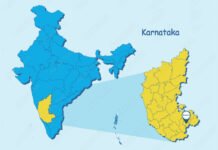
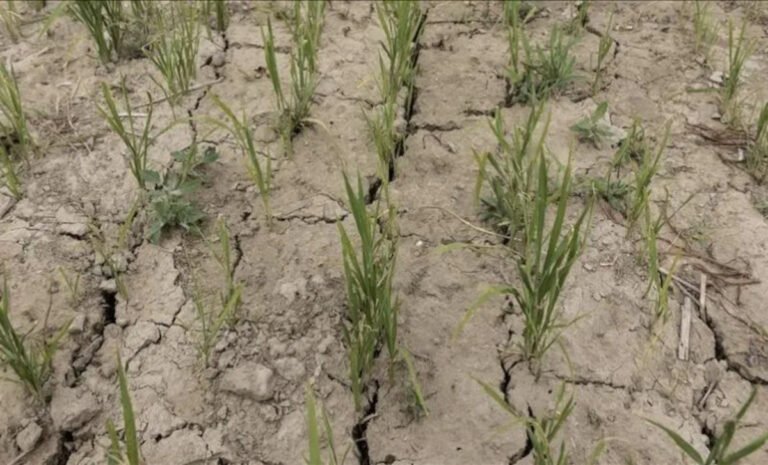
In the face of mounting climatic uncertainties, five districts in Assam—Kokrajhar, Barpeta, Dhubri, Baksa and Bongaigaon—have been officially declared as drought-hit by the State government in July. A prolonged rainfall deficit, reported to be over 40 percent below normal, has triggered distress across large swathes of farmland, leaving farmers grappling with crop losses, water scarcity, and a future fraught with uncertainty.
This declaration is not just a seasonal development; it is a symptom of a much deeper and long-ignored malaise—Assam’s broken irrigation ecosystem. The failure to provide water to farmlands even in a state blessed with a dense and complex river network, including the Brahmaputra, the Barak, and over 50 major tributaries, along with numerous wetlands and natural water bodies is emblematic of systemic rot, administrative neglect, and missed opportunities. As weather patterns grow more erratic due to climate change, this neglect is becoming costlier by the year.
A Deficit That Runs Deeper Than Rainfall
The rainfall deficit affecting at least 14 districts in the State is significant. In July 2025, the India Meteorological Department (IMD) noted a shortfall of over 60 percent in upper Assam districts like Dibrugarh and Sivasagar, labelling the situation as “large deficient.” In these areas, key phases of cultivation for winter paddy (sali) have been delayed or altogether suspended.
While five districts were formally declared as drought-affected, government data also acknowledges that the rainfall shortage in nine additional districts threatens to reduce agricultural yield across the State. Chief Minister Himanta Biswa Sarma, while announcing the drought status on July 15, emphasized that relief measures would be extended to affected farmers under the State Disaster Response Fund (SDRF).
However, for thousands of cultivators, relief aid offers cold comfort in the absence of water, and with irrigation systems either non-existent or non-functional, they find themselves at the mercy of a failing monsoon.
Ground Realities: Protests and Apathy
The drought situation has sparked widespread anger among farmers and student groups. On July 19 the All Assam Students’ Union (AASU) staged protests in Dibrugarh town, condemning the failure of the Irrigation Department. Farmers alleged that most minor irrigation systems, including shallow tube wells and lift irrigation units, had collapsed or been idle for years.
AASU leaders accused the State government of being reactive rather than proactive and blamed decades of poor planning and politicization of irrigation projects for the current crisis. Their concerns echo loudly across rural Assam, where farmers continue to depend on erratic rainfall in a state that ought to have been a model for water resource management.
The Chronic Failure of Assam’s Irrigation System
Too little, too late!
Despite repeated announcements and large infusions of Central funds, Assam’s irrigation system remains shockingly inadequate.
In a media report published in The Sentinel in September 2023, the Irrigation Department acknowledged that of the 3,913 schemes in the State, 1,585 were non-functional. This means that barely 60 percent of officially listed projects were operational at the time, an alarming statistic for a state whose economy still hinges heavily on agriculture.
That same report, quoting the then Irrigation Minister Ashok Singhal, revealed that while Assam had an irrigation potential of approximately 11 lakh hectares, only about 5.9 lakh hectares were actually being served—a glaring mismatch between capacity and utilization.
Worse still, many of these “functional” schemes exist merely on paper. In remote areas, farmers speak of water channels that were dug and abandoned, electric pumps installed but never powered, and lift irrigation systems built in zones with no permanent water sources. These failures point not only to poor planning but to chronic corruption, lack of oversight, and absence of maintenance mechanisms.
A Master Plan with Little Mastery
In March 2022, the State government launched a 5-Year State Irrigation Master Plan (2022–27). It promised to raise irrigation coverage from 21.5 percent in 2022 to 52 percent by 2027. The plan included reviving defunct schemes, constructing new ones, adopting solar-powered shallow tube wells, and integrating GIS-based monitoring.
However, two years in, progress has been patchy. As of early 2024, the irrigation coverage stood at just over 24 percent, according to media report of September 2023. Despite claims of doubling irrigation capacity since 2015, actual field-level delivery remains inconsistent, especially in vulnerable regions like the western and lower Assam belts.
The government has touted the creation of an online monitoring portal for better transparency. However, multiple reports, including an editorial in The Assam Tribune in May 2024, observed that data entry remains erratic, project updates are outdated, and citizens have no access to real-time verification or complaint mechanisms.
The Missed Opportunity: Water Abundance, Infrastructure Scarcity
Assam is not a desert state; it boasts one of the richest networks of rivers and wetlands in India. The Brahmaputra and its tributaries crisscross the land, offering enormous potential for surface irrigation.
But this geographical blessing has not translated into infrastructural advantage.
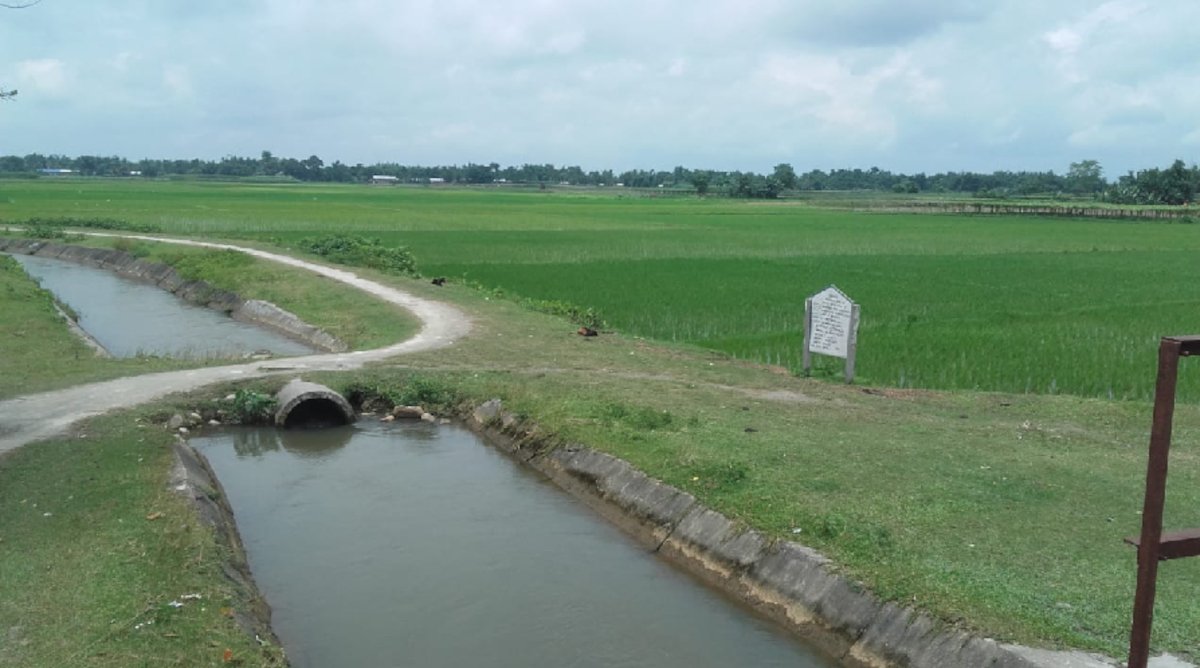
Experts argue that Assam should have pioneered models of flood-resilient and drought-mitigating water systems. Yet, even today, a significant portion of agricultural land remains dependent on rainfall. The State’s minor irrigation schemes are often too small, outdated, or built without understanding local topography. Canals are clogged. Pump sets are missing parts. Water doesn’t flow where it’s needed the most.
In contrast, several arid states namely, Rajasthan, Gujarat, even Maharashtra, have made significant strides using solar pumps, rainwater harvesting structures, check dams, and farm ponds, with community participation and decentralised governance. Assam, despite better water availability, remains far behind.
The Real Cost: The Farmer’s Story
In Barpeta, 54-year-old farmer Naba Kalita laments the drying paddy fields. “This is the third year we’ve had to wait for the rains to start sowing. But this year it just hasn’t come. The nearest irrigation canal hasn’t carried water in five years,” he was quoted by an local news channel.
In Kokrajhar’s Dotma area, tribal farmers say water pumps distributed under a Central scheme have been lying unused because electricity supply is unreliable and diesel is unaffordable. Many have abandoned hopes of a second cropping cycle altogether.
These stories are not exceptions. In fact they are the norm in districts now declared drought-hit. For these farmers, the real drought is one of institutional care and accountability.
What Needs to Be Done
1. Immediate Measures
Urgent repairs and revival of non-functional irrigation projects in the five drought-hit districts.
Deployment of solar-powered pumps and portable water tanks in severely affected paddy belts.
Real-time monitoring of crop damage, followed by swift compensation disbursals via SDRF and PMFBY insurance.
2. Medium-Term Solutions
Expansion of minor irrigation schemes like farm ponds, percolation tanks, and rainwater harvesting units.
Subsidies for decentralized solar pumps and drip irrigation in water-stressed regions.
Strengthening of district-level irrigation departments with accountability audits.
3. Long-Term Vision
Full implementation of the State Irrigation Master Plan 2022–27, with annual performance audits.
Public access to the irrigation monitoring portal, with regular data updates.
Integration of climate-resilient water management practices through cooperation with institutions like NECTAR and IIT Guwahati.
Conclusion
The current drought in Assam is not just a climatic event—it is a human-made disaster brought on by years of inaction. With climate change no longer a future possibility but a daily reality, the State must shift from a reactive to a resilient model of agriculture.
An efficient and equitable irrigation system is not a luxury—it is a lifeline. And that lifeline has frayed dangerously thin for the farmers of Kokrajhar, Barpeta, Dhubri, Baksa and Bongaigaon.
If this crisis doesn’t force a course correction, what will?
India and England are set to lock horns today at Old Trafford in Manchester for the fourth Test of the Anderson–Tendulkar Trophy. With England leading the five-match series 2–1, this encounter holds massive importance: a win for England would seal the series, while India must win to bring the decider into play.
India enter this fixture weakened by injuries. Key bowler Akash Deep has been ruled out with a groin strain, and Nitish Kumar Reddy is unavailable for the remainder of the tour due to a knee issue. In response, selectors may award a Test debut to Anshul Kamboj or choose Prasidh Krishna to reinforce the pace department. Wicketkeeper Rishabh Pant is expected back in the side, helping shore up the batting lineup.
England have made one change to their XI by bringing in left-arm spinner Liam Dawson, replacing injured Shoaib Bashir. The rest of their squad remains consistent, reflecting stability and confidence in familiar combinations.
Their aggressive “Bazball” strategy under Ben Stokes and coach Brendon McCullum continues to shape their mindset and on-field approach
The pitch at Old Trafford is generating debate among experts. While India’s captain Shubman Gill feels it might offer extra bounce, former England players like David Lloyd and Michael Vaughan predict a flatter surface with less pace but potential for spin later in the match.
The expectation is that fast bowlers will have the upper hand early on before conditions settle into batting-friendly terrain.
Weather conditions could play a significant role throughout the Test. Light rain and overcast skies are forecasted, which may favour seam bowlers, particularly early in the innings.
First-innings scores around 350-plus are anticipated, with test veterans suggesting the team winning the toss may opt to bowl first, although no side has won a toss and bowled first to win at Old Trafford.
With tensions high and national pride on the line, this fourth Test could define the tour. India is striving for consecutive Test wins in England for the first time since 2007 by taking both remaining matches.
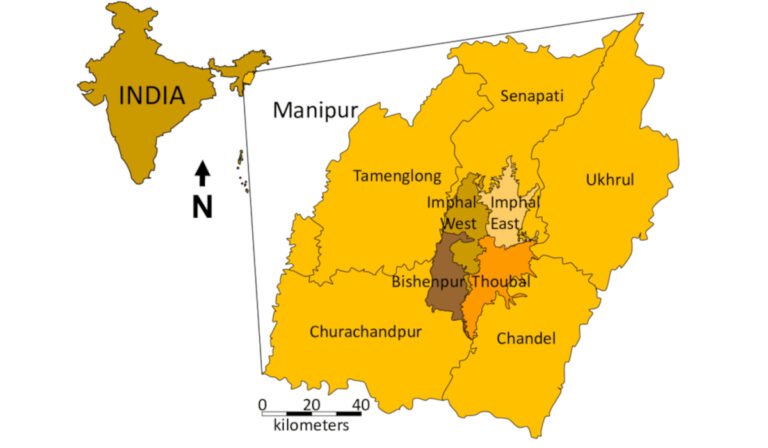
In a major anti-narcotics operation, security forces in Manipur seized a massive consignment of drugs valued at approximately ₹76 crore. The bust took place on the Barak River, where a joint team comprising personnel from Assam Rifles, Manipur Police, and the CRPF intercepted a suspicious boat.
The search operation led to the recovery of 616 soap cases filled with heroin, alongside nearly 50,000 methamphetamine tablets, according to officials familiar with the operation. The seizure is one of the largest in the state this year and marks a significant setback for drug traffickers operating in the border regions.
Authorities have detained one individual from Silchar in connection with the seizure. Further investigation is underway to determine the network involved and whether the contraband was intended for transit through other northeastern states.
The bust underscores ongoing concerns about drug trafficking along riverine and border routes in Manipur, a state that has increasingly become a corridor for the smuggling of synthetic and opiate-based substances.
A temporary ban on the use of drones was imposed in key parts of Dibrugarh district as Assam Chief Minister Himanta Biswa Sarma began a four-day visit on Tuesday. The restriction, enforced under the provisions of the Bharatiya Nagarik Suraksha Sanhita (BNSS) 2023, is in effect from 6 AM on July 22 until 6 PM on July 24.
The no-drone directive applies to sensitive zones including the Assam Medical College area, the University Campus, CM’s official guest house, and the Dibrugarh Airport vicinity. District authorities stated that the order was issued to ensure the Chief Minister’s security and maintain public safety during his engagements.
Local police have been instructed to monitor airspace violations and act promptly against any unauthorized drone activity. While drone use for commercial and recreational purposes has increased in Assam, such restrictions during VIP movements are being treated with high priority under new security protocols.
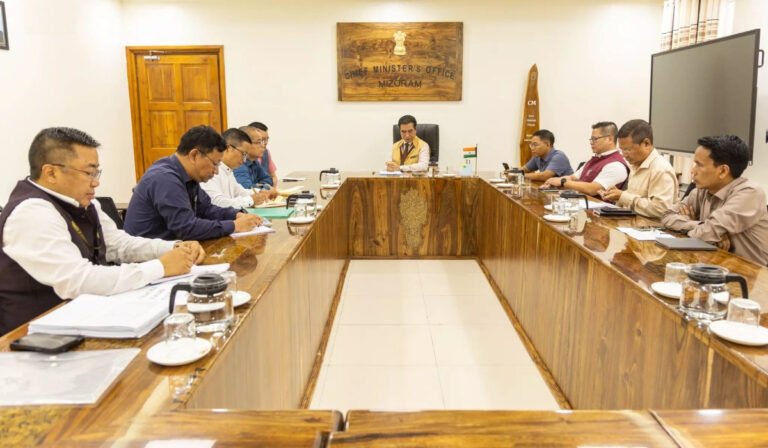
In a virtual meeting of the national handloom task force, Mizoram Chief Minister Lalduhoma spotlighted the Northeast’s central role in India’s handloom industry, noting that the region accounts for nearly 60% of the country’s total handloom workforce. The meeting, which saw participation from key policymakers and Union ministers, aimed to chart a path forward for the growth of India’s handloom sector.
During the discussion, Lalduhoma called for stronger central-state coordination to unlock the untapped potential of traditional weaving communities scattered across the Northeast. He stressed that the region’s cultural richness and skilled craftsmanship offer a solid foundation for scaling up sustainable textile production.
A strategic roadmap was approved in the session, focusing on three key pillars—skill development for artisans, standardization of handloom products, and nationwide branding initiatives. The government plans to adopt a cluster-based development model, which would allow local weaving hubs to receive targeted support for design innovation, quality control, and market access.
Officials said that the initiative is designed not only to preserve indigenous weaving traditions but also to make handloom products more competitive in both domestic and international markets. The roadmap also includes provisions for digital integration and e-commerce partnerships to boost the income of rural artisans.
The move comes at a time when the handloom sector, especially in the Northeast, is seeking stronger support post-pandemic. Stakeholders believe that this renewed attention could significantly enhance livelihoods and promote cultural exports from the region.
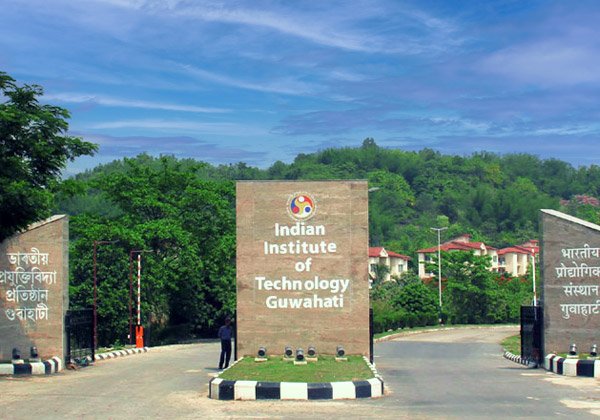
A wave of discontent swept through the Indian Institute of Technology (IIT) Guwahati as students staged massive protests on Tuesday, demanding a rollback of what they called an “exceptionally high” increase in fees. The chorus of “Kam karo, kam karo, fee hike kam karo” echoed across the campus as research scholars and postgraduate students gathered in large numbers to register their protest.
The unrest began with concerns among PhD and MTech students over a sudden surge in academic fees. Undergraduate students pursuing BTech programs have also been impacted by the revised fee structure for the July-November semester. What started as a modest demonstration on Monday soon intensified, with students rallying overnight to garner broader support.
At the heart of the discontent is an open house session held on July 17, where the institute’s director, along with deans of student and academic affairs and senior administrative officials, had engaged with the student community. According to the students, the administration had then indicated a willingness to consider their concerns regarding the new fee structure.
“During the open house, the administration said they wanted to hear us out,” said a PhD student, requesting anonymity. “But it now seems like the meeting was more of a delaying tactic. We were told there would be a reconsideration of the revised fee before registrations began, but nothing changed. And today (July 22), on the day of semester registration, we were denied access unless we paid the full revised fee.”
As per multiple accounts, students attempting to register on Tuesday found themselves blocked by departmental offices for not paying the updated fee amount. With no official clarification or follow-up communication from the administration since the open house, students felt blindsided.
“This isn’t just about money—it’s about trust,” said another protesting student. “We engaged with the administration in good faith, but when the promised dialogue led to no change and we were abruptly barred from registering, students had no option but to take to the streets.”
The protests are drawing participation across departments, with many questioning the transparency of decision-making and calling for a clear and inclusive process when it comes to fee revisions, especially given the financial strain many students face.
As of now, there has been no official response from the IIT Guwahati administration addressing the unfolding situation or indicating whether the fee structure will be reviewed in light of the protests
Following widespread protests and a public interest litigation taken up by the Gauhati High Court regarding the hazardous condition of several highways in Mizoram, the state government has now sanctioned ₹1.85 crore for urgent repairs of three critical road stretches.
The decision comes in the wake of growing public dissatisfaction over deteriorating road infrastructure, which had prompted citizens and civil society groups to approach the court earlier this month. The Gauhati High Court had subsequently issued a notice to the Mizoram Public Works Department, seeking a detailed action plan to improve the condition of national and state highways in the state. In particular, the petition highlighted the dangerous state of roads such as the Aizawl-Seling, Lunglei-Saiha, and Kolasib-Bairabi stretches, where regular landslides, potholes, and road cave-ins had led to multiple accidents and severely disrupted travel and trade.
As a direct response to the mounting pressure and judicial intervention, the state government approved emergency funds on Monday for immediate repair work. According to officials in the Public Works Department, the ₹1.85 crore allocation will be distributed across three priority areas identified as most urgent following recent site inspections.
PWD engineers have already been directed to begin work on landslide clearance, slope reinforcement, and patch repairs on these routes. Temporary diversion roads and enhanced drainage systems are also part of the short-term strategy to prevent further damage during the ongoing monsoon season.
Chief Minister Lalduhoma, while addressing reporters in Aizawl, said the government is committed to restoring safety and accessibility along Mizoram’s most vital road corridors. “We acknowledge the concerns raised by citizens and the court. This fund is just the beginning — we are in the process of submitting a long-term proposal for infrastructural upgrades to the Centre,” he said.
In addition to immediate repairs, the state is also preparing to submit a ₹150 crore proposal to the North Eastern Council and the Ministry of Road Transport and Highways for more extensive road improvements in the post-monsoon phase.
Meanwhile, the Gauhati High Court has listed the matter for further hearing next month and has directed the Mizoram government to submit a progress report detailing work carried out using the sanctioned emergency funds