NIA Arrests Two More in ULFA(I) IED Conspiracy Case in Assam

0

The National Investigation Agency (NIA) has arrested two more individuals in connection with an IED conspiracy case linked to the banned militant group United Liberation Front of Asom (Independent), or ULFA(I). The arrests were made on July 17 and the accused have been identified as Bhargob Gogoi and Sumu Gogoi, both residents of Dibrugarh, Assam.

According to the NIA, the two were involved in a larger plot to carry out multiple blasts across Assam during the Independence Day celebrations in August last year. One of the explosive devices was discovered near the Dispur Last Gate area in Guwahati. The agency stated that the intent behind the conspiracy was to create terror and threaten the sovereignty and security of the country.

These arrests bring the total number of people taken into custody in this case to three. The investigation into the case was initially handled by local police and later handed over to the NIA in September 2024. The NIA had already filed charges against ULFA(I) chief Paresh Baruah and other operatives for their alleged involvement in orchestrating the plot.

The ULFA(I), a separatist group seeking an independent Assam, has been responsible for several terror-related activities in the past. Its leader, Paresh Baruah, is believed to be operating from outside India and continues to lead the group despite government crackdowns.

The recent arrests come amid heightened security measures in the state, particularly in the run-up to national events such as Independence Day. Authorities have been on high alert, and multiple arrests have been made in recent weeks to prevent any disruption or terror activities by insurgent groups in the region.

BJP Slams Rahul Gandhi Over Remarks on Assam CM

The Bharatiya Janata Party (BJP) on Thursday strongly criticized Congress leader Rahul Gandhi for his reported remarks against Assam Chief Minister Himanta Biswa Sarma. Addressing the media in New Delhi, BJP spokesperson Syed Zafar Islam defended the Assam Chief Minister, saying that Sarma became the Chief Minister through the people’s democratic mandate and that the public has confidence in the BJP’s model of governance.

Islam further alleged that the so-called “Rahul Model” has failed in Congress-ruled states such as Himachal Pradesh, Karnataka, and Telangana. He claimed that wherever the BJP is in power, people appreciate its governance, which is in contrast to what he described as the poor performance of the Congress-led governments.

The BJP’s response came amid Rahul Gandhi’s ongoing campaign trail, during which he has been attacking BJP-ruled states, including Assam. Though the exact content of Gandhi’s remarks was not cited by the BJP, the party interpreted his comments as an attack on the leadership and credibility of the Assam Chief Minister.

Himanta Biswa Sarma and Rahul Gandhi have had a longstanding political rivalry. Sarma was once a senior Congress leader before he switched to the BJP in 2015, a move that significantly boosted the BJP’s influence in the northeastern region. Since joining the BJP, Sarma has become a key political figure in Assam and a vocal critic of the Congress, particularly Rahul Gandhi.

The latest exchange reflects the rising political tensions between the BJP and the Congress as both parties gear up for upcoming elections.

RGU Professor Sambhu Prasad Named Official for Indian Universities Athletics Team

Prof. Sambhu Prasad from Rajiv Gandhi University, located in Doimukh, Arunachal Pradesh, has been nominated as an official for the Indian Universities Athletics team participating in the FISU World University Games 2025. The nomination was announced on July 16 and is considered a significant recognition of his contributions to university-level athletics.

The FISU World University Games, an international multi-sport event for university athletes, will be held later this year in Germany. Prof. Prasad’s selection reflects his long-standing commitment to sports education and the development of athletic talent at the university.

As a faculty member in the Department of Physical Education, Prof. Prasad has played a vital role in nurturing student athletes and promoting competitive sports in Arunachal Pradesh and beyond. His inclusion in the national delegation is being celebrated by the university community as a proud moment for the institution.

This nomination also highlights Rajiv Gandhi University’s growing presence in the national sports landscape and its contribution to fostering excellence in physical education and athletics.

Pahalgam Attack: US Designates TRF as Terror Group in Boost to India’s Counter-Terror Efforts

In a significant development for India’s counter-terrorism efforts, the United States has officially designated The Resistance Front (TRF) as a global terrorist organization. The move follows the recent terror attack in Pahalgam, Jammu and Kashmir, and is seen as a diplomatic victory for India, which has long pushed for international recognition of Pakistan-backed groups operating in the region.

The designation by the US State Department places TRF on its list of Foreign Terrorist Organizations, subjecting the group to sanctions and blocking its access to international resources. Individuals associated with TRF will also face travel bans and restrictions under American law.

TRF, considered a proxy of the banned Lashkar-e-Taiba (LeT), has been involved in a series of targeted killings, attacks on security forces, and attempts to disrupt peace in Jammu and Kashmir. The group gained notoriety in recent years for using online platforms to claim responsibility for attacks while maintaining a shadowy organizational structure.

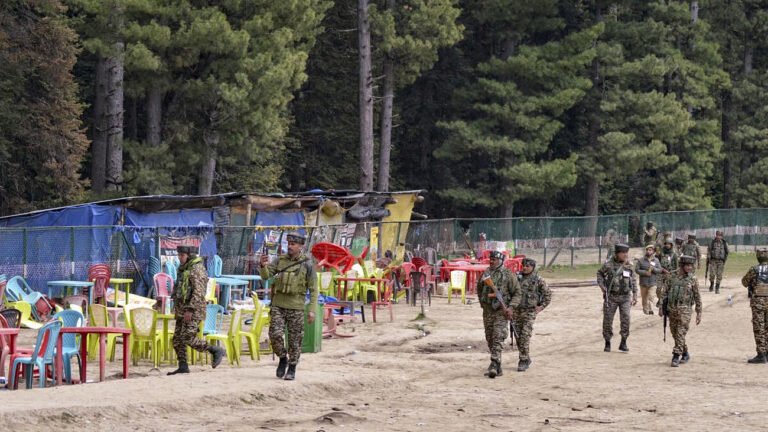
The decision comes shortly after the Pahalgam attack, in which militants opened fire on a convoy of security personnel, leading to casualties and heightening tensions in the region. Indian intelligence agencies have maintained that TRF is part of a larger network supported by elements across the border to destabilize the Kashmir Valley.

India has welcomed the US decision, calling it a step forward in global efforts to combat terrorism and isolate groups that threaten peace and security. Officials have stressed that international cooperation remains crucial to dismantling the financial and logistical networks that enable such organizations to operate.

The designation of TRF as a terrorist organization is expected to strengthen international pressure on Pakistan to act against groups operating from its soil and send a strong signal to other proxy outfits attempting to destabilize the region.

Nimisha Priya Execution Stayed, But Victim’s Family Refuses Pardon

0

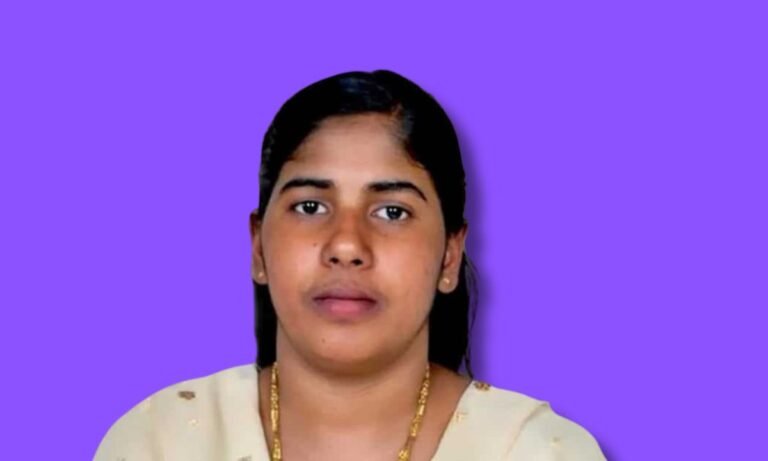
The scheduled execution of Kerala-born nurse Nimisha Priya in Yemen has been temporarily halted, offering a brief window for renewed negotiations. The stay, granted just hours before the execution on July 16, came after urgent appeals from Indian diplomats, religious leaders, and civil society groups.

Despite this reprieve, the outlook remains grim. The family of Talal Abdo Mahdi—the Yemeni national she was convicted of murdering—has categorically rejected all offers of blood money, a form of compensation permitted under Sharia law. In a public statement, Mahdi’s brother said, “blood cannot be bought,” demanding full retributive justice under Islamic law.

Background

Nimisha Priya, a trained nurse from Kerala, moved to Yemen in 2008 for better job prospects. She later opened a clinic with Talal Mahdi, a local Yemeni businessman, using forged documents in his name due to local licensing laws. The business relationship reportedly turned abusive, and Priya alleged she was physically assaulted and denied access to her passport by Mahdi, preventing her from returning to India.

In 2017, she and an associate attempted to sedate Mahdi in an effort to retrieve her documents. The plan went tragically wrong, and Mahdi died due to an overdose. His body was later found dismembered and hidden in water tanks. In 2018, a Yemeni court convicted her of premeditated murder, sentencing her to death.

Since then, numerous Indian organizations, including the Save Nimisha Priya International Action Council, have lobbied for her release, proposing to pay blood money if the victim’s family agrees. India’s Grand Mufti and the Ministry of External Affairs have also been involved in behind-the-scenes efforts.

Current Status

With no new execution date announced, time is critical. Under Yemeni law, only the victim’s family has the power to grant clemency in exchange for blood money. If they remain opposed, the death sentence could still be carried out at any time.

The case continues to stir intense public emotion in India, with appeals to both humanitarian and diplomatic channels to save Nimisha Priya’s life.

India–US Trade Pact ‘Very Close,’ Says Trump Ahead of August 1 Tariff Deadline

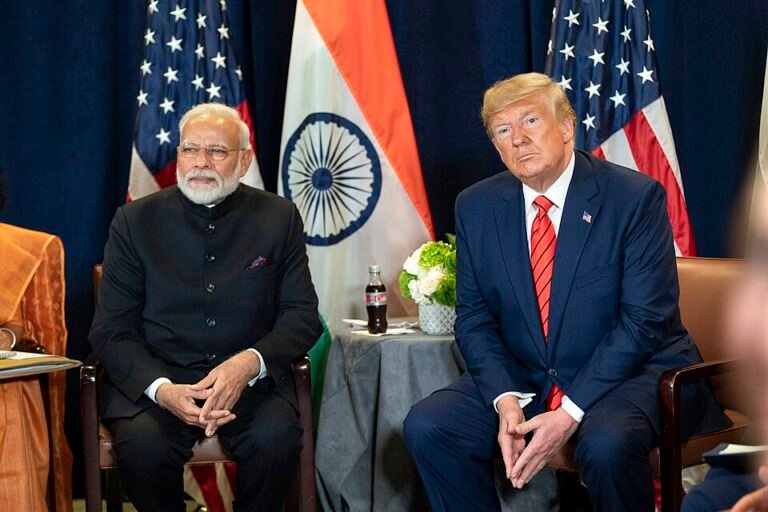
ndia and the United States are on the verge of finalizing a key trade agreement, according to U.S. President Donald Trump, who stated in an interview on July 16 that both nations are “very close” to concluding a deal. The agreement, reportedly modeled after the recent U.S.–Indonesia trade pact, is expected to be announced before the August 1 tariff deadline.

Talks have gained momentum in recent weeks as both sides work to avoid a new round of reciprocal tariff hikes that could affect billions in bilateral trade. While details of the agreement are still under wraps, sources suggest that the deal would focus on reducing import duties and expanding market access for U.S. companies in key Indian sectors including steel, automobiles, agriculture, and electronics.

An Indian trade delegation led by Chief Negotiator Rajesh Agrawal is currently in Washington to finalize terms. “Negotiations are progressing with mutual respect and an eye on national interest,” said a senior official familiar with the discussions.

For India, the stakes are high. Exporters across industries such as apparel, seafood, and gems & jewellery are closely watching developments, with pending U.S. orders hinging on the outcome of the talks. Meanwhile, domestic agricultural groups have raised concerns, urging the government to exclude sensitive sectors like dairy and grains from the final deal.

The U.S. administration is reportedly offering tariff reductions of up to 20%, similar to concessions given to Indonesia earlier this month. “India is a major trading partner, and this agreement will open new doors for American businesses while respecting Indian priorities,” a U.S. official said on condition of anonymity.

The agreement, if finalized in time, would mark a significant shift in bilateral trade dynamics and could pave the way for a broader trade partnership in the future.

With just two weeks remaining until the self-imposed deadline, all eyes are now on New Delhi and Washington for an official announcement.

Gauhati High Court Takes Up Petition on Hazardous Conditions of Key Highways in Mizoram

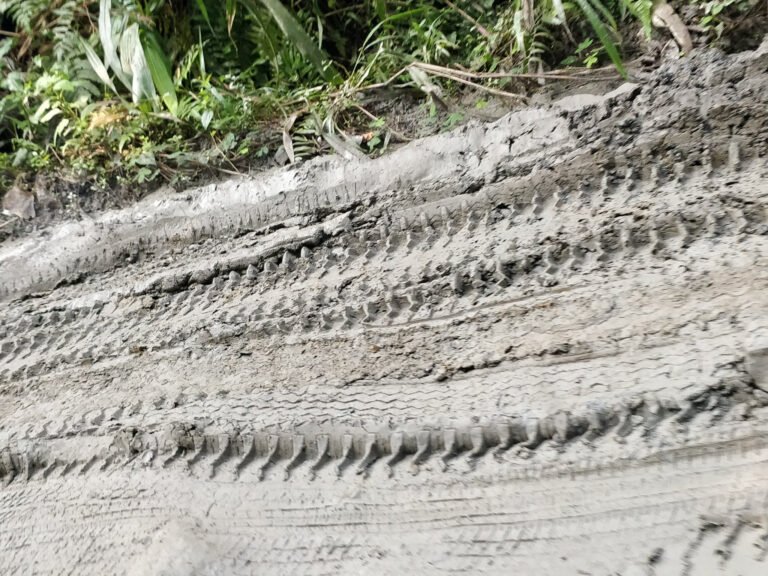
The Gauhati High Court has admitted a Public Interest Litigation (PIL) seeking urgent intervention over the poor condition of National Highway 6 (NH-6) and National Highway 306 (NH-306) in Mizoram. The PIL, filed by a resident of the state, has drawn attention to the crumbling infrastructure and the alleged inaction of the concerned authorities in maintaining two of the most vital lifelines connecting Mizoram to the rest of the country.

A division bench of the court has issued notices to the Union Ministry of Road Transport and Highways (MoRTH), the National Highways and Infrastructure Development Corporation Limited (NHIDCL), and the Mizoram state government. The court observed that the matter raised serious concerns regarding the right to safe travel and accessibility, especially for people residing in remote areas of the state.

NH-6 and NH-306 serve as key arterial roads linking Mizoram with Assam and Tripura. NH-6, which passes through the Jowai–Khliehriat–Silchar route, is especially critical for trade and the movement of essential goods. However, reports and citizen complaints have consistently highlighted severe potholes, frequent landslides, washed-away stretches, and inadequate repair work.

The petitioner contended that the highways have turned into death traps, particularly during the monsoon season, with vehicles regularly getting stuck or meeting with accidents. In the PIL, it was noted that “the roads are in such a condition that patients, schoolchildren, and even ambulances find it difficult to travel. Inaction by the authorities is a denial of basic rights.”

In its initial hearing, the Gauhati High Court stated, “The state and central authorities have a legal and moral responsibility to ensure that roads in hilly and border states are maintained to a standard that ensures safety, dignity, and connectivity.”

According to residents, the problem is not new but has worsened significantly in recent years. Local transporters and drivers have often voiced their frustration, citing frequent breakdowns and rising maintenance costs. A truck driver from Aizawl, who regularly plies between Mizoram and Assam, said, “Sometimes it takes us two to three days to cross what should be a six-hour stretch. We risk our lives and goods every time.”

Meanwhile, NHIDCL, which is responsible for executing highway infrastructure projects in the Northeast, has maintained that regular maintenance is being carried out and that monsoon-related disruptions are being addressed. However, locals argue that the pace of work is slow and often substandard.

Civil society groups and student organisations have also raised the issue multiple times over the past few years. The Mizo Zirlai Pawl (MZP), a prominent student body, has staged several protests and written memorandums demanding immediate attention to the dilapidated condition of national highways.

The court has fixed a date in August for the next hearing and has directed all respondents to submit a detailed report on the current condition of the roads and the timeline for their repair.

The PIL is seen as a significant step toward accountability, with hopes that judicial intervention will compel the relevant agencies to speed up repair and maintenance work. For a state like Mizoram, where connectivity is not just about convenience but survival, the outcome of this case could have far-reaching implications.


Manipur’s Noney District Hit by Record 225 mm Rainfall; Heavier Than Cyclone Remal, Says IMD

A torrential overnight downpour lashed Manipur’s Noney district on Tuesday night, triggering severe flash floods and landslides across the Khoupum valley. The India Meteorological Department (IMD) confirmed 225 mm of rainfall, making it the highest recorded in Manipur’s history, surpassing even Cyclone Remal’s intensity.

The heavy rain caused the Khoupum Dam to overflow, inundating paddy fields and flooding low-lying areas. Several homes were damaged in Khoupum Tampak, while landslides disrupted vital routes like the Old Cachar Road (Tongjei Maril) and parts of National Highway 37, cutting off connections to Jiribam and Assam.

Local MLA Dinganglung Gangmei urged commuters to avoid the affected routes, stating that clearing operations were in progress and safety remained a top priority.

Videos of the deluge have flooded social media, showing the sheer force of the water gushing through the valley. Authorities remain on high alert, with disaster response teams deployed. No casualties have been reported yet, but fresh rainfall warnings are still in place.

This comes just weeks after June floods impacted 1.65 lakh people and caused widespread destruction in Manipur.

Bangladesh Accuses India of Violating Border Agreements, Continuing ‘Push‑Ins’

0

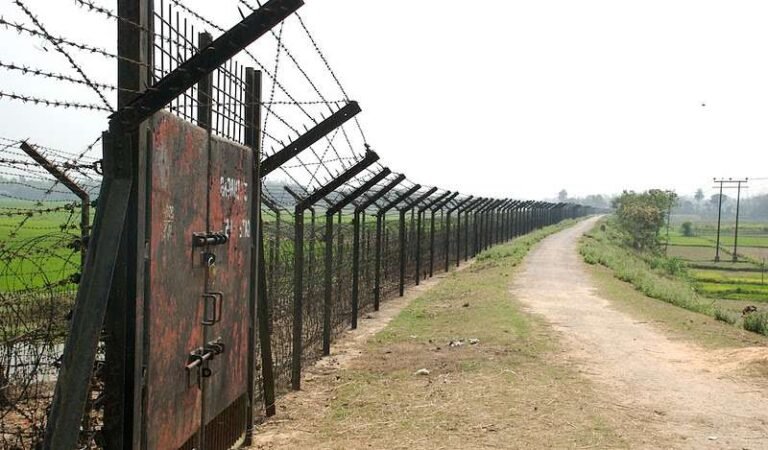
Bangladesh has accused India of repeatedly violating bilateral border agreements by forcibly pushing individuals into its territory without following proper legal procedures. According to Bangladeshi officials, India’s Border Security Force (BSF) has been carrying out these actions without verification or repatriation protocols, often dropping off individuals at night, blindfolded, and without documentation.

The Bangladeshi Foreign Affairs Adviser, Md Touhid Hossain, stated that these push-ins breach the 1975 Joint Guidelines and the Coordinated Border Management Plan that both countries are committed to. He emphasized that such actions bypass the established repatriation system, which requires verification of nationality and mutual agreement.

Border Guard Bangladesh (BGB) Director General Maj Gen Mohammad Ashrafuzzaman Siddiqui added that some of the individuals pushed into Bangladesh held Indian citizenship or UNHCR refugee status, including Rohingya refugees. He called these acts serious violations of human rights.

Bangladesh has filed multiple diplomatic protests with the Indian High Commission in Dhaka and is continuing to verify the nationality of those sent across. Since early May, BGB has reported several hundred push-in cases, with many individuals stranded near the border and later rescued by local residents.

India, on the other hand, maintains that it is deporting undocumented migrants, but Bangladeshi officials argue that deportation must follow legal processes—not unilateral actions. They warn that such incidents are straining bilateral ties and have urged India to stop the practice immediately.

While Bangladesh has not taken any retaliatory steps so far, its government says all diplomatic options remain open. Meanwhile, humanitarian groups are urging both nations to uphold international law and ensure that individuals are not subjected to statelessness or forced displacement.

Rahul Gandhi Slams CM Himanta Biswa Sarma at Chaygaon Rally, Predicts Arrest for Corruption

Congress leader Rahul Gandhi launched a fierce attack on Assam Chief Minister Himanta Biswa Sarma during a party workers’ meeting in Chaygaon on Tuesday, accusing him of large-scale corruption and misuse of state resources. Speaking to a packed gathering, Gandhi alleged that Sarma was “behaving like a raja (king)” and warned that he would soon “land in jail for corruption.”

“This is not a Congress prediction. It is the voice of the people of Assam. Mark my words, he will be arrested,” Gandhi said, accusing the BJP government in Assam of handing over land and public resources to corporate houses like Adani and Ambani.

Gandhi alleged that Sarma and his family had become the “agents of corporates” and were “stealing Assam’s resources day and night.” He particularly criticized the government for transferring land meant for the people for use in solar parks and resorts allegedly tied to big businesses.

Voter Roll Manipulation Fears Raised

In his address, Gandhi also raised concerns about potential manipulation of the voter list in Assam, suggesting that similar tactics were already in play in other BJP-ruled states like Maharashtra and Bihar. He urged Congress workers to remain vigilant and ensure that the voices of the people are not suppressed.

Himanta Biswa Sarma Hits Back

Reacting sharply, CM Himanta Biswa Sarma dismissed Gandhi’s remarks as “recycled” and lacking substance. In a post on X (formerly Twitter), Sarma wrote, “Rahul Gandhi visited Assam solely to criticise me, but ended up boosting my political stature. He should worry more about the criminal cases he is out on bail for.”

The Assam CM also mocked Gandhi’s accusations by questioning their credibility and reiterating that no evidence of wrongdoing had been proven against him.

Congress Shows Unity

The Chaygaon event also featured Congress president Mallikarjun Kharge, who joined Gandhi in attacking the BJP government and lauded the leadership of Gaurav Gogoi in Assam. The leaders urged party workers to prepare for the 2026 Assembly elections with renewed energy and unity.

Political Context

Gandhi’s visit to Assam is part of Congress’ efforts to rebuild its base in the Northeast ahead of the upcoming electoral cycle. The Chaygaon speech marks a significant escalation in the Congress-BJP rivalry in Assam, particularly around allegations of corruption and land mismanagement.

As the 2026 elections approach, political observers expect more sharp exchanges between the two parties as they battle for influence in one of the BJP’s strongholds in the Northeast