





Body of missing DU student from Tripura found in Yamuna: Delhi Police

Over a week after she was reported missing, the body of Sneha Debnath, a 19-year-old Delhi University student from Tripura, was recovered from the Yamuna River near the Geeta Colony flyover, Delhi Police confirmed on Tuesday. Her identity was confirmed by family members.

Sneha, who was pursuing a Mathematics degree at Atma Ram Sanatan Dharma College, hailed originally from Bhuratali village in Sabroom, South Tripura district, though her family has been living in Delhi for several years.

According to the police, she went missing on July 7 from her residence in Paryavaran Complex, following which her family filed a missing person’s complaint the same day. On July 9, an FIR was registered under Section 140(3) of the Bharatiya Nyaya Sanhita, which pertains to kidnapping or abduction.

The investigation took a critical turn on July 8, when a suicide note was discovered in Sneha’s room. The handwritten note, according to police sources, clearly stated that she had made the decision to end her life and that no one else was responsible for her actions. She reportedly described feeling like a burden, and expressed that her emotional pain had become unbearable.

The note, written in her handwriting, reflected deep mental anguish and a sense of isolation. Authorities believe this points to suicide, although the postmortem report is awaited to confirm the exact cause of death.

Police officials stated that further investigation is underway, and support has been extended to the family. The tragic incident has cast a spotlight on mental health challenges faced by young students, particularly those navigating academic and personal pressures far from home.

The college community and Tripura’s student groups in Delhi have expressed grief over the loss, with several calling for better counseling support systems for university students,
Violent Protests at Sabar Dairy as Gujarat Farmers Reject Milk Price Cut

0

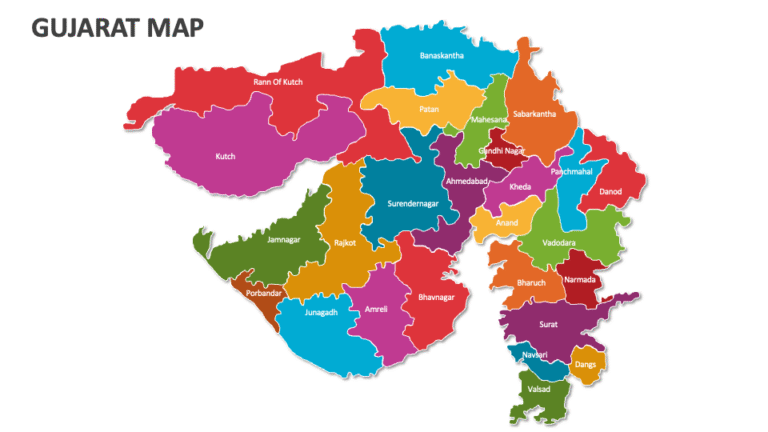
Tensions flared in Gujarat’s Sabarkantha and Aravalli districts as thousands of dairy farmers clashed with police outside Sabar Dairy, protesting a significant reduction in milk procurement bonuses. The unrest erupted after farmers claimed the bonus payout had been slashed from ₹602 crore last year to ₹500 crore this year—despite a rise in fodder and transportation costs.

On Monday, what began as a peaceful sit-in turned violent near the dairy’s gate in Himmatnagar, with farmers breaking barricades, vandalizing property, smashing CCTV cameras, and pelting stones at the police. In response, police used lathi charges and fired around 50 teargas shells to disperse the crowd.

At least three police personnel were injured, and four government vehicles were damaged. Authorities have filed FIRs against more than 1,000 farmers, with 47 protesters arrested so far. Among those named is a former legislator who reportedly supported the protest.

The farmers, many of whom dumped milk on roads as a symbol of their frustration, are demanding a 20–25% hike in procurement prices, citing skyrocketing input costs. “The bonus cut has come as a betrayal,” one protester said. “We’re not asking for charity—just fair compensation.”

Independent MLA Dhavalsinh Zala also voiced support for the farmers, questioning the police’s aggressive tactics and highlighting the financial stress faced by the rural dairy economy.

In defense, Sabar Dairy officials argued that the bonus cut was a result of ongoing financial audits, but stated that interim payments had already been made. They also noted that the cooperative’s long-term stability depends on financial prudence.

Meanwhile, a tragic note emerged from the protest when a farmer, Ashok Chaudhary, reportedly died of chest pain after returning home. Though his death was not linked directly to the violence, it added an emotional layer to the already charged situation.

The confrontation also hints at deeper political undercurrents, as elections for leadership positions in the Gujarat Cooperative Milk Marketing Federation (Amul) approach. The protests could influence the internal dynamics within Sabar Dairy and other cooperative bodies.

Authorities have since increased security in the region to prevent further flare-ups. Farmer unions, however, have warned of larger statewide protests if their demands are not met, signaling that the dispute may just be beginning.

Mamata Banerjee Marches in Rain, Accuses Centre of Targeting Bengali Migrants Amid Voter List Row

0

In a rain-drenched display of defiance in Kolkata, West Bengal Chief Minister Mamata Banerjee led a protest march on Wednesday, alleging systemic harassment of Bengali-speaking migrants in BJP-ruled states and accusing the Election Commission of India of facilitating voter suppression under the guise of electoral roll revision.

Her remarks come amid the Election Commission’s Special Intensive Revision of voter lists in West Bengal, a state gearing up for Assembly elections next year. Banerjee has claimed that the exercise is a covert attempt to implement the National Register of Citizens (NRC) and disenfranchise poor and migrant voters.

“People whose names are not on the voter list might be sent to jail,” she warned, urging citizens to verify their names even if it meant skipping work. “When the revision starts, leave everything and check the list. Your name missing could have consequences.”

Allegations of Migrant Targeting

The Trinamool Congress chief sharpened her attack on the BJP-led central and state governments, accusing them of unjustly targeting Bengali migrant workers in states like Odisha, Assam, and Delhi. “They are calling Bengalis Rohingyas. Rohingyas are in Myanmar, not here. BJP should be ashamed,” she declared.

According to Banerjee, nearly 22 lakh Bengali-speaking migrant workers face harassment across various states. She cited a case from Assam, where a Bengali farmer received a Foreigners’ Tribunal notice, and other recent instances of eviction and detention in Delhi and Odisha.

“I urge all our workers outside Bengal to come back. You will be safe here. West Bengal is still a part of India,” she said during the march, framing the situation as a systemic attack on Bengali identity and dignity.

Countering Infiltration Allegations

In response to BJP’s accusations that her government protects illegal Bangladeshi immigrants, Banerjee countered, “The border is under the Home Ministry. Why don’t they stop infiltrators if it’s such a concern?”

She dismissed BJP’s proposal to verify voter identities using the 2002 electoral rolls, pointing out that the population has changed significantly over the years due to deaths and births.

BJP Hits Back

Leader of Opposition Suvendu Adhikari was quick to counter Banerjee’s claims, accusing her of using “Bengali asmita” (identity) as a political smokescreen to cover up corruption and misgovernance.

“If she truly cared about Bengalis, why has her government failed to address the plight of thousands of unemployed teachers and job seekers protesting in the streets of Kolkata?” Adhikari asked. He also questioned the hiring of “outsiders” in the state administration, alleging that loyalty had been prioritized over merit.

“Everyone understands that her politics of Bengali identity is just a way to divert attention from a mountain of corruption,” Adhikari posted on X (formerly Twitter).

Political Battlelines Drawn

The row comes just months ahead of the crucial 2026 Assembly elections, with the voter list controversy likely to become a flashpoint between the Trinamool Congress and the BJP. The TMC appears poised to double down on its narrative of “outsider interference,” while the BJP is sharpening its focus on corruption, governance failures, and illegal immigration.

As identity politics takes center stage, Wednesday’s march may mark the start of a high-voltage election season in West Bengal.

Arunachal Governor, CM Emphasize Youth Empowerment for ‘Viksit Arunachal’ Vision

In a renewed push toward sustainable and inclusive development, Arunachal Pradesh Governor KT Parnaik has called for industry-linked skill development and entrepreneurship opportunities to prepare the state’s youth for the national goal of Viksit Bharat. Speaking at a presentation by the Confederation of Indian Industry (CII) on Tuesday, the Governor emphasized that empowering young Arunachalees is critical to realizing a “Viksit Arunachal”.

“Arunachal’s youth are talented and determined. They only need the right exposure and opportunities,” said Parnaik, urging the state to leverage Central and state government schemes through targeted training, financial support, and institutional partnerships.

He proposed the creation of a dedicated institute for skill development and entrepreneurship to bridge the gap between talent and opportunity. Citing the success of similar models across India, the Governor expressed optimism that collaboration with organizations like CII could pave the way for large-scale impact.

“With CII’s experience and national network, we can help our youth dream bigger and contribute actively to the state’s progress,” he added.

An official statement from the Raj Bhavan reinforced this focus on self-reliant growth, underscoring the need to embrace technology, private investment, and bold long-term initiatives to unlock Arunachal’s full potential.

Governor Parnaik and Chief Minister Pema Khandu’s administration are aiming to equip the next generation with market-ready skills in areas like agro-industry, clean energy, tourism, and rare-earth mining—sectors where Arunachal has a comparative advantage.

The initiative reflects a broader strategic shift in Arunachal’s development approach—from infrastructure-led growth to human capital investment, with youth at the heart of the vision for a resilient and self-sustaining future.

Assam Becomes India’s First State to Enter Crude Oil Production as Direct Stakeholder

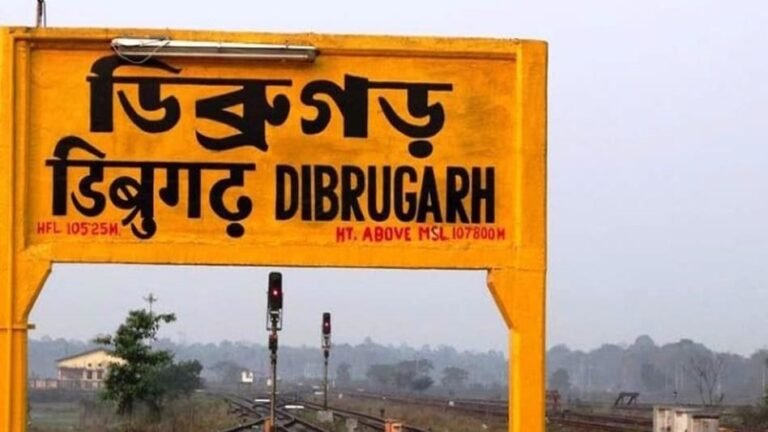
In a landmark development for India’s energy sector, Assam is set to become the first state government in the country to directly produce crude oil, moving beyond the traditional role of resource provider to an active equity stakeholder. This follows a successful hydrocarbon discovery at the Namrup Borhat-1 well in Dibrugarh district, where the state holds a “significant stake” in partnership with Oil India Limited (OIL).

Chief Minister Himanta Biswa Sarma hailed the development as a “proud moment” for Assam and a major leap forward in energy security and economic resilience. In a post on X, he stated:

“This discovery makes Assam the first state govt to be a direct oil producer, makes exploration efforts successful, empowers Assam with revenue & royalty, and ensures steady availability of energy for the country.”

From Royalties to Revenues

Assam has long been at the heart of India’s oil narrative, having hosted the country’s first oil well at Digboi over a century ago. Today, it ranks third in domestic crude oil production—after Rajasthan and Gujarat—having produced 4,361 thousand metric tonnes (TMT) in 2023–24 alone.

Between 2021–22 and 2023–24, India produced 88,223 TMT of crude oil. Of this, Assam contributed 12,518 TMT, cementing its place as a key onshore player. But until now, the state’s role had been limited to collecting royalties on oil extracted by public and private sector firms.

With the Borhat-1 discovery, Assam now has direct skin in the game—entitled not only to royalties but also a share of the profits (and risks) that come with exploration and production.

Decoding the Stake

While the government has not disclosed the exact size of its stake, a 2020 MoU between OIL and the Assam Hydrocarbon and Energy Company Limited (AHECL) suggests a 10% participating interest in the Namrup Block, which includes the Borhat-1 well.

This means Assam is now a financial and strategic partner, earning directly from the sale of crude oil—marking a structural shift in how states engage with natural resources.

Expanding Energy Equity

This isn’t an isolated move. Assam has been strategically investing in the energy sector over the past few years. In April 2023, the Assam Gas Company Limited (AGCL)—another state-run entity—entered a joint venture with OIL to establish city gas distribution networks across several districts in Assam and parts of Tripura.

The AGCL holds a 51% controlling stake in the joint venture, which includes plans for pipelines, CNG stations, and piped gas supply to homes and businesses. The project, with an authorised capital of ₹500 crore, aims to improve domestic energy access and boost state revenues.

Further, in December 2024, the state cabinet approved a 40% equity stake in the Namrup-IV Fertilizer Plant, operated by the Brahmaputra Valley Fertilizer Corporation Limited (BVFCL)—another sign of Assam shifting from facilitator to investor in core sectors.

A Model for Other States?

By entering the upstream oil sector as a stakeholder, Assam is setting a national precedent—one that may inspire other resource-rich states to seek greater equity in the exploitation of their own natural assets.

As Chief Minister Sarma emphasized, the move aligns with Assam’s larger vision of economic self-reliance, energy independence, and long-term revenue generation.

From being India’s first oil pioneer to becoming its first state-run crude producer, Assam has come full circle—and taken a bold step toward shaping its own energy future.

Dibrugarh Railway Colonies to Get Door-to-Door Waste Collection Under New DMC-NFR MoU

In a significant move to enhance sanitation and urban cleanliness, the Dibrugarh Municipal Corporation (DMC) has signed a Memorandum of Understanding (MoU) with the Northeast Frontier Railway’s (NFR) Tinsukia division. The agreement paves the way for door-to-door municipal solid waste (MSW) collection across 12 railway colonies in Dibrugarh, beginning mid-August.

The MoU, signed in the presence of DMC Commissioner Jay Vikas and Executive Officer Novas Das, aims to streamline waste collection and improve public hygiene for nearly 2,500 railway households—including 1,488 authorised and 1,027 unauthorised residences.

“This collaboration marks a crucial milestone in Dibrugarh’s journey toward sustainable waste management,” said Commissioner Vikas. “By extending services to railway colonies, we hope to foster a cleaner and healthier environment for all residents.”

The railway administration will contribute ₹200 per authorised household per month for the service. In return, DMC will be responsible for daily waste collection, transportation, and disposal. The agreement also includes optional desilting services for railway drains upon formal request, at standard rates.

The 12 colonies under the scheme include:
Naliapool Divisional Railway Hospital, Barbari, Kadamoni, Chowkidingee, Dibru, Mansarovar, Chiringaon, Kalibari, Gabharupathar, Bansbari, Banipur, and Naliapool Railway Colonies.

Railway authorities will also support resident awareness campaigns to promote segregation of wet and dry waste, while ensuring adherence to cleanliness norms.

The two-year agreement includes regular monitoring, billing mechanisms, and a grievance redressal system, but excludes hazardous and biomedical waste from DMC’s responsibilities.

Residents have largely welcomed the initiative. “Waste disposal has long been an issue here. This system will not only keep our colonies clean but also promote better habits like waste segregation,” said Parag Dutta, a resident of Dibrugarh.

Both DMC and NFR are optimistic that the initiative will serve as a model for collaborative urban waste management, benefiting both civic authorities and railway residents alike

How Assam’s Flood Survivors Rebuild Their Lives—Year After Year

0

Every June, as clouds gather over Assam’s lush floodplains, a familiar anxiety sets in. People stock up on dry food, reinforce bamboo stilts under homes, and move cattle to higher ground. They’ve done this before. They’ll do it again.

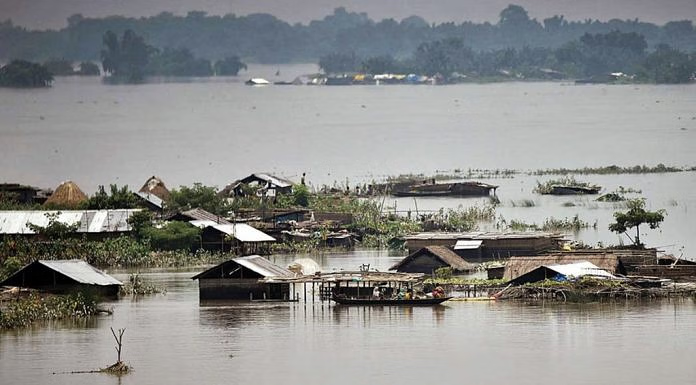
For many in districts like Dhemaji, Lakhimpur, and Morigaon, floods are not a disaster—they’re a season. The Brahmaputra and its tributaries overflow annually, inundating homes, schools, and fields. The toll is devastating. In 2023 alone, over 1.2 million people were affected, with 70,000 displaced into makeshift camps.

But behind these numbers lie untold stories of grit and resilience. Like that of Rani Begum, a widow who runs a community kitchen in a relief camp, feeding 200 people a day. Or schoolboy Rahul who swims across flooded streets to attend a temporary class in a relief shelter.

Government response has improved over the years, with better early warning systems and quicker relief deployment. Still, embankments break frequently, and compensation often arrives late. Evacuees lack privacy, clean water, and medical help in the camps.

Experts argue that Assam’s flooding problem isn’t just natural—it’s political. Unchecked development, sand mining, and poor river management have worsened the impact. More investment in climate-resilient infrastructure is critical.

On the ground, NGOs like AIDMI and grassroots volunteers are innovating. Mobile water filters, floating classrooms, solar-powered boats—they’re not waiting for policy change. They’re working with what they have.

“We cannot stop the river,” says a farmer from Majuli. “But we can change how we live with it.”

The challenge ahead is not just to survive the flood, but to build systems that allow communities to thrive in spite of it. Until then, they will continue racing against the rain—year after year, with courage that demands more than sympathy. It demands action.

How Tribal Tongues Are Fading—and the Fight to Keep Them Alive

0

In a quiet village in eastern Arunachal Pradesh, 74-year-old Thamcha is the last known fluent speaker of the Kman language. Her grandchildren understand some of it, but they reply in Hindi or English. “No one speaks it fully anymore,” she says with a sigh.

Kman is just one of over 200 tribal languages in Northeast India, many of which are now critically endangered. From the Tangkhul of Manipur to the Bodo of Assam, the region holds one of the richest and most diverse linguistic heritages in India. Yet, a growing number of these tongues are teetering on the brink of extinction.

The reasons are layered. Urban migration, formal education in dominant languages, and pop culture assimilation have eroded everyday use. English is now the default in many schools, especially private ones. Parents worry that using tribal languages at home might disadvantage their kids academically.

Linguist Dr. Pawan Chettri explains: “When a language disappears, we lose more than grammar. We lose folklore, medicinal knowledge, and a worldview.”

In response, a cultural revival is taking root. In Nagaland, youth collectives are creating YouTube videos in local dialects. In Shillong, music artists are incorporating Khasi and Garo lyrics into hip-hop. Arunachal schools are beginning to offer optional tribal language classes.

Digital tools are proving game-changers. Mobile dictionaries, apps like ‘TribalVoice,’ and storytelling podcasts are helping archive languages. NGOs like Living Tongues Institute are working to document and teach endangered scripts.

But documentation alone is not enough. Language needs space in homes, markets, and media. Community radio stations can play a role, as can school assemblies, festivals, and signage in public places.

Saving these tongues isn’t just nostalgia. It’s resistance. It’s identity. It’s survival.

“When we lose a language, we lose a part of ourselves,” says 21-year-old Lidia from Kohima. “But when we speak it again, we reclaim our roots.”

How Mizo Women Are Weaving Livelihood and Legacy

0

Tucked away in the green folds of Mizoram, thousands of women sit cross-legged outside their homes, turning bamboo into baskets, mats, and magic. Their hands, weathered but steady, carry not just craft but culture—and for many, survival.

In Champhai, 38-year-old Lalthanzami works six hours a day weaving bamboo trays. “It’s what I learned from my mother. It pays for my children’s school books,” she says. Her story is not unique.

Mizoram’s bamboo craftsmanship is rooted in centuries-old tradition. But in today’s economy, it’s also a silent economic force. Women dominate this industry, using locally sourced bamboo to create everything from fish traps to flower vases.

But for all its artistry, the craft is still largely unrecognized by markets and policymakers. Artisans face poor design exposure, low margins, and limited access to large-scale buyers. Middlemen often profit far more than the makers.

“We sell a tray for ₹100. In Delhi, it’s sold for ₹500,” says Lalzami, another artisan. Without branding or access to e-commerce, these women are stuck in an informal economy.

There are sparks of change. NGOs like ZOHANDCO and initiatives like the Mizoram Bamboo Mission are offering training, connecting women to urban markets, and promoting eco-friendly products. Local exhibitions and WhatsApp groups are helping expand reach.

Design schools from outside the region are also partnering with artisans to blend traditional skills with contemporary aesthetics. “Imagine a Tokyo coffee shop using Mizo bamboo decor,” says fashion entrepreneur Vanlalruati. “That’s the goal.”

For this vision to scale, the state and private sector must support supply chains, provide tools, and help with certifications and digital literacy.

When empowered, these artisans aren’t just earning—they’re preserving culture, passing down heritage, and elevating community pride. As demand grows for sustainable, handmade products, Mizo women stand poised at a global threshold.

All they need is a bridge.

Why Northeast’s Youth Are Leaving—and What It Means for the Region

0

Over the past decade, Northeast India has seen a growing wave of its youth migrating to cities like Delhi, Bangalore, and Pune. What once began as a trickle of students leaving for higher studies has now expanded into a widespread shift in search of jobs, exposure, and a better standard of living. But behind the statistics lies a deeper story—one of lost potential, fractured identities, and untapped local opportunity.

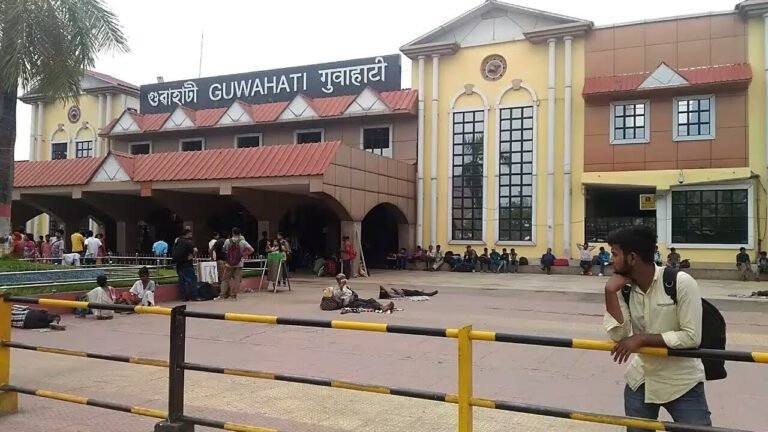
In Guwahati, 24-year-old Pratyush Deka is packing his bags for Gurgaon. A recent engineering graduate, he spent months applying for jobs across Assam with no luck. “Startups in our region are rare, and the public sector isn’t hiring enough,” he says. “The only way forward is to go out.”

This is the refrain of thousands like him. According to a 2023 report by the North Eastern Council, over 35% of youth between 20 and 30 years old have either migrated temporarily or permanently out of the region. Cities attract them not just with jobs, but also with cultural opportunities, better infrastructure, and social freedom.

But migration is not without cost. Families are broken. Local knowledge systems are weakened. Small towns lose their most dynamic population segment. And as more youth leave, regional entrepreneurship suffers a serious blow.

Sociologist and researcher Dr. Rinku Devi of Tezpur University puts it starkly: “We are losing a generation of problem-solvers. These are the very people who should be shaping Assam’s future from within.”

There are structural causes too. Limited industry, poor digital connectivity in remote areas, lack of modern colleges and professional institutes—these are all roadblocks. A young person in Dimapur or Aizawl often feels that their ambitions have no home base.

Yet, a small but determined counterwave is emerging. Take the example of 29-year-old Maya Bhutia from Sikkim, who returned after an MBA in Pune to start an eco-tourism venture in her village. “I saw value in my roots,” she says. “There’s peace, potential, and a growing market for authentic experiences.”

Similarly, initiatives like Startup Nagaland, Digital Northeast Vision 2022, and Skill India are slowly making their mark. Incubation centers in Guwahati and Imphal are nurturing homegrown ideas. Returnees are building coworking spaces, running bakeries, and launching content platforms.

To make a real dent, however, the region needs more. Policy incentives for local hiring, startup-friendly loans, better transport and net connectivity, and a cultural shift that celebrates staying back—not just moving out.

For now, the migration continues. But the seeds of reversal have been planted. The question is: will they be watered with enough vision and willpower?