NAPS Workshop Held At DC Office In Champhai

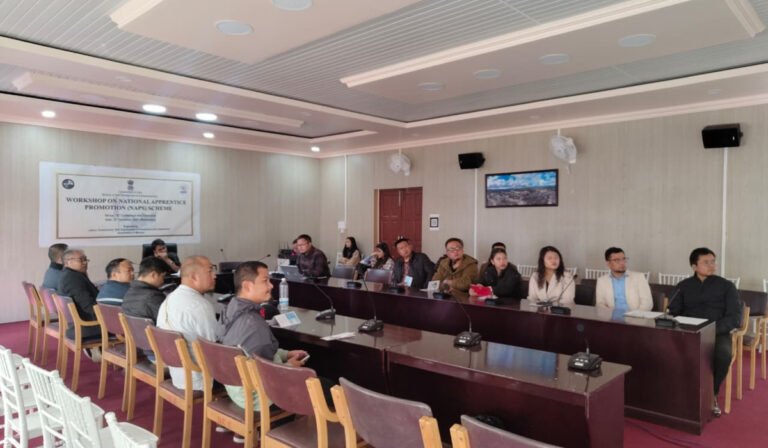
CHAMPHAI: A one-day Workshop on the National Apprenticeship Promotion Scheme (NAPS) was successfully conducted recently at the Deputy Commissioner’s Office in Champhai. The programme was chaired by Mohammed Aaquib, Deputy Commissioner of Champhai, who highlighted the importance of apprenticeship as a key pathway for youth skill development and enhanced employability in the district.

Our correspondent reports that the workshop commenced with an introductory address by Zothankhuma, Deputy Director, LESDE Department, who welcomed the participants and provided an overview of the objectives of NAPS and its relevance for both industries and youth beneficiaries.

A detailed presentation on NAPS 2025 was delivered by Donny C. Lallawmkima, LESDE Department, covering key components of the scheme, updated provisions under NAPS 2.0, eligibility criteria, registration processes, and benefits available to establishments and apprentices, our correspondent adds.

The event witnessed active participation from a range of stakeholders, including major establishments such as hotels, private schools, and other prominent institutions within Champhai District. Their presence underscored the growing interest in integrating apprenticeship as part of workforce development.

Our correspondent further reports that an open discussion session followed the presentation, where participants raised queries regarding implementation challenges, registration process, stipend reimbursement mechanisms, and opportunities for local establishments. Officials provided clarifications and encouraged stakeholders to actively engage with the scheme.

After the programme, on-the-spot registration was conducted on the NAPS portal, enabling willing establishments and individuals to enroll immediately with assistance from LESDE officials, our correspondent adds.

President Droupadi Murmu Hosts Putin At Rashtrapati Bhavan

0

NEW DELHI: President Droupadi Murmu hosted a banquet on Friday evening in honour of Russian President Vladimir Putin. She noted that his visit marks an important milestone in the strategic relationship between the two countries, as it coincides with the 25th anniversary of the India-Russia Strategic Partnership.

President Murmu appreciated President Putin’s support and personal commitment to the India-Russia Special and Privileged Strategic Partnership. The President noted that the partnership is guided by a shared commitment to peace, stability, and mutual socio-economic and technological advancement. President Murmu added that the year 2025 has been especially fruitful for India-Russia multifaceted partnership, with notable progress in areas including high-level political exchanges, trade and economy, defence, civil nuclear cooperation, space, science and technology, and people-to-people exchanges.

She added that the Joint Statement of the 23rd India-Russia Annual Summit reflects the special nature of the ties and provides a comprehensive framework for further deepening the bilateral ties.

The Two Presidents expressed confidence that the friendship between India and Russia, which has been steadfast for many years, will continue to prosper.

Indigo Flights’ Situation Is Getting Better: Naidu

NEW DELHI: Civil Aviation Minister Ram Mohan Naidu has said the situation of Indigo flight delays and cancellations is getting better and it is expected that there won’t be any waiting at airports from today.

He said, the government’s major focus has been on reducing the backlogs that have been happening at the airports and it is actively on the ground engaging with all the necessary stakeholders.

Talking to the media in New Delhi, he said, the Ministry of Civil Aviation has engaged with all the airport and airline operators to give priority to children, mothers, senior citizens and persons with disabilities.

Meanwhile, the minister has ordered a high-level probe into the severe operational disruption at Indigo, which has seen over 1,000 flights cancelled. Blaming the airline’s ‘mismanagement’ of crew, Naidu stated, ‘The ministry has been thoroughly engaging from day one.’ The Directorate General of Civil Aviation (DGCA) has temporarily exempted Indigo from new Flight Duty Time Limitation (FDTL) rules to help stabilize operations by 15 December. Meanwhile, SpiceJet MD Ajay Singh pledged assistance, adding extra flights to mitigate passenger inconvenience.

“We have formed a committee which will inquire into all this so that they can establish where things went wrong and who did it wrong. We are going to take necessary action on that also. This thing shouldn’t be left unattended. We are taking strict action on this, so that whoever was responsible into this needs to pay for it,” he said.

“We are deeply observing this, and observing the FDTL norms, scheduling network. We will thoroughly look into this and ensure that all airlines follow due diligence,” he added.

Ram Mohan Naidu said earlier in the day in a statement that the ministry has taken urgent and proactive measures to address the ongoing disruption in flight schedules, particularly those of Indigo Airlines.

He said passenger care, safety, and convenience continue to be the government’s highest priorities.

The minister said the DGCA’s Flight Duty Time Limitations (FDTL) orders have been placed in abeyance with immediate effect.

“Without compromising on air safety, this decision has been taken solely in the interest of passengers, especially senior citizens, students, patients, and others who rely on timely air travel for essential needs. Civil Aviation Ministry said in a release. Several operational measures have been directed to ensure that normal airline services are restored at the earliest and that the inconvenience caused to travellers is significantly reduced,” he said.

“Based on the immediate implementation of these directives, we expect that flight schedules will begin to stabilise and return to normal by tomorrow. We anticipate that complete restoration of services will be achieved within the next three days,” he added.

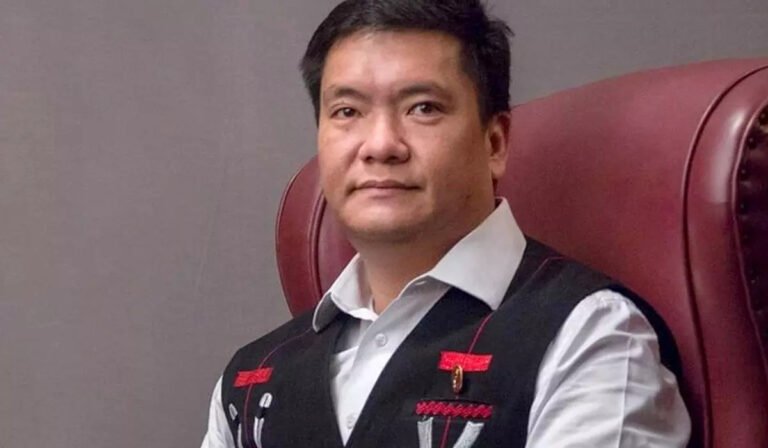
Khandu Says Development Under BJP Govt. Reached Remote Areas

ITANAGAR: Chief Minister Pema Khandu recently asserted that the state government’s development initiatives have extended to even the most inaccessible regions of Arunachal Pradesh, emphasising what he described as a renewed focus on equitable growth.

Speaking at a public programme, Khandu said his administration had pushed for stronger infrastructure, improved connectivity and wider access to government services across rural and border settlements. “No village is too remote for development,” he said. “Every citizen deserves the same opportunities, regardless of how difficult the terrain may be.”

Our correspondent reports that Khandu highlighted newly upgraded roads, improved power lines, expanded mobile coverage and enhanced administrative outreach in several districts known for challenging geography. He maintained that these improvements were the result of coordinated efforts among state departments and local bodies.

Officials accompanying the Chief Minister echoed his message, noting that development in remote areas had been a long-standing demand. “We are seeing encouraging changes,” a senior official said. “Areas once considered unreachable are now connected by all-weather routes.”

Our correspondent adds that local leaders attending the programme welcomed the government’s claim of inclusive progress, though some said sustained investment will be necessary to maintain momentum. They pointed out that education, healthcare and transport continue to be priority sectors in many remote locations.

Reaffirming his administration’s vision, Khandu added, “We want an Arunachal Pradesh where no citizen feels left behind. This is the direction we are moving in, and we will continue to push forward.”

Our correspondent reports that people in several interior villages have also acknowledged gradual improvements in services, particularly in mobility and access to government schemes.

In conclusion, our correspondent adds that the Chief Minister expressed confidence that persistent efforts in remote regions will lead to long-term social and economic gains for the state.

HC Panel Flags Illegal Coal Mining in Meghalaya

SHILLONG: A one man committee appointed by the Meghalaya High Court has confirmed that illegal coal mining continues unabated in parts of East Jaintia Hills, sharply criticising the district police for failing to act despite earlier complaints and video evidence. The committee’s findings have renewed concerns over the effectiveness of enforcement measures and the wider environmental and social fallout from unchecked extraction.

Justice B P Katakey, who heads the committee mandated to review compliance with court directives on coal mining, submitted a fresh report noting that clandestine operations remain active in several pockets of the district. He observed that mining pits and transportation routes were functioning even after repeated assurances from authorities that illegal extraction had been curbed. “There is clear continuity of mining activity that should not have occurred under any circumstances,” the committee noted in its latest assessment.

Our correspondent reports that the committee was particularly critical of the East Jaintia Hills police, stating that the force had displayed what it described as a lack of vigilance and follow up. According to the panel, the police failed to detect fresh mining despite being provided with location specific complaints and video clips showing active pits and coal movement. “When evidence is already available and complaints have been filed, it is the responsibility of the district police to verify and act. That fundamental requirement has not been met,” the report said.

Local residents and activists have repeatedly raised alarms over renewed digging, transportation of coal in the late hours and the presence of trucks on forest routes. Many of these concerns were brought before the court appointed committee which then undertook on site verification. The findings now confirm what community groups have long alleged. “We had submitted proof many times. It is only now with the committee’s confirmation that it is officially acknowledged,” said a resident who has been involved in documenting mining sites.

Environmental groups warn that the extended continuation of such operations has grave ecological consequences. They point to polluted streams, destabilised land and hazardous working conditions for labourers often recruited informally. Our correspondent adds that the panel remarked on visible environmental stress during its inspections, particularly in areas where unfilled mines and coal heaps sat close to water bodies. “The contamination from runoff is something we have been observing for years,” said an activist with a local conservation group. “This report finally brings authority to what communities have been experiencing.”

Officials within the state administration acknowledge the seriousness of the committee’s observations but insist that steps are being taken to strengthen enforcement. A senior government officer said investigations would follow and responsibility would be fixed wherever lapses were confirmed. “The instructions from the High Court are clear. We will study the report in detail and act accordingly. Enforcement systems will be tightened,” the official stated. He added that patrol units in vulnerable zones would be increased and that periodic checks would be made mandatory.

Our correspondent reports that the committee has recommended stronger monitoring mechanisms including regular reporting from district officials, dedicated surveillance teams and the use of technology for real time tracking of suspected mining activity. Justice Katakey also suggested that the government streamline coordination between police, mining authorities and the forest department to eliminate what he called operational gaps.

Economic drivers behind illegal mining also surfaced in the committee’s notes. According to local leaders, the lack of steady employment opportunities pushes many residents toward informal mining even when they understand the risks. “Families need income and options are limited,” said a village headman. “Unless there is an alternative path, people will continue to do what keeps their homes running.” The committee has recommended that the government design livelihood programmes in mining prone regions to break this dependency cycle.

Political observers say the report places pressure on the state government ahead of upcoming compliance hearings. They argue that the High Court’s stern comments about lapses in policing could force urgent administrative action. “The judiciary has made it clear that excuses will not be accepted,” said a political analyst. “The government now has to demonstrate not intention but results.”

Our correspondent adds that the High Court is expected to assess the committee’s findings in its next hearing and may consider issuing further directives. Meanwhile, residents and activists hope the renewed judicial scrutiny will finally bring sustained enforcement on the ground. “We want real action this time,” said a community worker. “Not temporary raids but a permanent solution.”

Manipur Government Rejects Insurgent “Boycott” Orders

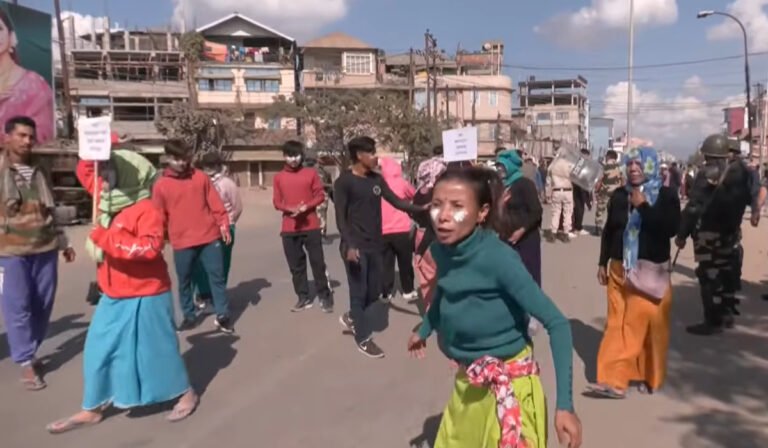
IMPHAL: The Manipur government has rejected coercive directives from insurgent groups that attempted to punish artists and others who participated in the state’s recent flagship tourism event. Authorities have clarified that no individual or organisation, proscribed or otherwise, has the legal authority to impose sanctions, ban performances, or disrupt lawful cultural and economic activity. The government has warned that anyone seeking to enforce such decrees will be dealt with strictly under the law.

Our correspondent reports that the controversy followed the conclusion of the Manipur Sangai Festival held from November 21 to 30. After the festival ended, a coalition of five proscribed valley-based insurgent groups issued a resolution naming various artists, businesses, and participants, demanding public apologies, and declaring a one-year ban on several traditional theatre troupes.

The government responded swiftly. Senior officials, including the Chief Secretary, issued statements condemning the threats and affirming the state’s commitment to protect citizens’ security and freedoms. “Any attempt to intimidate or endanger the safety and security of any citizen is an act against the state and its people,” declared the administration, adding that intimidation, extortion or violence would not be tolerated. Police sources have confirmed that several First Information Reports have been filed in multiple districts and several arrests have already been made in connection with the issued threats.

Our correspondent adds that the government also called on the public to report any suspicious activity, threats, or extortion attempts. This public appeal is part of a broader effort to restore communal harmony and ensure that civic spaces remain open for cultural expression and economic revival.

This episode underscores the delicate balancing act the state faces as it tries to revive public life and tourism while managing ongoing social and ethnic tensions. For some displaced communities and protest groups, the decision to go ahead with the festival despite unresolved conflict was seen as premature and insensitive. These voices argued that the priority should have been humanitarian relief and dialogue. At the same time, many others defended the Sangai Festival as a necessary step towards restoring livelihoods for performers, traders, hoteliers, and artisans who rely on such events for their incomes and social visibility.

In practical terms the government has signalled that freedom of culture and economic activity cannot be subordinated to extra-legal edicts. “No individual group or organisation has authority to impose decrees, punishments, or restrict lawful cultural or artistic activities in Manipur,” officials affirmed, warning that anyone found attempting to disturb peaceful coexistence will face prosecution according to the law.

Our correspondent reports that the arrests and FIRs serve both legal and deterrent purposes: to identify those who issued and attempted to enforce the threats, and to make clear that coercion and fear cannot be used to shape social behaviour. Law enforcement sources indicate probes are ongoing across several districts, with investigators tracing message flows, identifying perpetrators, and working to dismantle pressure networks targeting artists and organizations.

Our correspondent adds that public reaction has been mixed. Some local leaders and business owners welcomed the government’s stance, saying that artists and traders should not be forced into silence through intimidation. Others, especially among displaced families and community campaigners, argued that the festival should have been postponed until humanitarian and political concerns were addressed. The debate reflects deeper divides in the state, where issues of security, ethnic identity, and economic survival are tightly interwoven.

Observers say the incident offers several lessons. First, resuming public and cultural events after conflict requires careful stakeholder consultation to avoid alienating affected communities. Second, the state’s insistence on upholding rule of law is politically charged: ensuring legal protections for artists and traders may help restore confidence among businesses and cultural workers, but some may see it as downplaying the grievances that led to protests. Lastly, the case shows that even when insurgent groups’ military capacity is weakened, they may still exert influence through social coercion; countering this influence demands both policing and community engagement.

As investigations proceed, the government has urged citizens to cooperate with law enforcement to help ensure peace and normalcy. The public message emphasized that protecting freedom of expression and public safety are not conflicting aims and that the administration will use legal mechanisms to safeguard both.

Onam Gamno to Lead India at Asian Arm-Wrestling Cup

ITANAGAR: Onam Gamno of Arunachal Pradesh has been appointed captain of the Indian arm-wrestling team for the upcoming Asian Cup Arm Wrestling Championship, a decision that has generated excitement across the state’s sporting fraternity. The selection, announced by the Pro Panja League, marks a major milestone in Gamno’s career and further highlights the Northeast’s growing presence in national sporting arenas.

Gamno has steadily climbed the ranks over the past few years, earning a reputation for his strength, technique and disciplined training regimen. His leadership abilities, combined with a consistent record in national tournaments, made him a natural choice for the captaincy. Officials from the Pro Panja League noted that Gamno embodies both competitive drive and team-first commitment — qualities they believe will be invaluable as India faces some of Asia’s toughest opponents.

Speaking after the announcement, Gamno said he was humbled by the responsibility and eager to guide the Indian squad on the international stage. “This is a proud moment for me, my family and my state. Wearing the captain’s armband for India is something every athlete dreams of. I will give my best to lead with integrity and push our team toward a strong performance,” he said.

In Arunachal Pradesh, the news has been met with widespread appreciation. Local sports bodies, coaches and fans have applauded Gamno’s selection, calling it a defining moment for the arm-wrestling community in the region. Many believe his achievement will motivate more young athletes — especially from remote districts — to take up strength-based and emerging sports.

Preparations for the Asian Cup are already underway, with the Indian team participating in intensive training sessions and strategy workshops. The championship is expected to feature top contestants from across the continent, making it one of the most competitive events in the sport’s calendar. With Gamno at the helm, expectations are high for the Indian contingent to make a strong impression and potentially secure podium finishes.

Gamno’s rise also underscores a larger narrative: the increasing representation of athletes from the Northeast in national and international sports. His journey from local competitions in Arunachal Pradesh to leading the nation at a continental tournament is being celebrated as an example of how talent from smaller states can shine with the right platform and support.

SC To Review Clause In 2025 Order That Contradicts Assam Accord

NEW DELHI: The Supreme Court has sought the Centre’s response to a plea challenging the constitutionality of a provision that allows persecuted religious minorities from Afghanistan, Pakistan, and Bangladesh, who entered India without a passport or valid documents before December 31, 2024, to stay on in Assam.

A Bench headed by Chief Justice of India Surya Kant issued formal notice to the Union government on the petition filed by the Asom Gana Parishad (AGP), represented by senior advocate Jayant Bhushan and advocate Rahul Pratap, challenging Clause 3(l)(e) of the Immigration and Foreigners (Exemption) Order 2025 as violative of the Assam Accord.

The Accord, meant to halt the influx of aliens from Bangladesh, required foreigners who had entered Assam on or after March 25, 1971 to be identified and deported. The intent of the Assam Accord was made explicit through the insertion of Section 6A into the Citizenship Act 1955. Section 6A barred citizenship to immigrants who entered Assam after March 25, 1971.

“The rationale behind the Assam Accord was to preserve the demography and to promote the cultural, social and linguistic identities and heritage of Assamese people by constitutional and legislative safeguard. Any attempt to extend the cut-off date from March 24, 1971 to December 31, 2024 would be violative of the constitutional, legislative and statutory protection accorded to the people of Assam under the Assam Accord,” the AGP submitted.

The AGP argued that Clause 3(l)(e) of the 2025 Order has rendered the cut-off date in the Assam Accord otiose. It has indirectly legalised illegal immigration into Assam after March 1971. The clause has also violated Section 6A, which was upheld by a Constitution Bench of the Supreme Court in October last year.

The petition submitted that the clause ignored the point that Section 6A would override “all other provisions of law for the time being in force”.

It also challenged the constitutional validity of Section 33 of the Immigration and Foreigners Act, 2025. The AGP said Section 33 endowed the Centre with “unfettered and unbridled powers” to allow illegal immigrants to indefinitely stay on in India, especially in Assam.

The 2025 Order was issued by the government under Section 33. The AGP, a signatory to the Assam Accord, submitted that Section 33 was not only discriminatory but also in breach of the Citizenship Act of 1955.

BJP-AGP Seat Sharing Expected To Be Finalised By Jan 15

GUWAHATI: Chief Minister Himanta Biswa Sarma has indicated that the political landscape of the state is set for a major development ahead of the upcoming elections. Speaking to the media on Friday, he announced that the Bharatiya Janata Party (BJP) and its long time ally, the Asom Gana Parishad (AGP), are close to finalising their seat sharing arrangement. According to the Chief Minister, the discussions are progressing smoothly and the alliance agreement is expected to be completed by January 15. Our correspondent reports that this timeline has been set with the intention of preparing a clear and united electoral roadmap before the Magh Bihu festivities begin.

Sarma emphasised that the AGP is likely to receive a substantial share of the constituencies under the alliance. He explained that the BJP leadership recognises the long standing relationship between the two parties and intends to strengthen it further as they move toward the polls. The Chief Minister had recently held a detailed meeting with senior AGP leader and cabinet minister Keshab Mahanta. Following this meeting, he confirmed that formal negotiations with the AGP would commence shortly and that most issues have already reached an understanding in principle.

According to the Chief Minister, discussions between the BJP and the AGP have advanced far more than in previous election cycles. He stated that the BJP is willing to work together across many constituencies and is open to allowing the AGP to lead in a majority of them. He clarified that this cooperative approach reflects the mutual respect between the two partners as well as their shared political objectives. He added that similar engagement would also be initiated with other regional bodies, including the Rabha Hasong organisation and the Gana Shakti platform, to ensure a broader regional consensus.

Sarma explained that the goal is to complete all talks before January 15 in order to finalise the alliance structure. He said that the state government and the party organisation do not wish to delay the process and that finalising the alliance early will enable leaders and workers at the grassroots level to begin campaigning with clarity and confidence. Our correspondent notes that this early finalisation could give the alliance a strategic advantage by allowing them to plan events, outreach and candidate announcements in a systematic manner.

The Chief Minister also highlighted the BJP dedication to promoting young leadership within the party. He expressed the intention to introduce a larger number of young faces and more women candidates in the upcoming elections. He pointed out that the BJP has been working consistently to increase youth representation. For example, he mentioned the election of Taranga Gogoi as an illustration of the party commitment to nurturing young leaders. He added that this time, the party hopes to field candidates even younger than Gogoi and that the BJP wants to remain an organisation that inspires the next generation of political participants. According to Sarma, the enthusiasm and innovative energy of young leaders play a crucial role in strengthening democratic engagement across the state.

In contrast, Sarma criticised the Congress, accusing the opposition party of being distracted by internal disputes rather than focusing on issues concerning the public. He stated that a recent Congress meeting was dominated by discussions about the number of BJP hoardings in various areas, rather than substantive policy matters. He also remarked that the Congress leadership had spent two hours in an online meeting attempting to identify who leaked internal information, only to discover that the individuals responsible were themselves present in the meeting. According to Sarma, such incidents reflect a deep internal confusion within the party. Our correspondent observes that the Chief Minister spoke with a tone of confidence while comparing the organisational discipline of the BJP with what he described as the disarray within the Congress.

Sarma further claimed that Congress workers themselves lacked confidence in their party electoral prospects. He argued that development projects visible across the state have influenced public opinion strongly in favour of the BJP led government. He pointed out that regions such as Umrangsho and Karbi Anglong had suffered neglect for many years during the Congress rule. According to him, only after the BJP came to power did these regions experience real progress, peace and stability. He said that earlier, unrest was frequent in these areas and military presence was routine. Now, he added, development initiatives have taken centre stage and the local communities are witnessing tangible improvements.

The Chief Minister concluded by reiterating that the BJP and its allies are committed to continuing this development oriented approach. With alliance talks nearing completion and preparations for the elections intensifying, our correspondent believes that the next few weeks will be crucial in shaping the political narrative in Assam.

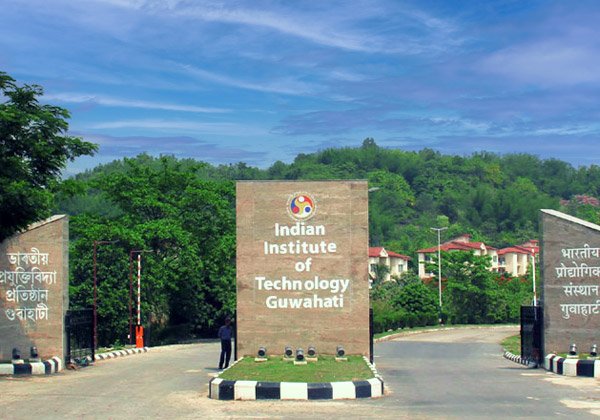
IIT Guwahati Develops New Epoxy Coating to Protect Steel

GUWAHATI: Researchers at IIT Guwahati have developed an advanced corrosion-resistant epoxy coating that promises to significantly improve the durability of steel structures. The innovation, announced recently, aims to shield steel from rust and degradation, a breakthrough particularly relevant for infrastructure projects in India’s humid and monsoon-prone regions.

Our correspondent reports that the newly formulated epoxy coating is designed to provide robust protection against moisture, chemicals and environmental stressors that typically accelerate corrosion in steel. This development could benefit a wide range of sectors, from construction and bridges to marine and industrial installations, by extending the lifespan of steel frameworks and reducing long-term maintenance costs.

According to the research team, the coating has undergone extensive lab testing and delivered promising results. In simulated tropical conditions, steel samples treated with this epoxy displayed minimal signs of rust even after prolonged exposure’ a stark contrast to untreated samples which deteriorated rapidly under similar stress. “The coating acts as a barrier, isolating steel from corrosive elements,” said a lead scientist involved in the project. “We expect it to substantially slow down corrosion and thereby reduce repair and replacement expenses.”

Our correspondent adds that the epoxy formulation leverages a novel blend of resins and corrosion-inhibiting agents that make it especially suited for the climatic challenges found in northeastern India and other high-humidity zones. The researchers think that, once commercialised, this coating could become standard for structural steel works in areas where environmental wear and tear are severe.

In addition to its protective properties, the coating is being praised for its adherence to steel surfaces and resilience even under mechanical stress. During tests involving exposure to heavy loads and thermal fluctuations, coated steel maintained structural integrity better than untreated controls, suggesting that the solution could be used in demanding industrial and civil infrastructure settings.

Our correspondent reports that project leaders are currently seeking partnerships with industry stakeholders and coating manufacturers to scale up production and begin real-world trials. Discussions are underway with several construction firms and government agencies interested in using the coating for upcoming infrastructure projects. If all goes well, the researchers hope to see the epoxy applied on bridges, overpasses, rail tracks and coastal installations within a few years.

Local experts emphasise the potential impact of this development. In a region like Northeast India, where frequent rainfall, high humidity and temperature variations accelerate steel corrosion, such a protective coating could dramatically lower maintenance burden and prevent premature structural failure. “Structures here often face accelerated degradation due to climatic conditions,” said an engineer familiar with regional construction. “A durable coating like this could shift how we think about infrastructure longevity.”

Our correspondent adds that beyond construction, industries such as shipping, oil and gas, and heavy manufacturing may also benefit. Ships, storage tanks, pipelines and port installations that typically suffer from high corrosion rates could see extended service life, translating into significant long-term savings and enhanced safety.

The IIT Guwahati team has emphasised that while lab results are encouraging, real-world performance will depend on proper application techniques and surface preparation. They have outlined recommended procedures for steel surface cleaning, primer application (if required), and curing times to ensure optimal performance. Developers interested in adopting the coating are being advised to follow guidelines carefully to achieve maximum protection.

Overall, this scientific innovation is being hailed as a step forward in cost-effective, sustainable infrastructure maintenance. By offering a technology that resists environmental degradation and reduces repair cycles, IIT Guwahati’s epoxy coating could play a significant role in future steel construction standards, particularly in regions vulnerable to corrosion.

For now, the coating remains in the pre-commercial trial phase, but the research community and industry watchers are keeping a close eye. If successful beyond the lab, this could become a game-changer for building long-lasting infrastructure across India.