




Two Hurt in Guwahati’s Zoo Road Flyover Accident

GUWAHATI: Two persons were injured when a vehicle crashed on the Zoo Road flyover in Guwahati today, raising fresh concerns over road safety in the city. The accident caused disruption to traffic, and both injured were rushed to a nearby hospital for emergency care.

Our correspondent reports that the collision took place during the early evening hours. Eyewitnesses said that a two-wheeler lost control while negotiating a curve, skidded and hit the flyover’s side barrier. The impact threw both the rider and pillion to the road below. Passersby and nearby shopkeepers rushed to their aid and alerted emergency services.

“A friend and I were coming from the market when we heard a loud bang. By the time we turned, the bike lay wrecked and both rider and pillion were bleeding,” said one local resident. “We helped lift them off the road before an ambulance arrived.” Several motorists halted to give first aid and clear the way.

Our correspondent adds that the injured, a young man and a woman, were taken to a nearby government hospital. Medical staff reported that both are in stable condition; one sustained fractures in the leg, while the other has head injuries and abrasions. Their identities have not yet been officially released.

A police patrol reached the site soon after receiving the call, and traffic on the flyover was diverted temporarily. A police officer at the scene said: “We are conducting an investigation to ascertain the exact cause of the crash. At first glance, it appears to be a brake failure or over-speeding.” Vehicles were being checked and police urged motorists to maintain lane discipline, especially on flyovers.

Our correspondent reports that traffic snarls were reported for over an hour as the ambulance and police vehicles blocked a lane during rescue operations. Commuters faced long delays and expressed frustration over mounting accidents in that part of the city. One motorist said: “If basic safety is not ensured, these flyovers become death traps. The city must improve road safety measures.”

Local residents in the area told reporters that accidents on Zoo Road flyover are not uncommon, especially after rain or on slippery roads. They demanded better lighting, proper signage and speed-control measures. “This is not the first accident here,” said a nearby shopkeeper. “We need reflectors, grip roads, speed breakers or at least regular policing.”

Our correspondent adds that city traffic authorities have been called on to review safety arrangements for flyovers and busy junctions. Civil society and neighbourhood groups have also urged coordinated efforts to ensure proper maintenance, enforcement of traffic rules and emergency response readiness.

The city police have registered a formal case and are expected to gather CCTV footage from nearby cameras. Authorities also plan to inspect the flyover’s structural safety and check whether there are design flaws that might contribute to frequent mishaps. Meanwhile, the injured continue to receive treatment, and their condition is being monitored.

As the city deals with the aftermath of this accident, residents and commuters are left hoping that authorities will take prompt action, not only to bring the guilty to justice, but also to prevent similar incidents in the future.
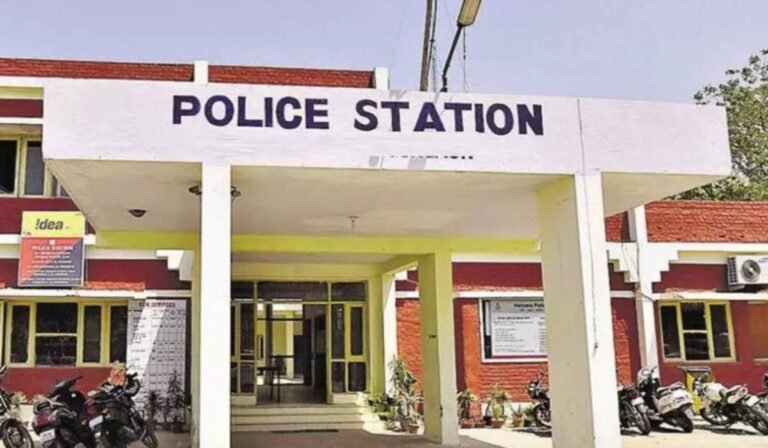

New Police Outpost Set Up in South West Khasi Hills

SHILLONG: A new Police Outpost has been established at Rongdangai in South West Khasi Hills district, marking a significant administrative move aimed at improving public security, strengthening law-and-order response, and making policing more accessible to remote settlements.

Our correspondent reports that the Meghalaya government approved the creation of the Rongdangai Police Outpost to enhance policing convenience for residents living in far-flung areas along the inter-district and international border belts. Officials stated that the decision was taken after reviewing the region’s geographical challenges, population spread and the need for quicker police response. “This outpost will help bring essential policing services closer to the people,” a senior district official said.

The newly established outpost will cover an extensive area bordered by multiple police jurisdictions. To the north and east, the outpost is flanked by the Nonghyllam Police Station and Borsora Outpost of South West Khasi Hills; to the south, it shares boundaries with Maheshkola Outpost in South Garo Hills and the Indo-Bangladesh International Border fencing; and to the west, it is bordered by Shallang Police Station in West Khasi Hills.

Our correspondent adds that officials believe the strategic placement of the Rongdangai outpost will improve monitoring in a region known for difficult terrain and limited connectivity. “Border-adjacent villages often require immediate intervention, but distance from existing police stations has been an obstacle,” an official said. “This outpost helps fill that gap.”

The jurisdiction under the Rongdangai Police Outpost includes several villages spread across the region: Moheshkola, Ganganagar-A, Ganganagar-B, Gillagora, Upper Gillagora, Koraibari, Upper Koraibari, Dambatgre, Chitokgre, Sooling, Amarsang, Umthengkut, Kampilgre, Rongdangai and Kaitakona. The settlement pattern in these villages, scattered across hills and forested stretches, has long been recognised as an area where increased police presence is essential.

Residents of the region have welcomed the decision, noting that frequent delays in lodging complaints or seeking assistance were common due to long travel distances. Many said that with the new outpost in place, response times for emergencies, disputes, or security-related issues are expected to improve significantly. One resident remarked, “People here have waited for years for a closer police setup. We hope this will make our villages safer and more connected.”

Our correspondent reports that the administration has emphasised the need for close coordination between the new outpost and neighbouring police stations. Officials believe the arrangement will streamline patrolling, surveillance and public outreach, especially in areas close to the Indo-Bangladesh border. They added that initiatives such as community policing, grievance redressal camps and awareness programmes can now be conducted more frequently and effectively.

The police department is now working on the operational framework for the outpost, including staffing, infrastructure setup and deployment of necessary communication and mobility resources. Authorities hinted that depending on ground requirements, the outpost may eventually grow into a fully equipped police station. “This is an evolving setup,” a source said. “As the area develops and population needs change, policing will also expand accordingly.”

Our correspondent adds that the outpost is expected to play a crucial role in resolving inter-village disputes, monitoring border-linked activities and ensuring timely intervention in cases involving vulnerable populations in remote settlements. Senior officials also indicated that the outpost will help in better coordination with border guarding forces where required.

Overall, the establishment of the Rongdangai Police Outpost is being viewed as a proactive administrative step intended to improve accessibility to security services and enhance the safety net for residents living across the southern stretches of South West Khasi Hills. As the government prepares the outpost for full functioning, expectations remain high that this move will contribute to stronger governance and greater public confidence in the region.

Biren Singh Warns of Manipur’s Existential Crisis

IMPHAL: Former Manipur Chief Minister N Biren Singh has warned that the state is facing an “existential crisis” due to the large-scale destruction of forests for illegal poppy cultivation, alleging that militant groups are directly involved in clearing vast stretches of land for illicit drug production. His remarks, made in a strongly worded public statement, have intensified debate over environmental degradation, narcotics trafficking and recurring floods that have battered Manipur in recent years.

Our correspondent reports that Singh released a video showing extensive poppy plantations in the Kolten and Selsi hill ranges under T Waichong subdivision in Kangpokpi district. The visuals, recorded recently, purportedly reveal freshly cleared forest patches converted into cultivation sites. Singh said the footage proves the link between deforestation, soil instability and recurrent floods. “This video recorded today shows why recurrent floods have taken place in the state,” he said. “All our forest has been destroyed while we are trying to pull each other down.”

He questioned the silence of political leaders and departments responsible for environmental protection. “None of our leaders has spoken out against such wide-scale devastation,” Singh said, adding that the Forest Department had failed to act despite evidence of organised illegal activity. “Why have officials of the Forest Department not taken any action against the perpetrators?” he asked.

Our correspondent adds that Singh also claimed that armed militants are engaged in the illegal cultivation, benefiting from the narcotics economy and using the difficult terrain to evade enforcement agencies. “It is suspected that armed militants are involved in these illicit activities. Unless we take concrete action, the state will face an existential crisis,” he cautioned.

Singh resigned as Chief Minister on February 9, four days before President’s Rule was imposed amid prolonged ethnic violence. His recent comments are being viewed as a renewed attempt to draw attention to long-standing issues that go beyond immediate law-and-order concerns.

Officials familiar with anti-narcotics operations said that security forces have intensified crackdowns over the past month. A senior police officer stated that joint teams of the Army, Assam Rifles, CRPF, BSF, Narcotics Control Bureau and Manipur Police destroyed more than 800 acres of illegal poppy cultivation between November 11 and December 1 across six mountainous districts. “These operations effectively foiled a large-scale attempt to manufacture opium worth several crores,” the officer said.

The illegal cultivation sites were located in Kangpokpi, Ukhrul, Tamenglong, Chandel, Tengnoupal and Senapati districts. During the operations, forces also demolished around 160 temporary huts, and destroyed fertilisers, herbicides, irrigation pipes and other items used in the cultivation process. Our correspondent reports that the destroyed poppy fields had the potential to yield nearly 7,600 kg of raw opium, representing a major financial blow to the drug networks operating in the region.

An aerial survey conducted on November 24 uncovered an additional 700 acres of poppy plantations in Kangpokpi district alone, suggesting that despite ongoing crackdowns, illegal cultivation continues to adapt and expand. Forces often work in extreme terrain and harsh weather, complicating large-scale clearance efforts.

A defence spokesperson highlighted the challenges faced by security forces: “The intensive operation against unlawful poppy farming was conducted under challenging terrain and adverse weather conditions.” He added that these actions demonstrate the commitment of the Assam Rifles and other agencies to dismantling drug-related networks. “This successful operation reaffirms the steadfast commitment of the Assam Rifles towards fostering a drug-free Northeast and contributing to long-term peace, stability and socio-economic development,” the spokesperson said.

Our correspondent adds that officials believe the gradual decline in identified poppy acreage since 2020 reflects some success. In that year, more than 8,000 acres of poppy fields were identified, of which 1,695 acres were destroyed. By 2024–25, the total area under illegal cultivation had reduced significantly, though officials stress that the drug economy continues to fuel instability.

State officials and analysts agree that the twin crises of ethnic tension and narcotics trafficking remain deeply intertwined. Many argue that addressing the environmental devastation caused by poppy plantations is critical not only for combating drugs but also for preventing recurring floods, landslides and erosion.

As Singh’s remarks continue to draw attention, the focus is now on whether the state and central governments will adopt stronger policies to protect forests, curb militant-linked drug networks and restore fragile ecosystems. For many in Manipur, the issue is no longer only about crime — it is about safeguarding the future of the state itself.

Post Malone to Rock Guwahati on December 8

GUWAHATI: Fans in Guwahati are gearing up for a major musical event: American rapper and singer-songwriter Post Malone is all set to perform his first ever solo concert in the city on December 8. The announcement had earlier sparked excitement across the Northeast, promising a high-energy evening filled with hits, live music, and a unique concert experience.

Our correspondent reports that this will be the first time Post Malone performs a solo show in Guwahati, marking a significant moment for the city’s music and entertainment scene. Organizers say the concert aims to attract fans from across the region and bring a global-level music spectacle to local audiences. Many young music lovers, who previously had to travel to metros to catch international acts, are looking forward to the show as a landmark cultural event.

The concert is being promoted as more than just a musical performance. It is expected to feature full production, live band, lighting, stage effects, and include some of Post Malone’s most popular tracks. While specific details about the setlist or special features are yet to be disclosed, organizers have hinted that fans may get to enjoy fresh renditions of hits that made him globally famous. A senior event coordinator told local media: “We want to offer Guwahati a concert experience on par with major cities, with the vibe, the energy and the scale that fans expect.”

Our correspondent adds that ticket sales have already begun, with several ticket categories on offer to accommodate different budgets and preferences. Early-bird buyers and those opting for premium tickets are expecting special perks, such as VIP access and better seating. Organizers are urging fans to book early, warning that tickets are likely to sell out quickly due to high demand.

In anticipation of a large crowd, local authorities are reportedly coordinating with event planners to ensure smooth logistics. Measures including traffic management, security arrangements and crowd control strategies are being discussed to make sure the concert goes off without hitches. “We want fans to enjoy themselves, but safety and order will be our top priority,” one official said.

The arrival of an international star like Post Malone in Guwahati is being interpreted by many as a sign of the city’s growing status as a hub for major cultural and entertainment events. Music enthusiasts believe this concert could set a precedent, encouraging more global artists to include Guwahati, and the Northeast, in their tour itineraries. A student and fan from Assam’s capital said: “We rarely get chances like this. It feels like a dream come true to see Post Malone perform live, right here in Guwahati.”

Our correspondent reports that local media and social media channels have already erupted with enthusiasm, with fan groups forming, travel plans being made, and hotels seeing advance bookings. People from neighbouring states are reportedly considering coming down to catch the show, given its significance and rarity.

Our correspondent adds that beyond the immediate excitement, cultural analysts expect the concert to have longer-term impacts. It could boost the city’s nightlife economy, bringing revenue to hotels, restaurants, transport and local businesses. Moreover, it could open up opportunities for local artists, technicians, and event-management professionals to work on a large-scale international concert. One music industry observer said: “Hosting a show of this magnitude can demonstrate the region’s capacity for organising global-standard events. It can pave the way for more such acts in future.”

As December 8 approaches, preparations are underway and excitement is building. For many in Guwahati and across the region, this concert represents not just a musical performance, but a milestone in the city’s cultural trajectory. Fans are counting the days until they can experience the energy, the music, and the moment live.

Assam Govt. Cracks Down On Jihadi Literature

GUWAHATI: In a major step to curb the spread of Jihadi ideology in the state, the Assam government has imposed a total ban on all forms of radical or Jihadi literature, print or digital, linked to certain terror outfits, invoking Sections 98 and 99 of Bharatiya Nagarik Suraksha Sanhita (BNSS).

The Home Department of the government issued a notification on 3rd December prohibiting the publication, circulation, sale, storage and digital sharing of any material associated with terror outfits, including Jamaat-ul-Mujahideen Bangladesh (JMB), Ansarullah Bangla Team (ABT), Ansar-Al-Islam/pro-AQIS. According to the notification, the Jihadi content violates several legal provisions, including Section 299 of the Bharatiya Nyaya Sanhita (objectionable content) and Section 67 of the Information Technology Act (transmission of objectionable electronic material) and is liable to forfeiture by the government.

“…the Government of Assam prohibits the publication, printing, circulation, distribution, sale, exhibition, possession and storage, whether physical or digital of any radical or jihadi literature, documents, materials or digital content…as well as all websites, social media pages, encrypted channels, online groups or digital platforms propagating such extremist or jihadi content for safeguarding internal security and preventing vulnerable youth from falling prey to extremist propaganda,” the order reportedly stated.

“…such material includes content glorifying violent jihad, promoting radicalisation, providing ideological indoctrination, and facilitating recruitment, operational guidance, and incitement against the sovereignty of India, thereby posing a grave threat to public order, internal security and communal harmony,” the order added. It further mentioned that the publication, circulation, exhibition and possession of such material attract offences under relevant sections of the BNSS, Bharatiya Nyaya Sanhita and Information Technology Act.

As per reports, the order was issued by the government after receiving intelligence inputs, cyber-patrolling reports, and recent investigations by the Assam Police and the Special Task Force, which indicated continued circulation, possession, dissemination and digital transmission of radical/jihadi literature, publications, documents and digital propaganda materials. The banned content includes material glorifying Jihadi ideology, providing ideological indoctrination, offering operational guidance and encouraging recruitment to terrorist organisations.

In their communication to the government, the authorities highlighted that the literature is associated with organisations designated as terrorist groups under Section 35 of the Unlawful Activities (Prevention) Act. The state Judicial Department told the government that the availability of such Jihadi material creates a possibility of radicalisation of young, vulnerable minds, leading to disturbed social harmony.

The order stated that any violation of the law would attract an action by the Assam Police, Special Branch, Crime Investigation Department, district Senior Superintendents of Police, cybercrime units and all law-enforcement agencies. Pertinently, in a separate action, the Assam Police earlier arrested several individuals linked to JMB and ABT for radicalising youth.

Manipur Naga Tribes Flag Concerns Over ‘Unchecked Immigration’ in Letter to PM

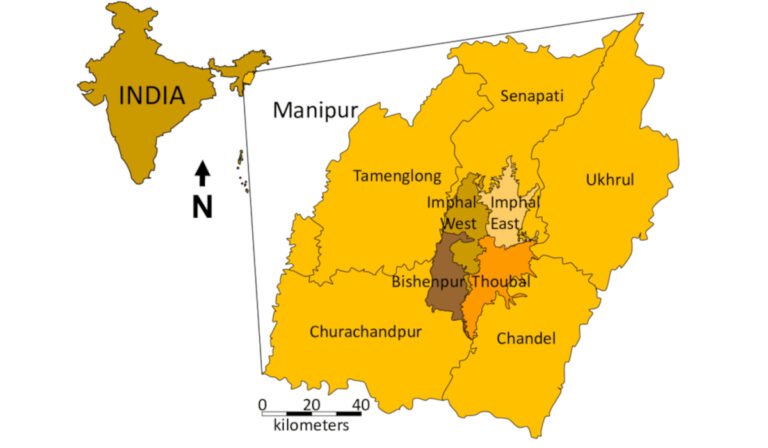
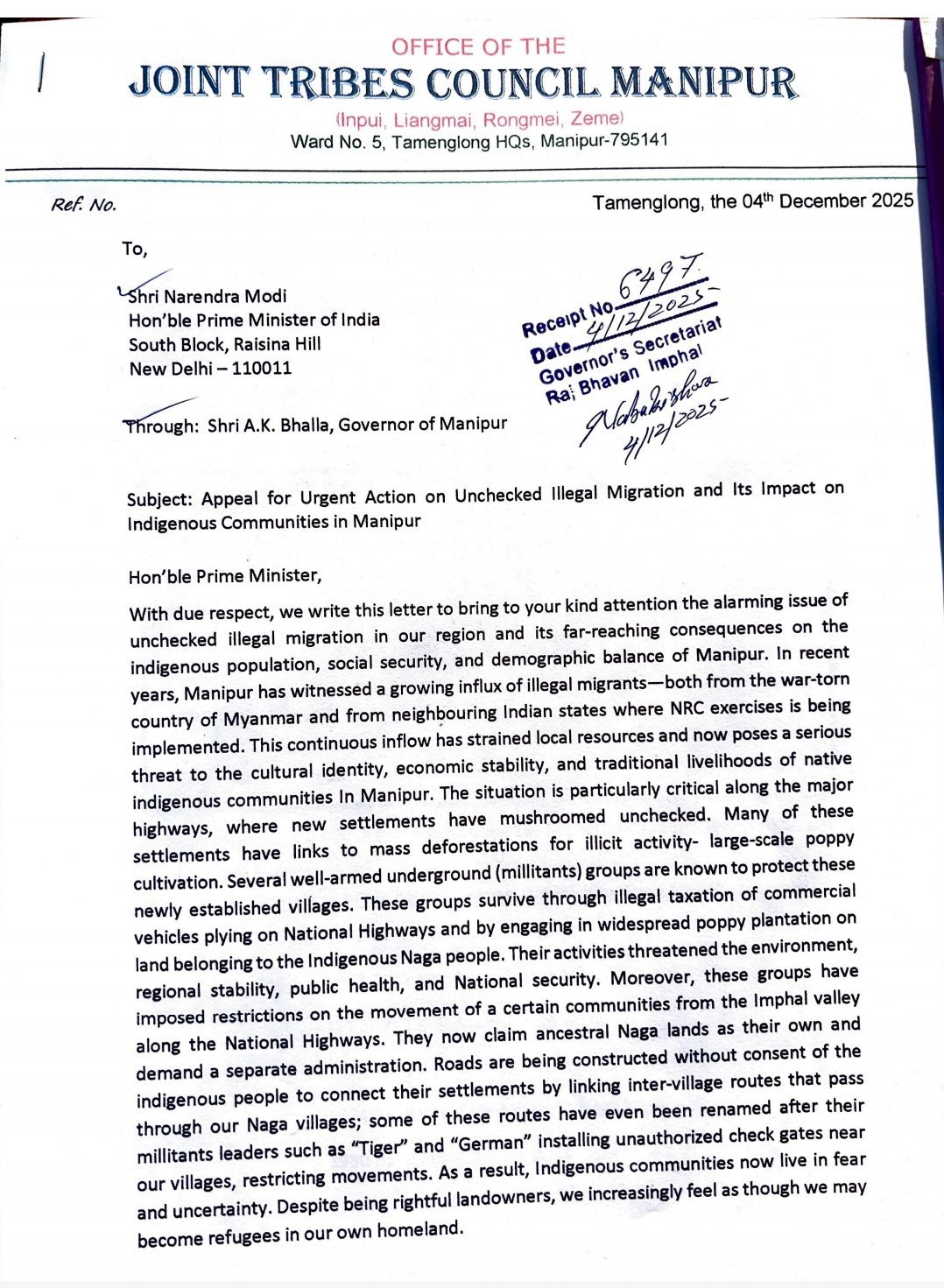
IMPHAL: The Joint Tribes Council (JTC) representing four Naga tribes in Manipur has written to Prime Minister Narendra Modi seeking urgent intervention over what it describes as “unchecked illegal immigration” from Myanmar and its alleged impact on indigenous populations. The letter, dated December 4 and signed by leaders of the Liangmai, Rongmei, Zeme and Inpui Naga councils, urges the Centre to take immediate measures to address what they call an escalating demographic and security challenge.

In the letter, the JTC argues that the continued inflow of people from across the Myanmar border has strained resources and placed pressure on land, employment and traditional livelihoods of indigenous communities. The organisation also warned that the issue, if left unaddressed, could have long-term implications for cultural identity and demographic balance in Manipur. “This continuous inflow has strained local resources and now poses a serious threat to the cultural identity, economic stability and traditional livelihoods of native indigenous communities,” the letter stated.

Concerns Raised Over New Settlements and Poppy Cultivation

The JTC, citing its own assessments, said that several new settlements have emerged along major highways, allegedly without the consent of local villages. The council further claimed that some of these settlements are linked to large-scale poppy cultivation and that underground groups are providing protection to those involved in such activities.

According to the JTC’s representation, these groups also allegedly impose illegal taxation on vehicles along national highways. The council warned that such activities pose risks to environmental stability, public health and national security. It said that these “well-armed groups” have also imposed restrictions on the movement of certain communities and have begun claiming ancestral Naga lands as their own.

Data Cited on Demographic Shift

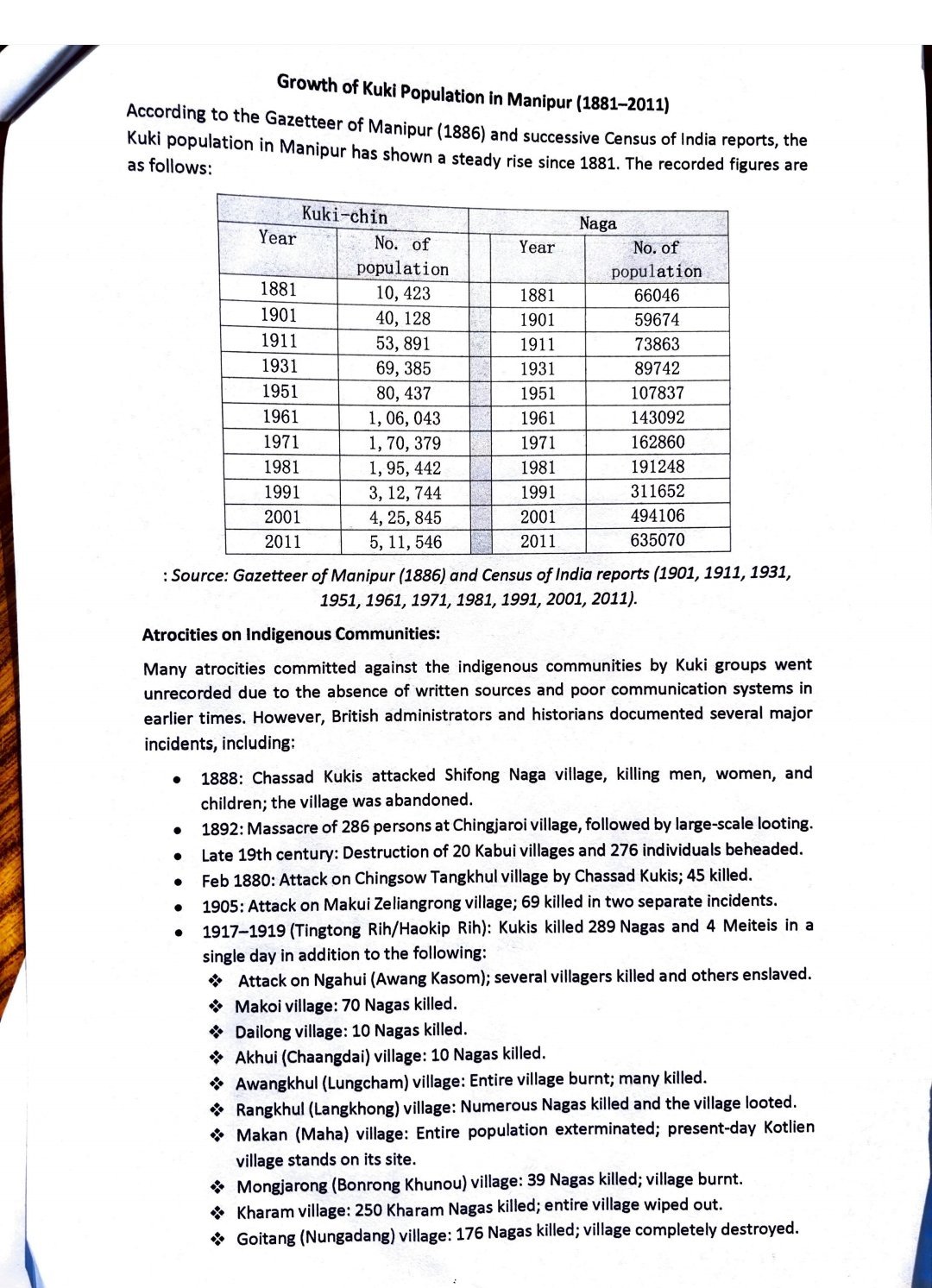
The letter cited historical census statistics to highlight what the JTC described as significant demographic changes in the Kuki population of Manipur between 1881 and 2011. According to the figures enclosed with the letter, the Kuki-Chin population rose from around 10,000 in 1881 to more than 5 lakh by 2011. The documents note periods of sharp rise in particular decades, which the council argues may be linked to migration.

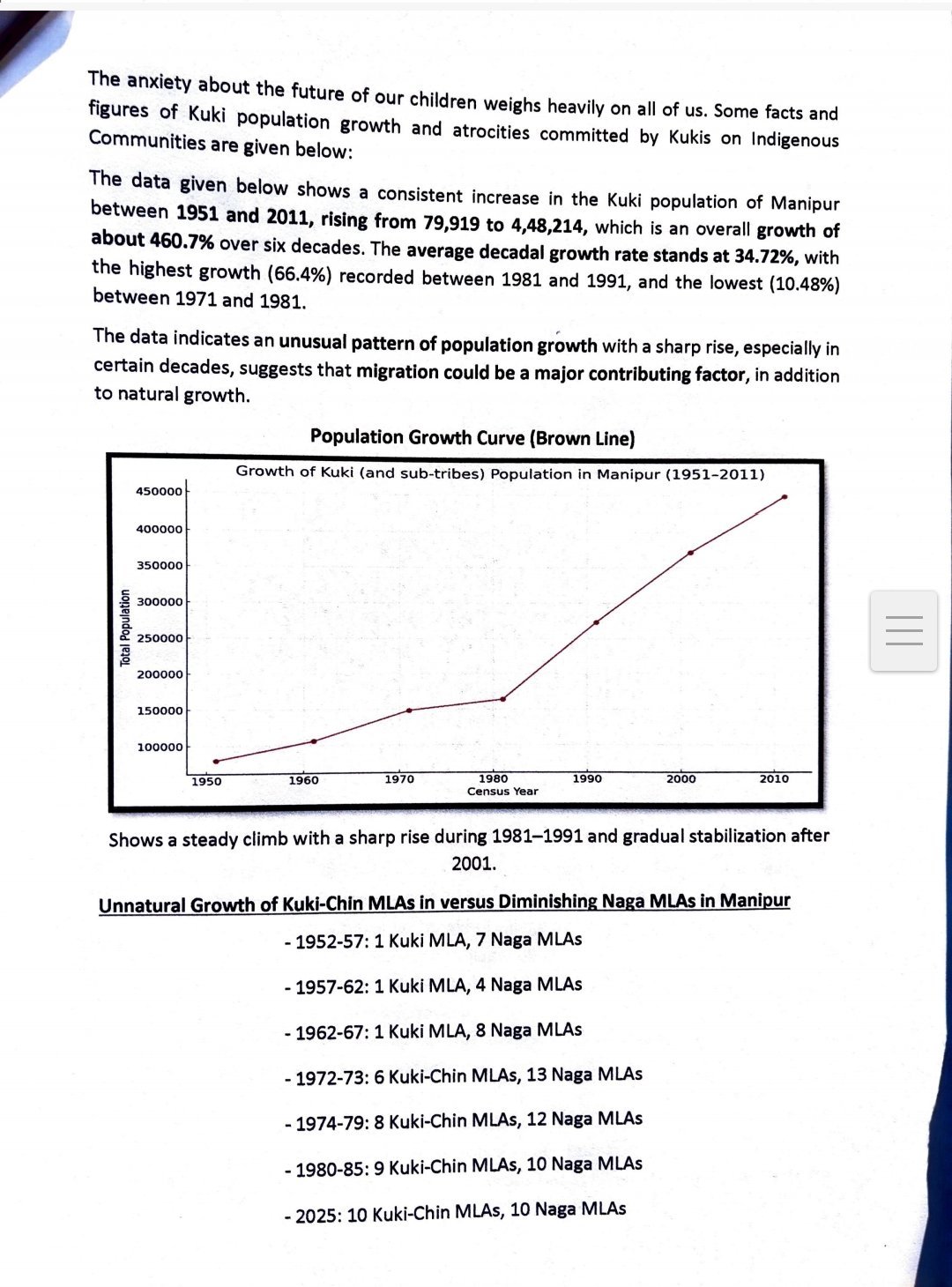
A population curve produced by the group shows notable increases between census years, particularly between 1981 and 1991. The JTC interpreted this as evidence of what it called an “unusual pattern of growth,” although the council did not provide external demographic studies to corroborate the reasons for the rise.

The representation also included an outline of MLA representation from different decades, suggesting that Kuki-Chin political presence had expanded steadily. The JTC contended that this shift reflects broader demographic changes, though it acknowledged that political representation is tied to electoral outcomes and constituency structures.

List of Historical Atrocities Attached

The JTC enclosed a list of violent incidents, some dating back to the late 19th and early 20th centuries, citing British-era documents and historical records. These incidents, described as attacks on indigenous communities, were included by the council to argue that longstanding grievances continue to shape present-day tensions. However, the report did not reproduce original historical sources, and the claims remain attributed solely to the council.

Call for Central Intervention

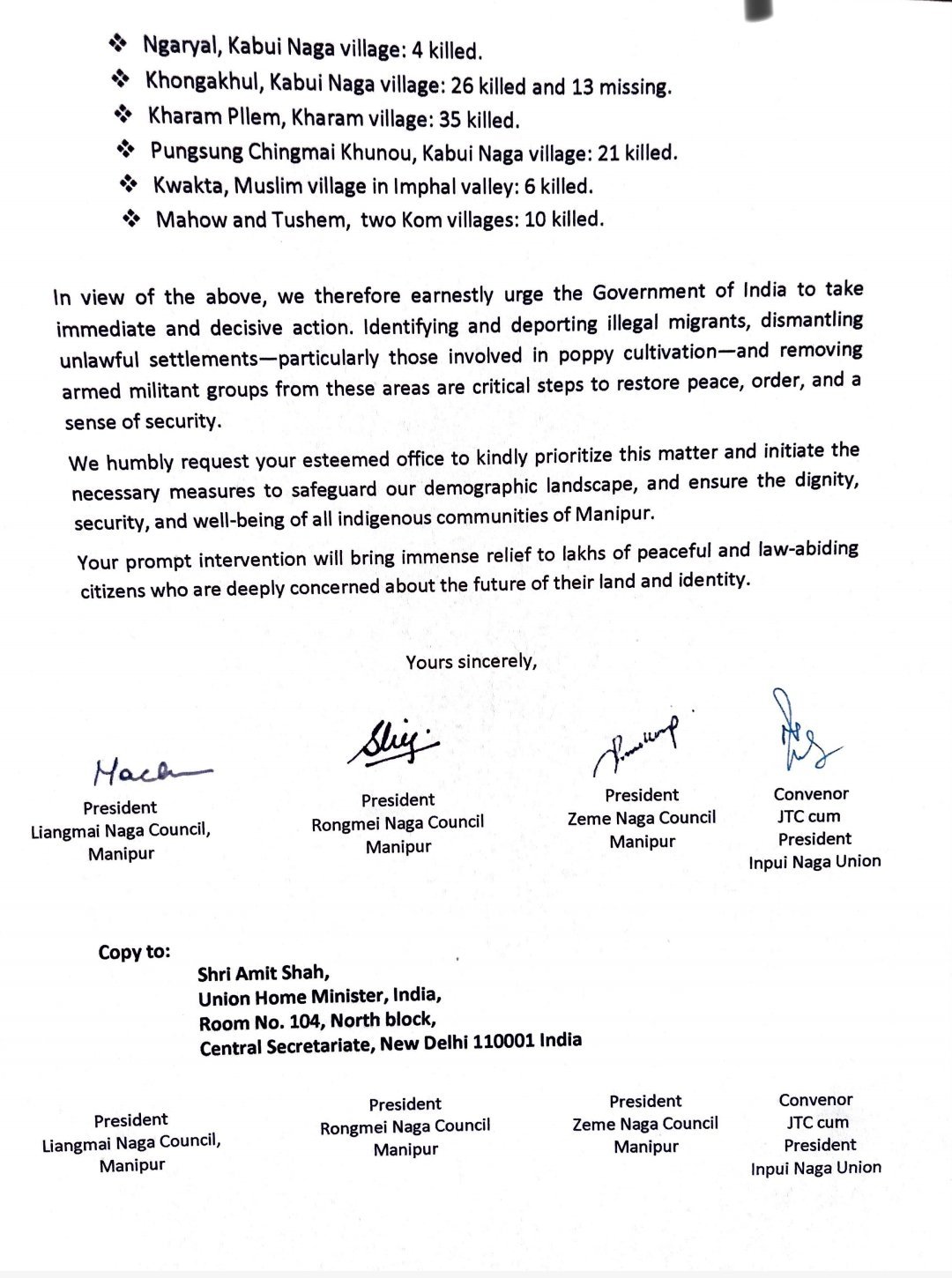
In its final appeal, the council urged the Government of India to identify and address alleged unlawful settlements, investigate links to poppy cultivation, and take steps to remove armed groups from affected regions. It said that decisive action is necessary to ensure “peace, order and a sense of security” for indigenous communities. The letter stated: “Your prompt intervention will bring immense relief to lakhs of peaceful and law-abiding citizens who are deeply concerned about the future of their land and identity.”

A copy of the representation has also been sent to Union Home Minister Amit Shah.

The Centre has not yet issued a public response to the concerns raised in the letter.

Namsai Marks International Day of Disabilities

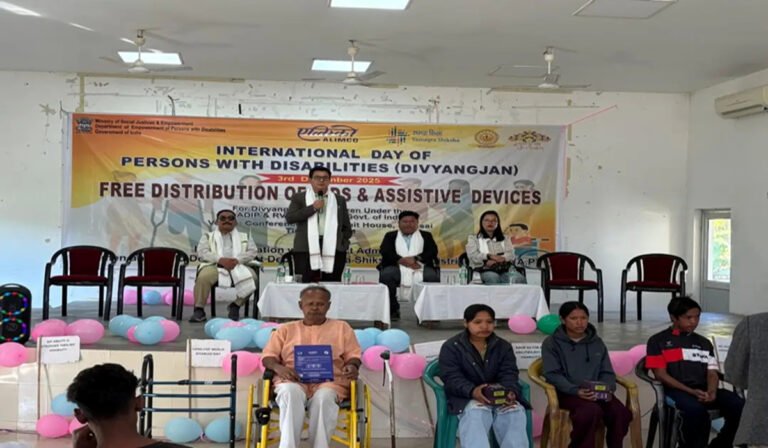
NAMSAI: The International Day of Persons with Disabilities was observed in Namsai district with a programme that highlighted inclusion, confidence-building and support for individuals with disabilities. The event was organised through a collaboration between ALIMCO, the District Administration, the Women and Child Development Department and Samagra Shiksha/ISSE.

Our correspondent reports that the gathering opened with a welcome address by Dr. Miti Siboh, District Nodal Officer of SJETA, who emphasised the importance of recognising the abilities and potential of persons with disabilities. Dr. Siboh reminded attendees that the day is not merely ceremonial but a call to ensure accessibility, dignity and equal opportunities. “Inclusion is not charity,” Dr. Siboh said. “It is a responsibility we all share.”

A detailed presentation was then delivered by Sanjeev Kumar of ALIMCO, outlining the organisation’s role in enabling individuals with disabilities through aids, appliances and mobility support. He briefed the audience on available schemes and assured families that ALIMCO would continue working to reach beneficiaries across the district.

Our correspondent adds that DDSE Pokdey Yomgam addressed the participants with words of encouragement, urging children and adults with disabilities to believe in their abilities and pursue education without fear or hesitation. He spoke about the need for schools and institutions to be supportive and inclusive. “Every learner deserves the chance to thrive,” he said. “Our systems must adapt to ensure that no child is left behind.”

A significant highlight of the programme was the participation of the Deputy Commissioner of Namsai, who concluded the event with a motivational message. He reiterated the district administration’s commitment to supporting persons with disabilities and called for a shift in societal attitudes. “You are not lesser in any way,” the Deputy Commissioner told the beneficiaries. “You are capable, strong and equal members of this society.” He later distributed aids and appliances supplied by ALIMCO, ensuring that beneficiaries received essential support equipment to help improve mobility and daily functioning.

Our correspondent reports that families attending the programme expressed appreciation for the initiative, noting that such events provide not just assistance but also recognition and a sense of belonging. Parents shared that many children with disabilities often struggle silently, and community-level programmes like this help them feel seen and valued.

The formal programme concluded with a vote of thanks from Ms. Nabam Yayek, who acknowledged the coordinated efforts of all departments and organisations involved. She emphasised the need for continued collaboration to create an inclusive district where persons with disabilities have access to education, livelihood and public services.

Our correspondent adds that the event in Namsai reflects a broader shift toward community-based support for persons with disabilities across Arunachal Pradesh. Officials said similar programmes will be carried out in other districts to ensure wider coverage. Many participants voiced hope that infrastructure upgrades, awareness drives and improved accessibility will follow the spirit of the day’s observance.

The commemoration served as both a celebration of resilience and a reminder of the work that remains in creating a society rooted in equality and empowerment.

Remembering Zubeen Garg: A Rockstar Who Sang Our Souls

Though I never had the chance to interact with Zubeen Garg, I knew him from his days at J.B. College, long before the release of the iconic Anamika album that catapulted him into stardom. Even then, he was impossible to miss. With his long, curly locks cascading over his shoulders, he carried an air of defiance and flamboyance that set him apart in the crowd. There was a certain aura about him — a restlessness, a hunger, perhaps even an intuition that he was destined for greatness.

When he moved to Guwahati, the trajectory of his career became known to all. From Assamese melodies to Hindi blockbusters, from Bengali ballads to devotional anthems, Zubeen’s voice became omnipresent — an inseparable part of our lives. Whether you were heartbroken, joyous, ready to dance, overcome with patriotism, or searching for spiritual solace, there was always a Zubeen Garg song to mirror your emotions. His versatility was not merely a testament to his craft but to the soulfulness with which he sang.

Zubeen lived life unapologetically — a true rockstar in every sense. He was flamboyant, larger than life, and wore his heart on his sleeve. He could be headstrong and impulsive, yet that very unpredictability made him real and deeply relatable. He was not the kind of artist who played safe; he was the kind who lived and sang with reckless abandon, often blurring the line between art and life. Even in his fifties, he retained the same youthful exuberance that had defined him decades earlier. His voice, like fine wine, only grew richer with time.

And yet, perhaps subconsciously, I never could imagine Zubeen growing old or mellowing down. He lived dramatically, and one could only assume that his departure, whenever it came, would bear that same intensity. But I had always hoped it would be decades away — after he had gifted us many more songs, many more anthems for our lives. At 52, he had far too much left to give, too many promises yet to fulfill, too many dreams left unspoken for his community, his people, and his art.

While we mourn his untimely demise, I cannot help but feel a deep, unsettling anger. Zubeen was known to suffer from epileptic fits — a condition where the first caution is to avoid open water. Yes, he was headstrong and often lived by his own rules, but that is precisely why those around him bore the greater responsibility of ensuring his safety. Stars may demand freedom, but those who love them — whether friends, colleagues, or organisers — must sometimes have the courage to intervene. That did not happen. He was in Singapore as an ambassador of the Northeast, invited to perform at a prestigious festival. His safety should have been paramount. It wasn’t. And for that, I cannot help but feel we, as a society, failed him.

Now, it is too late. The voice that gave us Ya Ali, Dil Tu Hi Bataa, Mayabini, and countless other gems has been silenced. The void he leaves is cavernous, one that no one will ever truly fill. For millions of his admirers, myself included, his passing feels personal — as if a part of our own youth, our memories, and our emotional soundtracks have been ripped away.

Rest in peace, Zubeen. You were more than a singer; you were a phenomenon. You will continue to sing through us — in every joyous gathering, in every silent heartbreak, in every song that lifts our spirit. And wherever you are now, may your voice still echo, reminding the universe that legends never truly die.

Assam’s beloved Zubeen Garg Dies In Scuba Diving Accident

Zubeen Garg, the celebrated singer from Assam known for his versatility and powerful voice, passed away at the age of 52 in a tragic scuba diving accident in Singapore on September 18, 2025. He was in the city to participate in the North East India Festival and to perform as a cultural ambassador.

Reports indicate that during a scuba diving activity, Garg experienced severe breathing difficulties. He was rescued and taken to Singapore General Hospital’s intensive care unit, where doctors made every effort to save him, but he was declared dead later that day.

Garg was born in 1972 in Meghalaya, and raised in Assam, with his birth name being Zubeen Borthakur. He began his musical journey at a young age and rose to widespread fame with the song “Ya Ali” from the film Gangster. Over the course of a long and varied career, he sang in multiple languages including Assamese, Hindi, Bengali, and many others.

His contribution to the Indian music industry extended beyond playback singing; he was also known for his regional albums and was deeply loved in the Northeast for his cultural impact. He had built a reputation not only for vocal ability but also for his ability to connect with audiences across linguistic and cultural lines.

News of Garg’s death drew condolences and tributes from colleagues, fans, and public figures. Assam Chief Minister Himanta Biswa Sarma called his passing “a deeply painful loss” and said, “Today Assam lost one of its favourite sons.” Many expressed how Garg’s music brought joy, identity, and inspiration.

Organisers of the North East India Festival confirmed that Garg was slated to perform on September 20 and had posted days before the event, inviting fans to join him in Singapore. The announcement of his death, coming before the scheduled performance, has deeply saddened the festival community.

As details continue to emerge, the exact circumstances leading to the accident are still under investigation. Authorities are looking into how breathing complications developed, and whether safety protocols during the diving activity were in place and followed.

Zubeen Garg’s death leaves a void in the world of music — both in Bollywood and regional music circuits. His songs like Ya Ali, Dil Tu Hi Bataa, Jaane Kya Chahe Mann, and many others will continue to be cherished. The news has triggered an outpouring of grief across Assam and among music lovers across India and abroad.

Nupur Bora, Surajit Bora Sent To CM Vigilance Custody

Assam Civil Services (ACS) officer Nupur Bora and Surajit Bora have been sent to three-day custody to the Chief Minister’s Vigilance Cell as part of an ongoing probe into corruption and financial irregularities. The move follows raids that uncovered unaccounted cash and jewellery linked to the accused.

Our correspondent reports that searches were conducted at multiple premises, including residences in Guwahati and Barpeta. Officials confirmed the recovery of over ₹1 crore in cash, gold ornaments, and property documents during the operations.

According to vigilance authorities, Nupur Bora is alleged to have played a key role in facilitating illegal land transactions while posted in Barpeta. Our correspondent adds that Surajit Bora, a revenue official, was reportedly working in collusion with her to push through questionable land transfers.

Our correspondent reports that the vigilance cell secured custody after presenting case evidence in court, citing possession of assets disproportionate to their known sources of income. The accused are now being interrogated for further details on their alleged role in land and revenue scams.

Chief Minister Himanta Biswa Sarma has reiterated that his government follows a policy of zero tolerance toward corruption in public service. Our correspondent adds that this action is seen as a strong message to bureaucrats and revenue officials that malpractice will be met with strict scrutiny.

The vigilance team is expected to interrogate the officers, trace financial transactions, and examine seized records during the remand period. Investigators are also probing whether additional individuals or networks were involved in the illegal land deals.

The arrests have stirred debate within bureaucratic and political circles, with public attention fixed on how this case may influence reforms in Assam’s land administration system.