Aizawl Linked To National Rail Network; First Rajdhani Flagged Off

0

Mizoram has taken a momentous step forward in connectivity as Prime Minister Narendra Modi on September 13, inaugurated the Bairabi-Sairang railway line, officially linking Aizawl, the state capital, to India’s national railway network for the first time. The project, costing around ₹8,070 to ₹8,215 crore, was completed after years of planning and engineering through difficult terrain.

The 51.38 km broad-gauge line includes 48 tunnels, 55 major bridges, and 87 minor bridges. Among the most notable structures is Bridge No. 196, which stands 104 metres high — taller than the Qutub Minar — and is now the second-highest rail bridge in the Northeast.

Alongside the rail link, the Prime Minister flagged off the state’s first Rajdhani Express service: the Sairang-Anand Vihar Terminal Rajdhani Express. This weekly train service will begin its regular run from September 19. The train covers approximately 2,510 to 2,512 km, taking about 42 hours and 20 minutes to reach Delhi.

The Rajdhani train has stops at key junctions including Bairabi, Badarpur Junction, New Haflong, Hojai, Guwahati, New Jalpaiguri, Patna, and Kanpur Central among others.

PM Modi described the inauguration as a “historic day” for Mizoram. He emphasized that this integration will not just improve accessibility but also open up opportunities in trade, tourism, education, and healthcare. Aizawl, he said, will now emerge from longstanding isolation.

State officials noted that the completion of this project has been especially challenging due to the region’s rugged geography, heavy rainfall, seismic activity, and the need for numerous bridges and tunnels. But those hurdles were finally cleared, with the infrastructure ready to boost socio-economic growth.

Local residents and travel-dependent businesses have greeted the launch with enthusiasm. Shorter travel times, reduced dependence on unreliable road transport, and more direct access to larger commercial centres are expected to improve livelihoods.

The Rajdhani Express, with its fully air-conditioned coaches, is seen not just as a convenience but as a symbol of belonging — for the people of Mizoram to be directly connected to India’s capital by premium rail service.

In summary, the inauguration of the Bairabi-Sairang rail line and the launch of the Rajdhani Express mark a transformational moment in Mizoram’s history. Beyond steel tracks and bridges, this development promises improved mobility, economic stimulation, and integration with the broader national framework.

Assam’s Broken Promises and the Weight of Betrayal

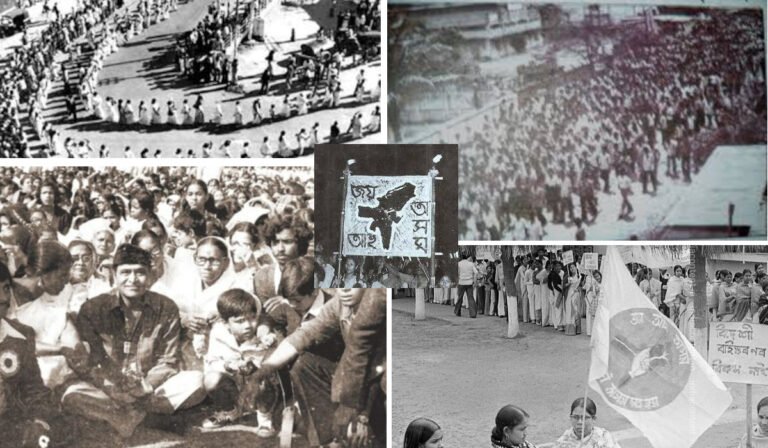
I grew up amidst the chants of protest and the acrid sting of tear gas drifting through the streets of Assam. As a child in the late 1970s and early 1980s, I watched my mother, my uncles and aunts, and even our neighbours leave behind the safety of their homes to march in the Assam Agitation. It was not some distant political movement; it was a visceral struggle that consumed the very rhythm of daily life. Schooling was interrupted, careers were abandoned, and lives were extinguished in the name of safeguarding our homeland. More than eight hundred and fifty martyrs gave their lives, believing that their sacrifice would secure the identity and dignity of future generations. Yet today, I cannot help but ask—for what?

The Government of India’s recent order under the Immigration and Foreigners Act, 2025 has reopened old wounds. By permitting non-Muslim migrants from Afghanistan, Bangladesh and Pakistan who entered India on or before 31 December 2024 to remain even without valid documents, Delhi has once again shifted the goalposts. For policymakers, this may appear a gesture of humanitarian relief. But for us in Assam, it feels like the slow unravelling of the Assam Accord of 1985, the very pact that was supposed to guarantee our survival.

The blow first fell with the Citizenship (Amendment) Act, 2019, which had already extended the cut-off date for such migrants to 31 December 2014. That Act effectively nullified the Accord’s solemn deadline of 24 March 1971, a date consecrated by blood and compromise. It was not simply a legal threshold; it was the cornerstone of trust between the Assamese people and the Indian state.

Now, with the 2025 order, the cut-off has been pushed yet another decade forward. Each such extension is more than an administrative adjustment; it is a symbolic betrayal. It tells every family who lost a loved one in the agitation that their sacrifice has been treated as expendable. It reopens scars that had never truly healed.

For the rest of India, this is an abstract debate about refugee protection. For us, it is an existential crisis. The demographic equilibrium of Assam is already precarious. The Assamese language, culture and political voice stand imperilled. In village after village, town after town, quiet demographic shifts erode the very essence of our homeland. The threat is not merely economic or electoral; it is civilisational.

I am not without compassion for those fleeing persecution. Yet I ask: why must Assam perpetually bear the disproportionate burden of India’s refugee policies? Why must our fragile identity be sacrificed at the altar of national humanitarianism?

When I recall the faces of my family and neighbours, chanting through the streets in those turbulent years, I struggle to find words. They believed their courage would protect us, that the Accord enshrined their sacrifice. Today, as Delhi moves the goalposts yet again, I am left with the most painful of questions: was it all for nothing?

Assam’s Existential Crisis: 2025 Immigration Order Reopens Old Wounds

0

The latest directive of the Government of India, issued under the Immigration and Foreigners Act, 2025, has once again thrown Assam into turmoil. To much of the country, the notification appeared to be a matter of legal housekeeping, a humanitarian gesture intended to address a lingering refugee question. But for Assam, the order has landed like a hammer blow. It has revived decades-old wounds, unsettled the political landscape, and reignited the central debate about identity, land, and survival in the Brahmaputra Valley.

The order states that non-Muslim migrants from Afghanistan, Bangladesh, and Pakistan who entered India on or before December 31, 2024, will be permitted to stay even without valid travel documents. Across most of India, this might appear as a continuation of earlier refugee policies. But for Assam, it represents something far more profound: a perceived betrayal of the Assam Accord of 1985 and the sacrifices of hundreds of young men and women who fought and died during the six-year-long Assam Agitation.

A Return to the Fears of the 1970s

To understand why this notification has created such deep resentment, one must return to the late 1970s, when the illegal immigration issue first exploded into a mass movement. Assam had long been a land of migration, with waves of people arriving since colonial times. But after the 1971 Bangladesh Liberation War, the inflow of migrants—many undocumented—accelerated dramatically.

For Assamese communities, this influx threatened their fragile demographic balance. Concerns grew that the indigenous population would be reduced to a minority in their own state, outnumbered in political representation, squeezed out of land ownership, and overshadowed culturally. The electoral rolls swelled with names of doubtful authenticity, creating a sense of disenfranchisement among the locals.

The unrest culminated in the Assam Agitation of 1979–1985, led by the All Assam Students’ Union (AASU) and the All Assam Gana Sangram Parishad (AAGSP). This mass movement mobilized people across every district, with students, farmers, artists, and professionals joining hands. The demand was simple but uncompromising: “Detect, Delete, Deport”. Illegal immigrants, regardless of religion, had to be identified and removed.

The agitation saw massive protests, civil disobedience campaigns, and blockades. The price was heavy—over 855 protestors became martyrs. Their sacrifice has become part of Assam’s collective memory, etched into songs, literature, and political identity. For the Assamese people, their deaths formed a moral pact: their state’s culture, language, and identity would be safeguarded forever.

The Assam Accord: A Promise of Protection

The movement culminated in the Assam Accord, signed on August 15, 1985, between the Government of India and the leaders of the agitation. At its core was the acceptance of a cut-off date of March 24, 1971. Anyone who had entered Assam after that date would be treated as a foreigner and was liable to be deported.

This date was non-negotiable. It was tied to the Bangladesh Liberation War and was seen as a fair compromise between humanitarian concern and Assamese survival. The Accord also included Clause 6, which promised constitutional, legislative, and administrative safeguards to protect the cultural, social, and linguistic identity of the Assamese people.

For Assam, the Accord was not just a political settlement; it was a sacred covenant. Every subsequent law or policy was expected to honor its spirit. For the people who had lived through the agitation, the Accord was the guarantee that their sacrifices had not been in vain.

The First Betrayal: Citizenship Amendment Act, 2019

The first shock to this hard-won peace came with the Citizenship (Amendment) Act, 2019 (CAA). The CAA offered a path to Indian citizenship for non-Muslim minorities from Afghanistan, Bangladesh, and Pakistan who had entered India before December 31, 2014.

While the rest of India debated the Act in terms of secularism, religion, and refugee protection, Assam saw it as a direct attack on the Assam Accord. By setting the cut-off date to 2014, the CAA extended the window by 43 years beyond the 1971 deadline. It meant legitimizing hundreds of thousands of migrants who, by the Accord’s terms, were supposed to be excluded.

Massive protests broke out in Assam. Streets filled with slogans echoing the spirit of the 1980s agitation. Once again, ordinary people felt that Delhi had ignored their unique historical and cultural context. They feared the permanent demographic alteration of their homeland, with linguistic, cultural, and political consequences that could not be undone.

The 2025 Order: A Second Betrayal

If the CAA was the first betrayal, the Immigration and Foreigners Order, 2025, is seen as the final blow. By pushing the cut-off date even further, to December 31, 2024, the Central government has effectively rendered the 1971 deadline meaningless.

In the eyes of Assamese society, this order nullifies the very essence of the Assam Accord. It acknowledges that infiltration has continued for decades and chooses to legitimize it. For the Assamese, it is a reopening of a wound that never healed, a reminder that their sacrifices can be disregarded by the state in pursuit of larger political calculations.

Political Fallout: The Dilemma of the AGP

The new order has placed the Asom Gana Parishad (AGP), born out of the Assam Agitation, in a profound dilemma. As an ally of the BJP-led ruling coalition, AGP has been part of the government that has now introduced the directive. Yet, ideologically, its entire existence is tied to the Assam Accord.

AGP vice-president Kumar Deepak Das has announced that the party will move the Supreme Court against the order. He declared, “Any step that seeks to dilute or is against the Assam Accord will be protested vehemently by our party.” This reflects the pressure the AGP faces from its support base, which sees the Accord as non-negotiable.

The AGP’s challenge illustrates the contradictions of regional politics in Assam, where leaders must balance local sentiment with the compulsions of national alliances.

Opposition Criticism and Public Anger

The Congress and other opposition parties have strongly condemned the order. They allege that the directive is a deliberate vote-bank strategy by the BJP, intended to cultivate support among certain migrant communities while ignoring the long-term cultural consequences for Assam.

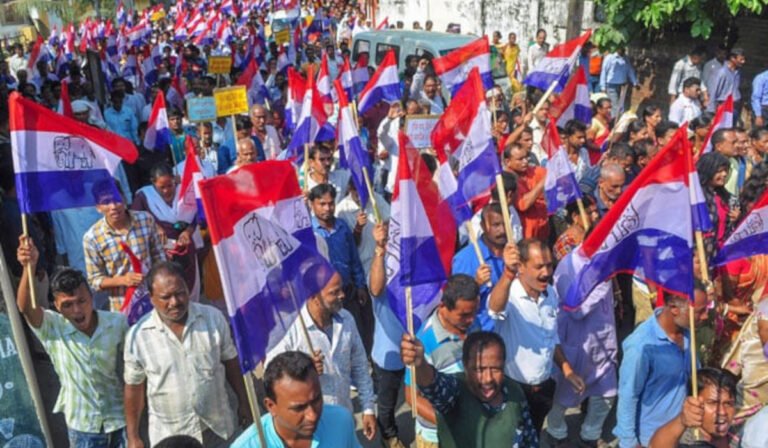
The Congress has gone so far as to call it a “conspiracy to destroy the Assamese identity”. Civil society groups and student organizations, particularly the All Assam Students’ Union (AASU), have also reacted with outrage. Demonstrations are being planned across the state, echoing the fiery days of the late 1970s and early 1980s.

The recurring sentiment is that Assam has been treated as a dumping ground for migrants, left to absorb the consequences of India’s refugee policies while the rest of the nation debates abstract principles.

Identity, Land, and Language: The Core of the Crisis

The implications of the 2025 order go beyond politics. They strike at the very existential anxieties of the Assamese people.

For a community where identity is rooted in land and language, the continuous influx of migrants threatens to permanently change the demographic landscape. Villages and towns across the Brahmaputra Valley have already witnessed shifts in population patterns. Indigenous groups fear losing not just jobs and land, but also the dominance of the Assamese language and culture.

The fear is not abstract. Assamese activists point to shrinking representation in local constituencies, changes in linguistic patterns, and the gradual dilution of cultural practices. To them, the 2025 order represents not just an economic or administrative problem but a civilizational threat.

Delhi’s Policies vs. Assam’s Realities

Underlying the crisis is a long-standing complaint: that Delhi makes policies for Assam without fully understanding its unique context. Decisions like the 2019 CAA and now the 2025 order are seen as being driven by national political calculations, with little sensitivity to Assam’s historical struggles.

For many Assamese, this reinforces the perception that the Northeast continues to be treated as a periphery, a region expected to absorb national challenges at the cost of its own identity.

The Struggle Continues

The legal challenges mounted by the AGP, the protests planned by AASU, and the outrage of civil society indicate that the fight over Assam’s future is far from over. The 2025 order has reignited the very questions that defined the Assam Agitation nearly five decades ago.

It has reopened debates about who belongs, who decides, and how far promises made to a people can be stretched before they break. For the Assamese, this is not simply about migrants or documents; it is about the survival of a culture and a way of life.

As the protests grow and the case moves to the courts, one thing is clear: Assam’s battle to protect its identity, first crystallized in the flames of the 1979 agitation, remains unfinished. The sacrifices of the past weigh heavily on the present, and the future of the state continues to hang in the balance.


AGP to Move Supreme Court Against CAA Cut-off Extension

The Asom Gana Parishad (AGP), a key ally in Assam’s ruling coalition, has announced its decision to petition the Supreme Court to exempt the state from a new Central government order on foreign immigrants. The party believes the directive, which extends the cut-off date for eligibility for citizenship, violates the 1985 Assam Accord.

AGP vice-president Kumar Deepak Das told reporters on Saturday that the party will file a writ petition before the Supreme Court. “Any step that seeks to dilute or is against the Assam Accord will be protested vehemently by our party,” he stated.

The new order, issued under the Immigration and Foreigners Act, 2025, allows non-Muslim migrants who entered India from Afghanistan, Bangladesh, and Pakistan on or before December 31, 2024, to stay without valid documents if they fled religious persecution. This represents a significant shift from the Citizenship (Amendment) Act, 2019 (CAA), which had set the cut-off date a decade earlier, on December 31, 2014. Critics argue this extension will disproportionately affect Assam.

Das expressed the AGP’s “full faith in the judiciary” and its confidence that the Supreme Court will rule in the state’s favor. He also noted that the party has not yet decided whether to remain a part of the NDA alliance.

The AGP had previously filed a separate petition against the CAA in the Supreme Court, a case which is still pending. With this new legal challenge, the party is reaffirming its stance that Assam, a state already burdened by illegal immigration, cannot accept the additional influx of migrants.

Tickets Now on Sale for Women’s World Cup Matches in Guwahati

0

The ICC Women’s Cricket World Cup 2025 is set to be the most affordable global cricket event in history, with tickets for the India and Sri Lanka match to be held in Guwahati is now available for booking. An exclusive pre-sale for tickets, accessible through Google Pay at tickets.cricketworldcup.com, began on Saturday at 7 pm IST and will run for four days.

In India, group-stage match tickets start at a record low of just Rs 100, making the tournament highly accessible for fans. This initiative is part of the ICC’s new global partnership with Google, a collaboration focused on increasing fan engagement in women’s cricket. General ticket sales will open to all fans from September 9 at 8 pm IST.

The tournament will kick off with a grand opening ceremony in Guwahati, headlined by acclaimed singer Shreya Ghoshal. She will perform live before the opener between India and Sri Lanka on September 30. Ghoshal has also sung the official tournament anthem, “Bring it Home.”

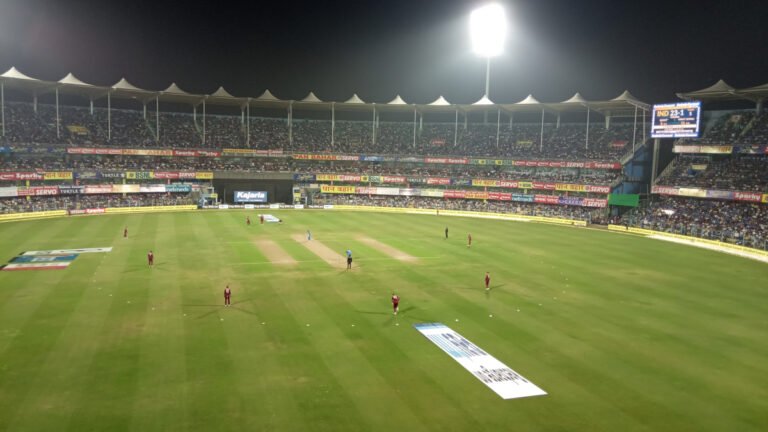
This marks the return of the Women’s World Cup to India after 12 years, with eight teams competing for a record prize pool of USD 13.88 million. Guwahati’s ACA Stadium at Barsapara is a key venue, scheduled to host four league matches, including the inaugural fixture. Organizers anticipate record fan turnout, promising a major sporting and cultural event.

Arunachal’s ‘Sun Rise Festival’ to welcome New Year at easternmost village

In a move to boost tourism and showcase its natural beauty, Arunachal Pradesh will host a five-day “Sun Rise Festival” at Dong, the easternmost village of India. The festival, announced by Chief Minister Pema Khandu, is scheduled to take place from December 29 to January 2, allowing visitors to witness the first sunrise of the new year.

Situated at an altitude of 1,240 meters near the tri-junction of India, China, and Myanmar, Dong is the first place in the country to be touched by the sun’s rays each morning. The state government views this event as a significant step toward placing the remote village firmly on India’s tourism map.

“From this year onwards, we will be hosting a five-day Sun Rise Festival at Dong to boost tourism and create new opportunities for adventurers and nature lovers,” Khandu stated on social media. The chief minister recently visited the area, saying, “Landed in Walong, Anjaw district, and will be heading towards Dong, the place where the first sun ray touches Indian soil.”

According to the state Tourism Department, the festival will feature a variety of activities, including local cultural performances, adventure sports, and eco-tourism initiatives. These events are designed to highlight the unique traditions and stunning landscapes of the Anjaw district.

The initiative aims to strengthen Arunachal Pradesh’s reputation as a prime destination for adventure and nature-based tourism. Khandu has extended an open invitation to people from across the country to experience the breathtaking landscape of Anjaw and “witness the first dawn of the New Year in the Land of the Rising Sun!”

Inspector Zende: Weak Storytelling and Comedy Miss the Mark

0

I watched Inspector Zende with high expectations, but the film left me disappointed. If I had to rate it, I would give it only 1.5 stars out of 5.

The movie tries to present itself as a quirky cat-and-mouse comedy, but the humor never rises beyond slapstick. The jokes felt juvenile, like hanging out with someone whose sense of humor never grew past middle school. Instead of being sharp, witty, or even darkly funny, the comedy just fell flat.

What makes this more frustrating is that the story had so much potential. The real Inspector Madhukar Zende captured Charles Sobhraj twice, a tale filled with tension, mystery, and intrigue. But here, that rich history is wasted on gags that feel hollow and misplaced.

Manoj Bajpayee is the only saving grace. He brings sincerity and grit to Zende, but even he cannot elevate the weak script. I could sense shades of his earlier roles, but this time they felt empty. Jim Sarbh, who could have made Carl Bhojraj menacing and magnetic, instead comes across as cartoonish—more caricature than criminal.

By the second half, the pacing drags, the suspense is gone, and the entire narrative feels predictable. What could have been a tense thriller instead fizzles into a repetitive and frustrating watch.

My verdict: Inspector Zende is more irritating than entertaining. The comedy falls flat, the suspense evaporates, and the talent of its cast is squandered. At best, it’s the kind of film you might play in the background while folding laundry. 1.5 stars out of 5.

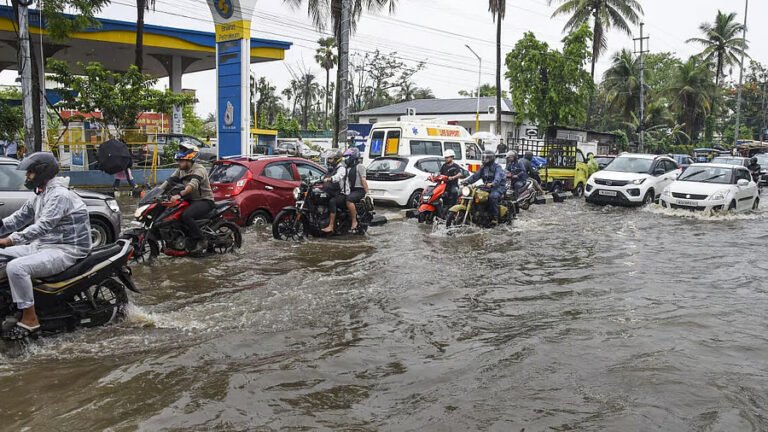
3-Year-Old’s Tragic Death in Open Drain Spurs Public Outcry, CM Orders Survey

A tragic incident in the Kalapahar area of Guwahati has ignited a firestorm of public outrage and placed a harsh spotlight on the city’s persistent issues with civic negligence. On September 3 (Wednesday), a three-year-old child tragically died after falling into an open drain at a construction site, leading to widespread calls for accountability and urgent action from authorities.

The incident has been met with shock and condemnation from residents who cite a long-standing pattern of safety lapses, including uncovered drains, unlit construction zones, and haphazardly dumped materials that pose a serious risk to the public.

In a swift and decisive response, Chief Minister Himanta Biswa Sarma has ordered a comprehensive satellite survey of all open manholes and drains across the city. The directive aims to create a detailed inventory of potential hazards and ensure that necessary measures are taken to prevent similar incidents in the future. The Chief Minister’s office stated that the survey is a crucial step toward enhancing urban safety infrastructure.

Adding to the official response, the Public Works Department (PWD) has issued a show-cause notice to the construction company responsible for the site where the tragedy occurred. The notice demands an explanation for the grave safety lapse and indicates that strict action, including penalties and potential suspension of work, could be forthcoming.

However, for many residents, these actions, while welcome, are seen as belated. “This shouldn’t have happened,” said a local resident, who wished to remain anonymous. “We have been raising these issues for years. It takes a child’s life for them to finally pay attention.”

The incident has refocused attention on the critical need for stricter enforcement of safety regulations at construction sites and a more proactive approach to maintaining civic infrastructure. As the city mourns the loss of a young life, the tragedy serves as a stark reminder of the human cost of civic negligence and the urgent need for systemic change. The coming days will see if the renewed focus on safety can translate into concrete, lasting improvements that protect the city’s most vulnerable citizens.

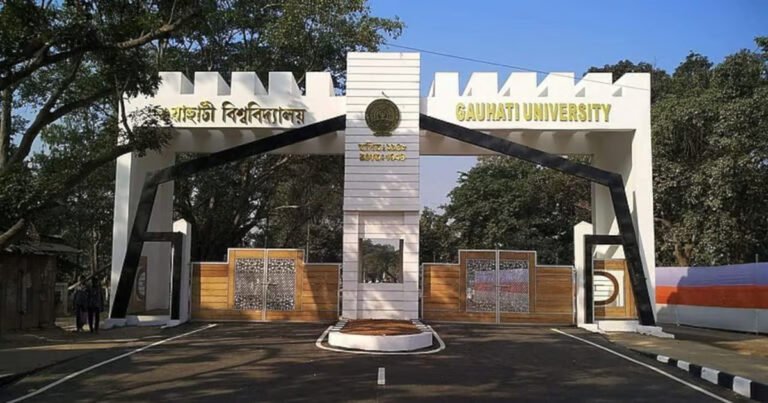
Gauhati University Among Top 10 State Universities in India in NIRF Rankings

In a proud moment for Assam, Gauhati University has secured a place among the Top 10 State Universities of India in the prestigious NIRF Rankings 2025. The recognition has been hailed as a significant achievement for the academic community of the Northeast and a testimony to the university’s growing national reputation in higher education.

Chief Minister Himanta Biswa Sarma took to his official X account on Thurday to extend his congratulations. In his post, he wrote, “This is an excellent news. Congratulations to Team @GauhatiUniv on securing a spot as one of the Top 10 State Universities of India.”

The Chief Minister’s message underscored the pride this recognition brings not only to the university but to the entire state of Assam. He noted that Gauhati University’s consistent focus on academic excellence, research, and innovation has placed it firmly on the national map, inspiring students and faculty alike.

Gauhati University, one of the oldest and most respected higher education institutions in the Northeast, has steadily improved its academic profile in recent years, with enhanced research output, infrastructure, and global collaborations. Educationists have welcomed the NIRF recognition as a reflection of the university’s commitment to quality learning and knowledge creation.

The achievement is being seen as a boost to Assam’s higher education sector, motivating other state institutions to strive for excellence and strengthen the state’s presence in India’s academic landscape.

Assam CM Himanta Biswa Sarma Pays Tribute to Dr. Sarvepalli Radhakrishnan on Teachers’ Day

On the occasion of Teachers’ Day, Assam Chief Minister Himanta Biswa Sarma remembered former President of India and great philosopher Dr. Sarvepalli Radhakrishnan on his birth anniversary, which is celebrated across the country as a tribute to the teaching community.

In a post shared on his official X handle, CM Sarma wrote, “Remembering former President of India, Sarvepalli Radhakrishnan ji on his jayanti, commemorated as #TeachersDay. Across India, we mark this day to honour the people who instill the values of good education and propriety in young children and mould them to become better humans.”

The Chief Minister highlighted the unmatched role of teachers in society, noting that they are the ones who nurture values, shape character, and guide the younger generation to become responsible citizens. By recalling the contribution of Dr. Radhakrishnan, he stressed that Teachers’ Day is not just a day of celebration but also an occasion to reaffirm the nation’s respect for those who dedicate their lives to education.

CM Sarma’s message reflected the larger national spirit of gratitude, with millions across India paying tributes to their teachers and mentors who have left a lasting impact on their lives.