












IMPHAL: Former Manipur Chief Minister N Biren Singh has warned that the state is facing an “existential crisis” due to the large-scale destruction of forests for illegal poppy cultivation, alleging that militant groups are directly involved in clearing vast stretches of land for illicit drug production. His remarks, made in a strongly worded public statement, have intensified debate over environmental degradation, narcotics trafficking and recurring floods that have battered Manipur in recent years.
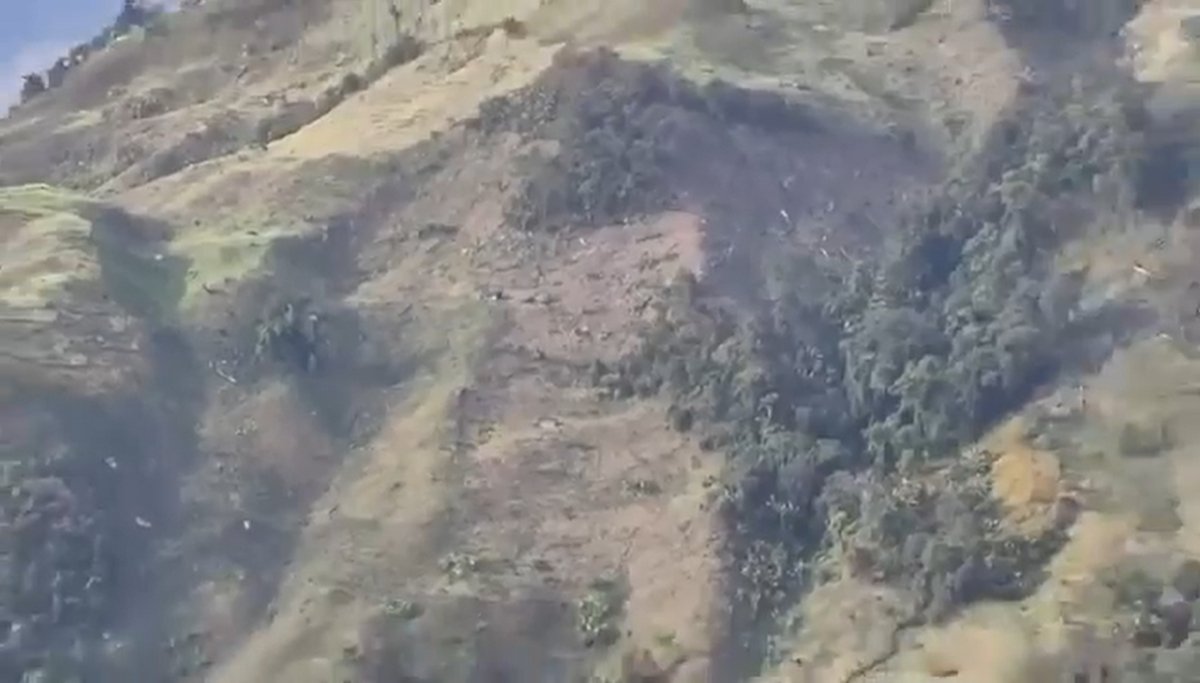
Our correspondent reports that Singh released a video showing extensive poppy plantations in the Kolten and Selsi hill ranges under T Waichong subdivision in Kangpokpi district. The visuals, recorded recently, purportedly reveal freshly cleared forest patches converted into cultivation sites. Singh said the footage proves the link between deforestation, soil instability and recurrent floods. “This video recorded today shows why recurrent floods have taken place in the state,” he said. “All our forest has been destroyed while we are trying to pull each other down.”
This video recorded today shows why recurrent floods have taken place in the state. The footage shows poppy plantation at Kolten and Selsi Hill Ranges of IT- Road under T. Waichong Sub-division in Kangpokpi District.
All our forest have been destroyed while we are trying to… pic.twitter.com/K8zzk6Tl5o
— N. Biren Singh (@NBirenSingh) December 3, 2025
He questioned the silence of political leaders and departments responsible for environmental protection. “None of our leaders has spoken out against such wide-scale devastation,” Singh said, adding that the Forest Department had failed to act despite evidence of organised illegal activity. “Why have officials of the Forest Department not taken any action against the perpetrators?” he asked.
Our correspondent adds that Singh also claimed that armed militants are engaged in the illegal cultivation, benefiting from the narcotics economy and using the difficult terrain to evade enforcement agencies. “It is suspected that armed militants are involved in these illicit activities. Unless we take concrete action, the state will face an existential crisis,” he cautioned.
Singh resigned as Chief Minister on February 9, four days before President’s Rule was imposed amid prolonged ethnic violence. His recent comments are being viewed as a renewed attempt to draw attention to long-standing issues that go beyond immediate law-and-order concerns.
Officials familiar with anti-narcotics operations said that security forces have intensified crackdowns over the past month. A senior police officer stated that joint teams of the Army, Assam Rifles, CRPF, BSF, Narcotics Control Bureau and Manipur Police destroyed more than 800 acres of illegal poppy cultivation between November 11 and December 1 across six mountainous districts. “These operations effectively foiled a large-scale attempt to manufacture opium worth several crores,” the officer said.
The illegal cultivation sites were located in Kangpokpi, Ukhrul, Tamenglong, Chandel, Tengnoupal and Senapati districts. During the operations, forces also demolished around 160 temporary huts, and destroyed fertilisers, herbicides, irrigation pipes and other items used in the cultivation process. Our correspondent reports that the destroyed poppy fields had the potential to yield nearly 7,600 kg of raw opium, representing a major financial blow to the drug networks operating in the region.
An aerial survey conducted on November 24 uncovered an additional 700 acres of poppy plantations in Kangpokpi district alone, suggesting that despite ongoing crackdowns, illegal cultivation continues to adapt and expand. Forces often work in extreme terrain and harsh weather, complicating large-scale clearance efforts.
A defence spokesperson highlighted the challenges faced by security forces: “The intensive operation against unlawful poppy farming was conducted under challenging terrain and adverse weather conditions.” He added that these actions demonstrate the commitment of the Assam Rifles and other agencies to dismantling drug-related networks. “This successful operation reaffirms the steadfast commitment of the Assam Rifles towards fostering a drug-free Northeast and contributing to long-term peace, stability and socio-economic development,” the spokesperson said.
Our correspondent adds that officials believe the gradual decline in identified poppy acreage since 2020 reflects some success. In that year, more than 8,000 acres of poppy fields were identified, of which 1,695 acres were destroyed. By 2024–25, the total area under illegal cultivation had reduced significantly, though officials stress that the drug economy continues to fuel instability.
State officials and analysts agree that the twin crises of ethnic tension and narcotics trafficking remain deeply intertwined. Many argue that addressing the environmental devastation caused by poppy plantations is critical not only for combating drugs but also for preventing recurring floods, landslides and erosion.
As Singh’s remarks continue to draw attention, the focus is now on whether the state and central governments will adopt stronger policies to protect forests, curb militant-linked drug networks and restore fragile ecosystems. For many in Manipur, the issue is no longer only about crime — it is about safeguarding the future of the state itself.