













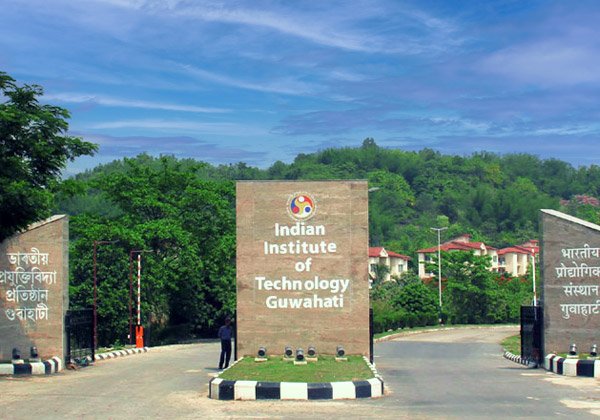
GUWAHATI: Researchers at IIT Guwahati have developed an advanced corrosion-resistant epoxy coating that promises to significantly improve the durability of steel structures. The innovation, announced recently, aims to shield steel from rust and degradation, a breakthrough particularly relevant for infrastructure projects in India’s humid and monsoon-prone regions.
Our correspondent reports that the newly formulated epoxy coating is designed to provide robust protection against moisture, chemicals and environmental stressors that typically accelerate corrosion in steel. This development could benefit a wide range of sectors, from construction and bridges to marine and industrial installations, by extending the lifespan of steel frameworks and reducing long-term maintenance costs.
According to the research team, the coating has undergone extensive lab testing and delivered promising results. In simulated tropical conditions, steel samples treated with this epoxy displayed minimal signs of rust even after prolonged exposure’ a stark contrast to untreated samples which deteriorated rapidly under similar stress. “The coating acts as a barrier, isolating steel from corrosive elements,” said a lead scientist involved in the project. “We expect it to substantially slow down corrosion and thereby reduce repair and replacement expenses.”
Our correspondent adds that the epoxy formulation leverages a novel blend of resins and corrosion-inhibiting agents that make it especially suited for the climatic challenges found in northeastern India and other high-humidity zones. The researchers think that, once commercialised, this coating could become standard for structural steel works in areas where environmental wear and tear are severe.
In addition to its protective properties, the coating is being praised for its adherence to steel surfaces and resilience even under mechanical stress. During tests involving exposure to heavy loads and thermal fluctuations, coated steel maintained structural integrity better than untreated controls, suggesting that the solution could be used in demanding industrial and civil infrastructure settings.
Our correspondent reports that project leaders are currently seeking partnerships with industry stakeholders and coating manufacturers to scale up production and begin real-world trials. Discussions are underway with several construction firms and government agencies interested in using the coating for upcoming infrastructure projects. If all goes well, the researchers hope to see the epoxy applied on bridges, overpasses, rail tracks and coastal installations within a few years.
Local experts emphasise the potential impact of this development. In a region like Northeast India, where frequent rainfall, high humidity and temperature variations accelerate steel corrosion, such a protective coating could dramatically lower maintenance burden and prevent premature structural failure. “Structures here often face accelerated degradation due to climatic conditions,” said an engineer familiar with regional construction. “A durable coating like this could shift how we think about infrastructure longevity.”
Our correspondent adds that beyond construction, industries such as shipping, oil and gas, and heavy manufacturing may also benefit. Ships, storage tanks, pipelines and port installations that typically suffer from high corrosion rates could see extended service life, translating into significant long-term savings and enhanced safety.
The IIT Guwahati team has emphasised that while lab results are encouraging, real-world performance will depend on proper application techniques and surface preparation. They have outlined recommended procedures for steel surface cleaning, primer application (if required), and curing times to ensure optimal performance. Developers interested in adopting the coating are being advised to follow guidelines carefully to achieve maximum protection.
Overall, this scientific innovation is being hailed as a step forward in cost-effective, sustainable infrastructure maintenance. By offering a technology that resists environmental degradation and reduces repair cycles, IIT Guwahati’s epoxy coating could play a significant role in future steel construction standards, particularly in regions vulnerable to corrosion.
For now, the coating remains in the pre-commercial trial phase, but the research community and industry watchers are keeping a close eye. If successful beyond the lab, this could become a game-changer for building long-lasting infrastructure across India.